
Written by: Dr. Akash Chandawarkar, Board Certified Plastic Surgeon, Mirror Plastic Surgery
Key Takeaways
- Body contouring procedures should match your specific anatomical concerns, not marketing claims. Confirm safety through ABPS certification, accredited facilities, and qualified anesthesia providers.
- Liposuction carries the lowest complication rates among surgical options.1 Abdominoplasty has higher risks and requires advanced techniques and experienced surgeons to reduce issues such as seroma formation.1
- Recovery becomes more demanding as procedure scope increases. Circumferential body lifts often require 6–12 months of healing, compared with 1–2 weeks for liposuction alone.1
- Non-surgical options such as CoolSculpting and Emsculpt Neo cannot correct significant skin excess or muscle separation.1 Surgery remains the functional solution for many patients after pregnancy or major weight loss.
- Patients seeking personalized body contouring in Tampa can schedule a consultation at Mirror Plastic Surgery for a comprehensive anatomical assessment and evidence-based treatment recommendations.
Body Contouring Safety Checklist for Tampa Patients (2026)
Confirm each safety item below before scheduling any body contouring procedure in Tampa.
- Surgeon holds active certification from the American Board of Plastic Surgery (ABPS), the only plastic surgery board recognized by the American Board of Medical Specialties.
- The surgical facility carries AAAASF, AAAHC, or equivalent accreditation, which correlates with stronger safety standards.
- A board-certified physician anesthesiologist or qualified CRNA, not the operating surgeon, administers anesthesia.
- The surgeon maintains hospital privileges for the planned procedure, providing an independent review of training and outcomes.
- The practice limits daily surgical volume so your surgeon can provide individualized attention before, during, and after surgery instead of managing five to ten cases per day.
Schedule your safety-focused consultation to review your anatomy, goals, and the full safety checklist in a dedicated hour-long assessment.
Safest Body Sculpting Options and Risk Differences
Liposuction consistently shows the lowest overall complication burden among surgical body contouring procedures. Analyses of the FDA MAUDE database and broader clinical literature support these low complication rates.
Ultrasound-assisted liposuction appears in MAUDE reports, yet many complications relate to equipment malfunction rather than surgeon technique.
Abdominoplasty carries a higher complication profile. The StatPearls review on abdominoplasty reports higher complication rates than liposuction in general populations, with further increases after massive weight loss. Specific risks include seroma (5–43%), infection, hematoma, and skin necrosis. Preserving the Scarpa fascia during flap elevation and using progressive tension sutures significantly reduce seroma formation compared with drains alone.
These statistics do not argue against abdominoplasty. They highlight the need for a surgeon with detailed anatomical knowledge, experience using seroma-reduction techniques, and a case volume that allows full focus on each patient. At Mirror Plastic Surgery, the tummy tuck approach restores the entire abdominal musculature from chest to pubic area. Functional integrity comes first, followed by aesthetic refinement.
Mini tummy tucks that treat only the lower abdomen are avoided because they leave the upper musculature untreated. This pattern often produces a persistent upper abdominal bulge that later requires revision.
A single-surgeon retrospective study of consecutive drainless lipoabdominoplasty patients using progressive tension sutures, Scarpa fascia preservation, and minimal electrocautery reported low seroma rates requiring aspiration and low overall complication rates. All patients recovered without long-term sequelae.
Most Demanding Body Contouring Recoveries
Recovery difficulty increases as more anatomical regions are treated and as procedures become more extensive.
Liposuction 360, which treats the abdomen, flanks, and back, usually requires one to two weeks off work. Patients typically wear a medical-grade compression garment for four to six weeks and avoid strenuous exercise during that time. Final contour appears after swelling resolves over three to six months.
The Avelar-style lipoabdominoplasty combines circumferential liposuction with abdominoplasty using limited undermining and perforator preservation. This method reduces dead space and seroma risk, yet recovery lasts longer than with liposuction alone. Most patients return to desk work within two to three weeks and resume physical activity by six weeks.
Circumferential body lift treats the abdomen, flanks, lower back, hips, and buttocks in one operation and has the longest recovery among standard body contouring procedures. Full recovery after large body contouring cases often takes 6–12 months. Patients usually wear compression garments for 6–8 weeks or longer, and scars need sun protection for at least one year.
Combining too many procedures in one session increases risk in a non-linear way. A 2015 study of 25,478 abdominoplasty patients found higher serious complication rates when abdominoplasty was combined with liposuction or other procedures. Mirror Plastic Surgery follows a safety-first philosophy and limits same-session combinations to what your anatomy and physiology can safely tolerate.
Procedures Linked to High Patient Satisfaction
Many patients report high one-year satisfaction after abdominoplasty.1 When complaints occur, they most often relate to scar length and placement.
Satisfaction rises further when surgery corrects functional problems, not just appearance. Research on postbariatric abdominoplasty patients shows significant improvements in general health, social relationships, mobility, self-esteem, sexual life, and work performance at one year. These studies report only minor complications and no major adverse events.
Reviewed studies on high-definition liposuction show patient satisfaction rates above 90 percent.1 Muscular definition can remain visible for up to five years when patients maintain a stable weight and exercise regularly.1
Non-Surgical Body Contouring Limits After Weight Loss
Non-surgical body contouring technologies such as CoolSculpting (cryolipolysis), Emsculpt Neo (high-intensity electromagnetic muscle stimulation), and radiofrequency skin tightening work best for patients near their ideal weight. Ideal candidates have mild to moderate localized fat and good skin quality. CoolSculpting can reduce fat in the treated area, with results developing over 4–12 weeks.1 Emsculpt Neo delivers the equivalent of 20,000 muscle contractions per 30-minute session, with maintenance sessions recommended every six months.
These technologies cannot remove significant skin excess, repair rectus diastasis, lift descended tissues, or rebuild body architecture after multiple pregnancies or major weight loss. Non-invasive treatments refine contour but do not reconstruct the body’s framework. When skin excess or tissue descent dominates, surgery provides a more functional solution.
Cryolipolysis carries a specific risk called paradoxical adipose hyperplasia (PAH). PAH creates a firm, enlarged, rectangular fat mass in the treated zone 2–6 months after treatment. It does not resolve on its own and usually requires surgical liposuction or excision. PAH accounted for 95.1% of cryolipolysis complaints in the MAUDE database.
Procedure-by-Body-Concern Comparison
The following table links common anatomical concerns to appropriate surgical options. It highlights how each procedure’s functional benefits and complication ranges differ so you can discuss targeted choices with your surgeon.
| Concern | Surgical Option | Functional Benefit | 2026 Complication Range |
|---|---|---|---|
| Abdominal skin excess + muscle separation | Full abdominoplasty (Avelar / lipoabdominoplasty) | Restores rectus integrity, eliminates intertrigo, improves core stability | Higher in general populations, rises further after massive weight loss |
| Flanks and circumferential fat | Lipo 360 (ultrasound-assisted or power-assisted) | Uniform circumferential reduction, waist definition | Low |
| Upper arm laxity | Brachioplasty (arm lift) | Eliminates chronic skin irritation, restores arm mobility comfort | Comparable to thighplasty, seroma and wound healing most common |
| Inner/outer thigh laxity | Thigh lift (thighplasty) | Reduces skin friction, improves gait comfort after weight loss | Wound healing complications most frequent, DVT <1% with prophylaxis |
| Buttock volume deficit | Fat transfer (AlloClae) or implant augmentation | Structural volume restoration, improved sitting comfort and proportion | 78% satisfaction at 6 months, fat embolism risk reduced by anatomical technique |
Once you identify which procedure fits your main concern, the next step is confirming that your surgeon has the training and infrastructure to perform it safely.
How to Verify Surgeon Credentials
Use this credential checklist before committing to any body contouring surgeon in Tampa or the broader Bay Area.
- ABPS certification: Verify active status at abplasticsurgery.org/public and cross-check through certificationmatters.org. ABPS certification requires extensive surgical training, a plastic surgery residency, and passage of comprehensive written and oral examinations.
- License and disciplinary history: Review the Federation of State Medical Boards’ DocInfo.org for license status, board actions, and disciplinary history.
- Facility accreditation: Confirm AAAASF, AAAHC, or state-licensed ASC status directly with the accrediting body. Accredited facilities must meet strict safety standards.
- Hospital privileges: An accredited hospital’s credentialing committee has reviewed the surgeon’s training, competency, and outcomes. This review provides an external quality check even when procedures occur in an office-based suite.
- Board-certified anesthesia provider: A surgeon who administers their own anesthesia while operating creates a significant safety concern because no one can both operate and continuously monitor anesthesia at the same time.
- Annual case volume: Ask how many body contouring procedures the surgeon performs each year and request procedure-specific before-and-after photographs.
Red Flags in High-Volume Clinics vs Concierge Practices
The way a surgical practice is structured directly influences patient safety and outcomes. Practices that perform five to ten surgeries per day divide their team’s attention across multiple simultaneous cases. This pattern shortens consultations, limits pre-operative assessment, and narrows the margin for intraoperative judgment.
Mirror Plastic Surgery limits surgical volume to one to two cases per day. This ceiling reflects a structural commitment that keeps the entire clinical team focused on a single patient before, during, and after surgery. Consultations can last up to one hour and include ultrasound-based pre-operative assessment and a top-to-bottom anatomical evaluation. This level of individualized attention is possible because the practice is led by a surgeon whose training emphasizes complex decision-making rather than high procedural volume.
Dr. Akash completed his medical degree through the Harvard-MIT Division of Health Sciences and Technology, graduating from Harvard Medical School with Honors. His surgical training included a seven-year integrated plastic and reconstructive surgery residency at Johns Hopkins University, followed by an aesthetic surgery fellowship at the Manhattan Eye, Ear and Throat Hospital (MEETH), one of the most competitive aesthetic training programs in the United States. He has appeared on Newsweek’s America’s Best Plastic Surgeons list for two consecutive years, including 2025.
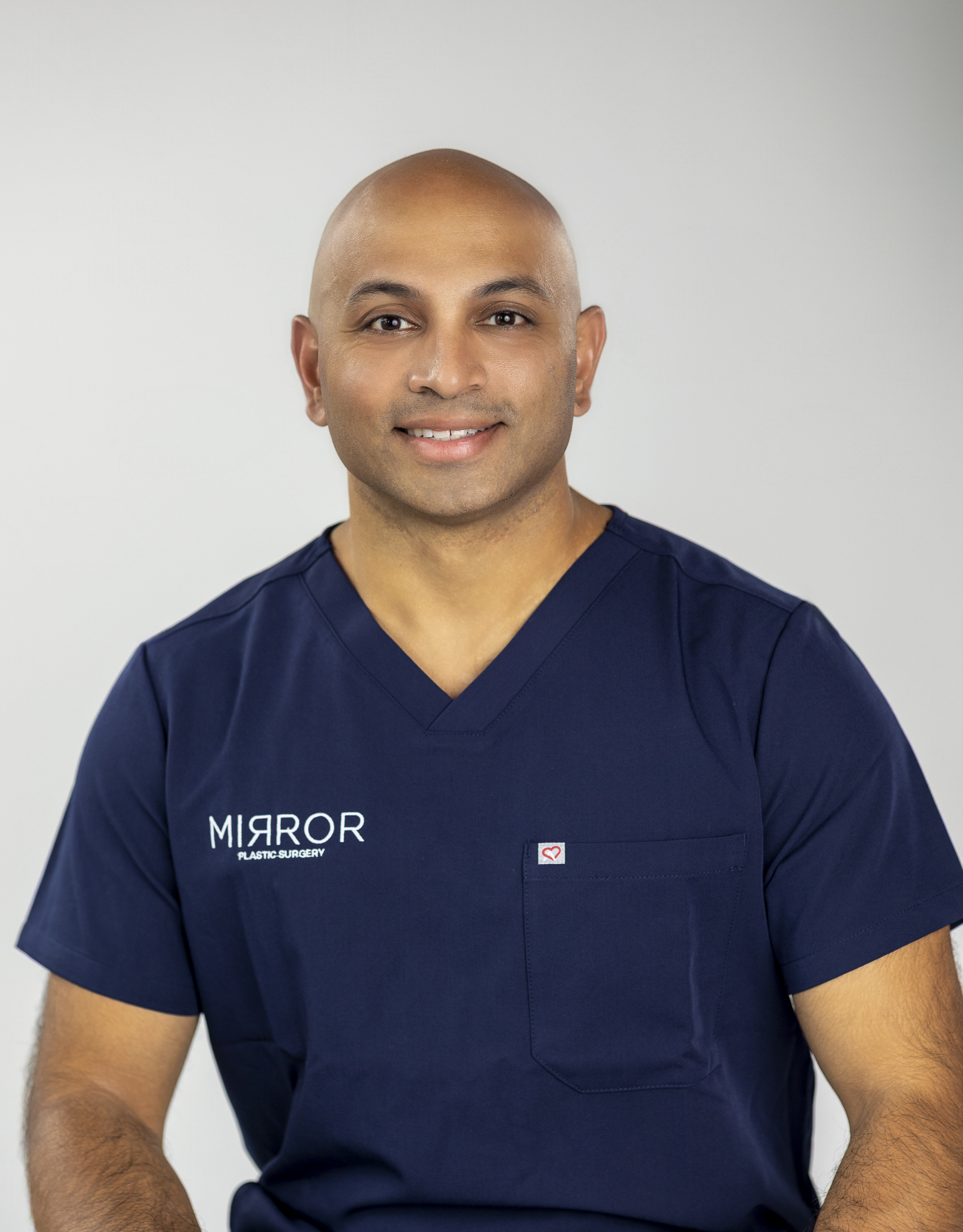
In contrast to this training-intensive background, several red flags can signal high-volume or under-credentialed practices.
- Surgeon holds certification from a board not recognized by the American Board of Medical Specialties, such as the American Board of Cosmetic Surgery, which requires only one year of training.
- Procedures occur in an unaccredited office suite with no external quality verification.
- The surgeon administers anesthesia personally.
- Consultations last fewer than 20 minutes and exclude detailed anatomical assessment or complication discussions.
- Before-and-after photographs cannot be confirmed as the practice’s own work.
- No documented hospital privileges or clear transfer pathway for complications.
Experience the concierge difference from your first appointment with Dr. Akash.
Frequently Asked Questions
What is the difference between Lipo 360 and a tummy tuck, and how do I know which one I need?
Lipo 360 uses circumferential liposuction to remove subcutaneous fat from the abdomen, flanks, and back. It refines the waistline without removing skin or repairing muscles. A tummy tuck, or abdominoplasty, removes excess skin, repairs rectus diastasis, and repositions the navel.
Patients with good skin elasticity and no meaningful muscle separation usually qualify for liposuction alone. Patients with loose skin, a persistent lower abdominal bulge despite weight loss, or a history of pregnancy-related muscle stretching typically need abdominoplasty for a flat, functional result. An in-person anatomical assessment that includes ultrasound evaluation provides the only reliable way to determine which procedure addresses your underlying problem.
Can non-surgical treatments like CoolSculpting or Emsculpt Neo replace surgery after pregnancy or major weight loss?
Non-surgical body contouring works well for patients near their goal weight who have mild to moderate localized fat and good skin quality. These treatments cannot remove excess skin, repair abdominal muscle separation, lift descended tissues, or rebuild body architecture after multiple pregnancies or significant weight loss.
Patients who have lost 50 or more pounds, or who show visible skin laxity and a separated abdominal wall, rarely achieve meaningful structural correction from non-surgical treatments. In these situations, surgery provides the functional solution. Non-surgical options can still play a role after recovery by refining residual contour, yet they do not replace structural reconstruction.
How many procedures can safely be combined in a single operation?
Combining procedures increases operative time, anesthesia exposure, blood loss, and overall physiological stress. A 2015 study of 25,478 abdominoplasty patients found higher serious complication rates when abdominoplasty was combined with other body contouring procedures.
The safe number of simultaneous procedures depends on your health, BMI, smoking history, and the specific areas treated. A safety-first practice evaluates each combination individually instead of offering maximum-procedure packages. Staging procedures across separate operations, when appropriate, lowers cumulative risk and allows full recovery between surgeries.
What credentials should a body contouring surgeon in Tampa have?
The foundational credential is active certification by the American Board of Plastic Surgery, verifiable at abplasticsurgery.org/public (see the credential verification checklist above for full ABPS requirements). Beyond certification, patients should look for hospital privileges for the planned procedure, an aesthetic surgery fellowship for complex body contouring cases, membership in the American Society of Plastic Surgeons, and a surgical facility accredited by AAAASF, AAAHC, or an equivalent body. A board-certified anesthesiologist or qualified CRNA, not the operating surgeon, should manage anesthesia.
How long do body contouring results last, and what affects longevity?
Surgical body contouring results, including those from liposuction and abdominoplasty, can last a decade or longer when patients maintain a stable weight through balanced nutrition and regular exercise.1 Significant weight changes after surgery can stretch skin and alter contour.
Non-surgical body contouring results usually last from six months to several years and depend heavily on lifestyle. Scars need consistent sun protection, especially during the first year, to reduce the risk of permanent darkening. Patients pursuing body contouring after massive weight loss should reach and maintain their goal weight for 12–18 months before surgery to create stable tissue conditions and support long-term results.
Next Step: Planning Your Tampa Body Contouring Consultation
Body contouring after pregnancy or weight loss works best when your surgeon prioritizes anatomical function, limits daily case volume, and selects techniques based on evidence and your specific anatomy. Tampa-area adults seeking a transparent, safety-first evaluation of options such as Lipo 360, Avelar-style abdominoplasty, and non-surgical treatments can find that approach at Mirror Plastic Surgery in St. Petersburg.
Start with a comprehensive anatomical assessment to receive an hour-long evaluation and an evidence-based treatment plan tailored to your goals, your anatomy, and your long-term well-being.
1 Results may vary from person to person. Editorial content, before and after images, and patient testimonials do not constitute a guarantee of specific results.