
Written by: Ellie Pranckevicius, FNP-BC, Aesthetic Nurse Practitioner & Aesthetic Injector | Facial Restoration & Regenerative Injectable Specialist, Mirror Plastic Surgery
Key Takeaways for Natural-Looking Injectables
- Natural-looking injectables rely on full-face balancing, micro-dosing, dynamic fillers, and biostimulators tailored to your unique anatomy.
- Overdone results usually come from incorrect product placement, excess volume, or limited anatomical knowledge, not from the products themselves.
- Provider expertise matters more than degree type; prioritize injectable-specific training, high case volume, and a willingness to say no.
- A thorough consultation includes medical screening, full-face assessment, expectation setting, and a clear follow-up plan.
- For personalized, anatomy-driven injectable care in Tampa Bay, schedule a consultation at Mirror Plastic Surgery.
How Natural-Looking Injectables Actually Work
Natural-looking injectables rely on two main treatment categories: neuromodulators and dermal fillers. Neuromodulators such as Botox, Dysport, Xeomin, Daxxify, and Jeuveau temporarily reduce targeted muscle contractions to soften dynamic lines. Dermal fillers, including biostimulatory agents like Radiesse and poly-L-lactic acid, restore volume, improve skin quality, and support facial structure.
Full-face balancing refers to a treatment philosophy that evaluates all facial thirds, upper, middle, and lower, as an interconnected system rather than separate zones. Facial harmonization becomes the outcome, with proportional, symmetrical features that move naturally and age gracefully together.
This harmonization approach aligns with the dominant 2026 industry trend toward personalized treatment plans based on a patient’s age, muscle strength, skin elasticity, lifestyle, and prior treatment response rather than standardized dosing protocols. Specific techniques driving this shift include:
- Micro-dosing (Baby Botox): Uses roughly 30 to 50% fewer units than standard dosing, spread across more injection points to preserve expression while softening dynamic lines.
- Dynamic fillers: Products in the RHA collection are tuned for viscoelasticity that integrates with facial animation, allowing expression-safe correction in perioral, tear trough, and nasolabial areas.
- Biostimulators: Agents that stimulate the body’s own collagen production over weeks and months, creating gradual results that read as healthier skin rather than added volume.
- AI-assisted facial mapping: AI tools analyze patient photos to recommend injection sites, volume distribution, and symmetry corrections, often reducing consultation time by 30 to 50 percent.
- Sequential protocols: Botulinum toxin on day 0, filler on days 10–14, then biostimulators, which reduces hyperdynamics, supports filler longevity, and builds harmonized structure.
Anatomical precision and honest communication between you and your provider matter more than any single technique. Patients report similar satisfaction levels with non-surgical rhinoplasty using HA fillers across a range of injector experience levels.
How to Recognize and Prevent Overdone Results
Two anatomical benchmarks show how quickly results can look off:
- The ogee curve: Disruption of this S-shaped profile from temple through cheek highlight to midface is a primary cause of an overdone appearance in cheek and midface filler treatments.
- Product-to-anatomy matching: High G-prime filler products that work well for chin or jawline support create hard, unnatural results when placed in the lips or under-eye area.
A persistent misconception claims that filler itself causes an overdone appearance over time, sometimes called filler fatigue, or that Botox inevitably creates a frozen face. The concern is valid, but both issues stem from provider technique, including poor education, inadequate facial assessment, suboptimal injection technique, inappropriate product selection, and the absence of a strong aesthetic eye, not from the products themselves.
These fears are preventable when providers follow evidence-based protocols. Prevention strategies supported by clinical evidence include:
- Starting with conservative doses and adding product gradually across multiple sessions
- Assessing the face in motion, not only in static photos, before any placement decision
- Selecting filler rheology that matches the specific anatomical zone being treated
- Declining filler when a patient already appears puffy or overfilled, or when the primary issue is significant skin laxity or tissue descent
Choosing Between a Dermatologist and a Medical Spa
Provider setting matters less than provider-specific training, case volume, and anatomical knowledge. Credential type, whether MD, DO, NP, or PA, matters less than injectable-specific training, case volume, and aesthetic eye when you want subtle, non-overdone outcomes. A dedicated NP or PA who performs 500 filler cases per year is often more qualified for natural-looking results than a physician who performs only 10 cases annually.
The qualifications most associated with subtle results share common elements regardless of setting. Together, they show that the provider understands both beauty and safety:
- Comprehensive training in facial anatomy, including muscle structure, vascular anatomy and danger zones, nerve pathways, fat compartments, and bone structure
- Training in vascular occlusion recognition and complication management protocols
- Clinical experience in areas like critical care or emergency medicine, which builds strong skills in patient assessment and handling urgent situations
- Willingness to decline treatments that do not suit a patient’s anatomy
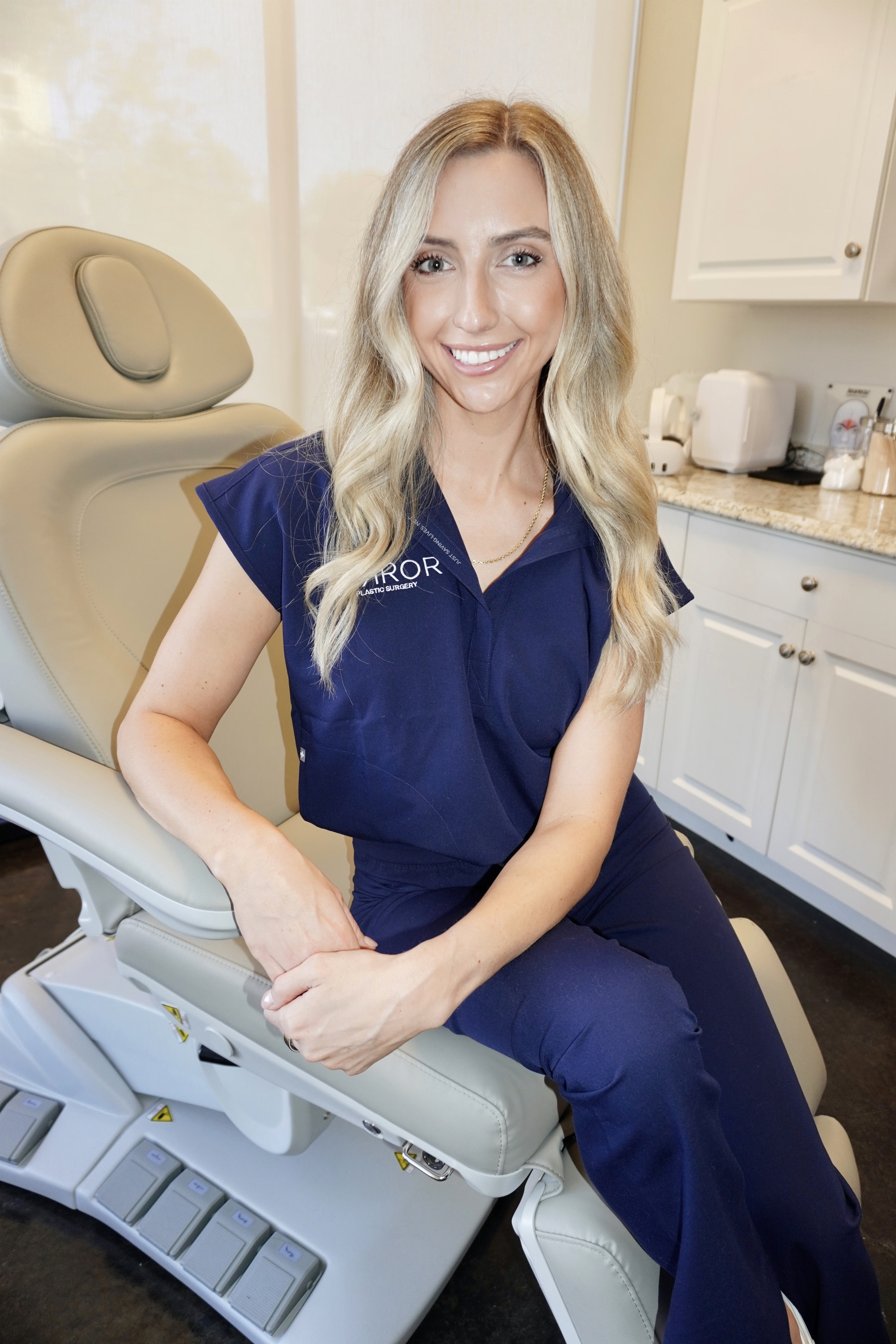
At Mirror Plastic Surgery in St. Petersburg, injectable treatments are led by Ellie Pranckevicius, FNP-BC. Ellie holds a Bachelor’s in Health Science from Boston University, completed a 600-hour hands-on esthetics licensure program, and earned both her Bachelor’s and Master’s in Nursing from the University of South Florida. Before joining Mirror Plastic Surgery, she spent four years in the Neuroscience ICU at Tampa General Hospital, an environment that sharpens clinical judgment, physiological assessment, and the ability to manage complex patient presentations. That critical care background, combined with her esthetician foundation, creates a depth of anatomical and skin-physiology knowledge that is uncommon in high-volume injectable settings.
Full-Face Balancing Compared with Single-Area Injections
As discussed earlier, full-face balancing evaluates the entire face as an interconnected system. In practice, providers assess structure, symmetry, proportion, facial thirds, volume distribution, and how light and shadow fall across the face, rather than focusing on a single feature. A full-face assessment also considers how individual features interact, such as chin alignment with the lips, how cheek volume supports the under-eye area, and how the ogee curve reads across the midface.
Ellie’s approach at Mirror Plastic Surgery follows this philosophy closely. She first focuses on revitalizing your inherent facial characteristics, then considers volume augmentation only after foundational restoration. This staged, lower-volume strategy supports a seamless transition between the upper, middle, and lower facial regions and helps prevent the asymmetry and overdone appearance that isolated, single-area injections often create.
What Happens During a Comprehensive Injectable Consultation
A first injectable consultation at a quality practice often lasts 30 minutes or longer and follows a structured flow. At a concierge-level practice, that time expands to allow genuine clinical depth. A well-structured consultation covers six phases:
- Intake and medical history review: Detailed screening for autoimmune disorders, bleeding disorders, anticoagulant therapy, herpes simplex history, pregnancy or breastfeeding status, keloid history, prior aesthetic treatments, and allergies to lidocaine or filler ingredients.
- Full-face clinical assessment: Examining the face at rest, in motion, and under different lighting conditions to understand dynamic muscle patterns and volume distribution.
- Candidacy review: Evaluating whether the desired outcome is achievable, whether expectations exceed what treatment can deliver, and whether the risk-benefit profile supports treatment.
- Individualized treatment planning: Presenting a full treatment plan that includes sequence, timeline, expected result, and a transparent cost discussion that covers maintenance schedules rather than a generic package.
- Treatment execution: Explaining product and technique clearly, including what is being injected, the quantity, and the precise anatomical locations.
- Follow-up: Scheduling a follow-up visit two to four weeks after treatment to assess results, allowing touch-ups for undercorrection or evaluation of symmetry.
Tampa Bay residents face specific post-treatment considerations. Florida’s heat, humidity, and year-round sun exposure can accelerate product metabolism and increase bruising risk if patients return immediately to outdoor activity. A quality provider will address sun avoidance, heat exposure limits, and skincare integration as part of the aftercare plan.
Red flags in any consultation include pressure to book immediately, vague answers about specific products, recommendations for unrequested procedures, and the absence of a structured follow-up mechanism.
Planning Long-Term Maintenance for Subtle Results
Botox effects generally last 3 to 6 months, with treatments repeated every three to six months to maintain results.1 Results often improve over multiple treatment cycles as treated muscles gradually atrophy, which can allow later treatments to use slightly lower doses while achieving the same relaxation.1 Dermal fillers vary more widely in duration. Fillers can last 12–24 months in some patients, and maintenance touch-up appointments typically require much less product than the initial treatment.1
The 2026 industry shift toward preventative micro-dosing reflects a growing body of evidence. A 15-year real-world retrospective cohort study on consecutive OnabotulinumtoxinA injections reported long-term safety data and patient-perceived age but did not examine computational modeling or wrinkle-depth reductions by initiation timing. Earlier, lower-volume intervention tends to produce better long-term outcomes than waiting for advanced aging and then pursuing aggressive correction.
Maintenance considerations for Tampa Bay patients work best as a coordinated plan rather than isolated decisions at each visit. Key elements include:
- Neuromodulators: plan for treatment every 3–4 months, and recognize that consistent patients often achieve equivalent results at lower doses over time
- HA fillers and biostimulators: most areas need touch-ups at 12–18 months, while biostimulators build gradually and may extend intervals between sessions
- Pairing injectable treatments with active skincare such as retinoids, sunscreen, and antioxidants helps maintain skin elasticity and reduces long-term reliance on volume replacement, which matters especially in Florida’s high-UV environment
- Practice philosophy: quota-driven practices push volume at every visit, while individualized plans adjust product type and quantity based on how your face has changed since the last appointment
Ellie’s approach at Mirror Plastic Surgery treats maintenance the way a dentist treats preventive care. Care stays consistent, appropriately timed, and calibrated to what you actually need, not what generates the highest per-visit revenue.
Ready to create a maintenance plan that adapts to your needs over time? Schedule a consultation with Ellie to discuss a personalized approach tailored to your anatomy and Tampa Bay lifestyle.
Conclusion: Bringing It All Together
Natural-looking injectables in Tampa Bay are achievable when you work with a provider who has genuine anatomical expertise, a full-face assessment philosophy, and the integrity to recommend less when less is appropriate. The criteria outlined in this guide apply to any provider evaluation, including training depth, consultation structure, candidacy honesty, and a maintenance approach built around the individual rather than a treatment quota.
Mirror Plastic Surgery operates at 780 4th Ave S, St. Petersburg, FL 33701. You can reach Ellie Pranckevicius through Mirror Plastic Surgery.
Frequently Asked Questions
What is the difference between Baby Botox and standard Botox, and which produces more natural results?
Baby Botox, also called micro-dosing or soft Botox, uses roughly 30 to 50% fewer units than a standard treatment, distributed across more injection points. The goal is partial muscle modulation rather than full relaxation, which softens dynamic lines while preserving the directional movement that keeps facial expressions looking genuine. Standard dosing works well for patients with stronger muscle activity or deeper static lines, and the same conservative philosophy still applies, meaning the right dose for the individual anatomy, not a predetermined number of units. Neither approach works better for everyone. The correct choice depends on muscle strength, skin elasticity, treatment history, and the specific areas being addressed. A thorough consultation that assesses the face in motion offers the only reliable way to determine which protocol fits a given patient.
How do I know if a provider is using the right filler for my face?
Dermal fillers differ significantly in their physical properties, especially their resistance to deformation (G-prime), spreadability, and tissue integration. A high G-prime product designed for structural support in the chin or jawline will feel hard and unnatural in the lips or under-eye area. A qualified provider selects filler based on the anatomical zone being treated, the tissue depth of placement, and the degree of lift or hydration needed. During your consultation, the provider should explain which product they recommend, why it suits your specific anatomy, and what the alternative options are. If a provider offers a single filler brand for every area of the face without explaining the rationale, that pattern is a meaningful red flag. At Mirror Plastic Surgery, Ellie works across multiple filler brands, including Juvederm, RHA, Versa, Restylane, Radiesse, and Evolysse, and selects the most appropriate product for each patient’s individual needs rather than defaulting to a preferred brand.
What are the realistic risks of Botox and dermal fillers, and how are they managed?
Common, temporary side effects of neuromodulators include bruising at the injection site, localized swelling, and headache. Eyelid ptosis, or a drooping eyelid, can occur after forehead and glabellar treatments and typically resolves as the product wears off. All known neuromodulator side effects resolve as the product clears, and there are no published reports of permanent cosmetic damage from FDA-approved botulinum toxin at standard aesthetic doses. Dermal filler carries a small but serious risk of vascular occlusion. A qualified provider maintains hyaluronidase on-site, can describe their vascular complication protocol clearly, and screens thoroughly for contraindications before any treatment. Absolute contraindications for both product categories include pregnancy, breastfeeding, active infection at the injection site, and neuromuscular diseases such as myasthenia gravis or ALS. Ellie’s Neuroscience ICU experience at Tampa General Hospital supports her ability to identify contraindications, manage complications, and make the no-treatment decision when it is the right one.
How often will I need maintenance treatments to keep natural-looking results?
Neuromodulators typically require retreatment every 3 to 4 months. Patients who maintain consistent treatment over two or more years often find that results last slightly longer and require the same or lower doses over time as treated muscles gradually reduce in activity.1 Fillers generally last 12 to 18 months in most facial areas, although longevity varies by product, placement depth, and individual metabolism.1 Biostimulatory agents like Radiesse and poly-L-lactic acid work by stimulating the body’s own collagen production. Their effects build gradually over several months and may extend the interval between sessions.1 Maintenance appointments typically require significantly less product than the initial treatment. A well-structured maintenance plan stays individualized and adjusts at each visit based on how the face has changed, rather than repeating a fixed schedule of the same product and volume indefinitely.
What makes Mirror Plastic Surgery’s approach to injectables different from a high-volume med spa?
The core difference lies in the concierge medicine model. Mirror Plastic Surgery dedicates up to an hour for an initial injectable consultation, providing a full top-to-bottom assessment that explores anatomy, emotional motivations, long-term goals, and medical history before any treatment recommendation. High-volume practices often compress consultations to maximize patient throughput, which limits the clinical depth needed for individualized planning. Mirror remains supplier-neutral, so product recommendations are based on what suits the patient’s anatomy rather than brand relationships or commission structures. Ellie is known for advising patients when an expensive service is not yet necessary, a transparency that builds long-term trust rather than short-term revenue. When injectable treatment intersects with surgical considerations, Ellie’s work can be complemented by Dr. Akash Chandawarkar, MD, a Harvard-educated, Johns Hopkins-trained plastic surgeon with fellowship training at Manhattan Eye Ear and Throat Hospital, which supports continuity of care across the full spectrum of aesthetic medicine.
Disclaimer: Results may vary from person to person. Editorial content, before and after images, and patient testimonials do not constitute a guarantee of specific results.
1 Results may vary from person to person. Editorial content, before and after images, and patient testimonials do not constitute a guarantee of specific results.