
Written by: Dr. Akash Chandawarkar, Board Certified Plastic Surgeon, Mirror Plastic Surgery
Key Takeaways for Lip Filler Swelling and Recovery
- Swelling after hyaluronic-acid lip filler usually peaks within the first 48 hours. Most visible edema settles within 1–2 weeks, and full tissue integration is typically complete by 4 weeks.1
- Evidence-based aftercare using cold compresses, head elevation, hydration, and avoiding heat or strenuous activity directly reduces vascular permeability and speeds lymphatic clearance during the first 72 hours.1
- Lipstick and other cosmetics should be avoided for the first 24–48 hours until micro-perforations in the epithelial barrier close. After that point, SPF lip balm and gentle makeup are generally safe.
- Normal healing often includes symmetrical puffiness, bruising that fades from purple to yellow, and small lumps that soften over 2–4 weeks.1 Worsening swelling, increasing pain, fever, or skin discoloration require prompt medical evaluation.
- Schedule a personalized consultation at Mirror Plastic Surgery for a physician-level assessment of your lip anatomy and a tailored recovery plan.
Day-by-Day Swelling Stages After Hyaluronic-Acid Lip Filler
The lips contain a dense vascular network fed by the superior and inferior labial arteries, which run close to the surface. Needle insertion triggers an acute inflammatory cascade with mast cell degranulation, histamine release, vasodilation, and increased vascular permeability that drives most early swelling. The claim that hyaluronic acid binds 1,000 times its weight in water is a myth; laboratory tests show substantially lower capacity, though it can still amplify volume beyond what the placed product alone would produce. The table below expands on the timeline mentioned earlier and shows how swelling, tissue changes, and sensations typically progress from injection through full integration.
| Day Range | Expected Volume Change | Tissue-Level Process | Patient Sensation |
|---|---|---|---|
| Day 0–1 | Significant swelling above placed volume1 | Acute inflammatory cascade, HA begins water absorption, lidocaine present | Tightness, warmth, tenderness, lips feel firm |
| Day 2–3 | Peak swelling1 | Maximum edema, neutrophil activity, bruising visible as red blood cells oxidize | Asymmetry common, firmness peaks, bruising purple-to-green |
| Day 4–5 | +15–30% above final volume1 | Macrophages clear neutrophils, lymphatic drainage increases, uncross-linked HA degraded by hyaluronidase | Lips soften, bruising fades to yellow, contour becomes more recognizable |
| Day 6–9 | +5–15% above final volume1 | Residual lymphatic clearance, HA begins integrating with collagen fibers and fibroblasts | Shape approaches final result, small palpable lumps may remain |
| Day 10–14 | Near-final volume, rheological equilibrium reached1 | HA fully hydrated, gel softens and integrates with surrounding tissue | Natural feel, symmetry assessable, two-week review appropriate |
| Week 3–4 | True long-term result visible1 | Complete tissue integration, mild neocollagenesis from mechanical stimulation | Soft, pliable, indistinguishable from native tissue |
Schedule your consultation to receive a personalized recovery plan tailored to your lip anatomy and treatment goals.
Targeted, Evidence-Based Ways to Reduce Swelling
Simple, consistent steps during the first 48–72 hours can noticeably limit swelling and bruising. Each measure below addresses a specific part of the inflammatory response and supports smoother recovery.
- Cold compress protocol: Apply a clean ice pack wrapped in cloth for 10–15 minutes on, 10 minutes off during the first 24 hours. Cold constricts superficial vessels and reduces plasma leakage into the tissue. Never apply ice directly to the skin.
- Head elevation: Sleep on your back with two to three pillows for the first two nights to keep the head above heart level. Gravity then helps limit fluid pooling in the lips.
- Hydration: Aim for at least 2 liters of water daily throughout recovery. HA is hydrophilic, so steady hydration supports even filler integration and can extend longevity.
- Activity and heat avoidance: Avoid strenuous exercise, alcohol, hot baths, and saunas for the first 48 hours. Heat and exertion increase vasodilation and blood flow, which worsens swelling during the period of peak vascular permeability.
- Dietary adjustments: Avoid salty foods, alcohol, and excess caffeine for the first few days to prevent dehydration-driven fluid shifts that prolong swelling.
- Pain management: Use acetaminophen for tenderness and avoid ibuprofen and aspirin unless medically necessary, because NSAIDs increase bruising risk by inhibiting platelet aggregation.
Safe Timeline for Lipstick and Makeup After Lip Augmentation
Fresh injection sites leave tiny openings in the skin barrier. Until that barrier closes, usually within 24–48 hours, cosmetics can introduce bacteria into already inflamed tissue and increase infection risk.
- Hours 0–24: Avoid all lip products and keep the area clean and dry. Avoid touching, pressing, or massaging the lips during this time because the filler remains soft and pressure can shift the product.
- Hours 24–48: Plain, fragrance-free lip balm is acceptable once injection points have closed. Skip products that contain retinol, glycolic acid, or strong fragrances.
- Day 3–7: Standard lip balm with SPF works well. Use lip balm with SPF 30+ to slow filler degradation from UV exposure.
- Day 7+: Full makeup, including lipstick and lip liner, is generally safe once bruising resolves and the surface looks intact. Avoid heavy lip stains that require aggressive rubbing to remove.
Warning Signs That Require a Call to Your Surgeon
Most changes after lip filler fall within a normal healing pattern. Recognizing when symptoms move outside that pattern helps you seek timely care and protect your result.
Normal findings to monitor at home:
- Symmetrical puffiness and tenderness that peak around 48 hours
- Asymmetric swelling in the first few days that improves within 1–2 weeks
- Pinpoint bruising that shifts from purple to green to yellow over 7–10 days
- Small palpable lumps that gradually soften over 2–4 weeks
Contact the surgeon promptly (same day) for:
- Swelling that worsens or does not begin improving after day 3–4
- Increasing pain after the first 24 hours, especially with warmth and spreading redness
- Fever above 100.4°F (38°C)
- Hard, growing, or painful lumps that persist beyond two weeks
Seek emergency care immediately for possible vascular compromise:
- Blanching (white patches) or dusky, mottled purple discoloration of the skin
- Severe burning or throbbing pain that feels out of proportion to the procedure
- Skin around the injection site that feels cool to the touch
- Any vision changes after facial filler, which require an emergency room visit
- Pus, blistering, or areas of skin breakdown
Vascular occlusion remains rare, and incidence strongly correlates with practitioner experience and detailed anatomical knowledge. Time to hyaluronidase administration is the main factor that shapes outcomes when these events occur.
Tampa Climate Factors That Affect Lip Filler Swelling
Tampa Bay’s subtropical climate adds heat and humidity that directly influence recovery. Warm, moist air causes cutaneous vasodilation, which increases blood flow to superficial tissues and can intensify early edema during the first 48 hours. Extreme heat exposure such as hot yoga or saunas accelerates hyaluronic acid filler breakdown and should be avoided for at least one week after treatment.
Practical adjustments for Florida patients include the following steps, which work together to control temperature, protect filler structure, and support hydration:
- Scheduling treatment in the morning to avoid peak afternoon heat during the first 24 hours, when swelling responds most strongly to temperature changes
- Remaining in air-conditioned environments for the first 48 hours post-injection to maintain that cooling advantage through the peak swelling window
- Avoiding direct sun exposure to the lips and applying SPF lip balm consistently, because UV radiation degrades HA cross-links and shortens filler longevity beyond the initial recovery period
- Staying indoors during peak UV hours (10 a.m.–4 p.m.) for the first week to protect both healing tissue and the filler’s structural integrity
- Increasing water intake beyond the standard 2-liter guideline to replace fluid lost through perspiration in humid conditions, which otherwise encourages the body to pull water from the filler itself
Expertise Behind Mirror Plastic Surgery’s Lip Filler Protocol
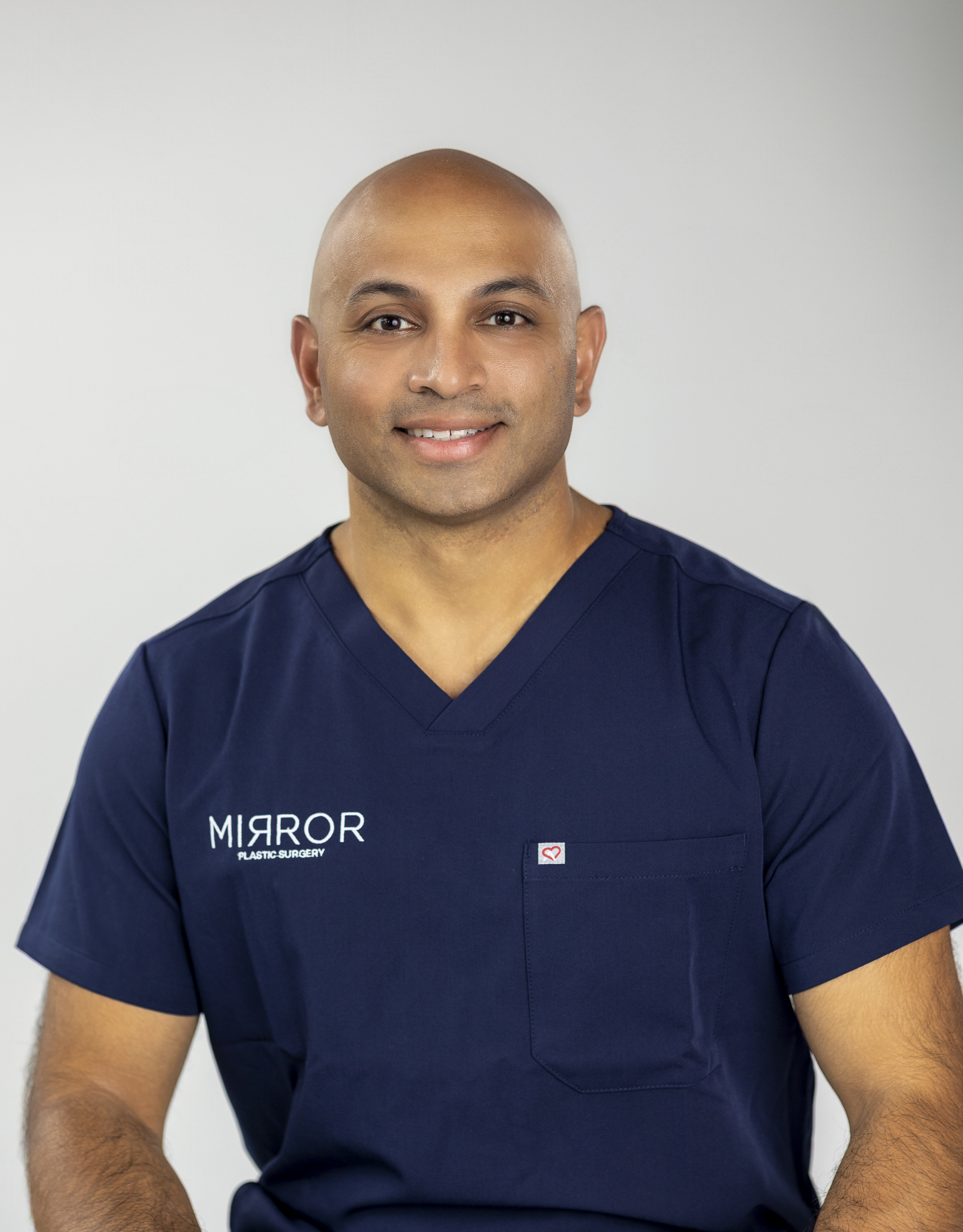
The recovery protocols at Mirror Plastic Surgery follow the same safety-function-aesthetics hierarchy that guides every surgical and non-surgical procedure in the practice. The hour-by-hour swelling guidance and Tampa-specific adjustments reflect detailed training in both reconstructive microsurgery and aesthetic refinement. Dr. Akash completed his medical degree through the Harvard-MIT Division of Health Sciences and Technology, a program designed to train physician-scientists, and graduated from Harvard Medical School with Honors.
His seven-year integrated plastic and reconstructive surgery residency at Johns Hopkins University included rotations at the Johns Hopkins Hospital, the R Adams Cowley Shock Trauma Center, and the Curtis National Hand Center. Following residency, Dr. Akash completed an aesthetic surgery fellowship at the Manhattan Eye, Ear and Throat Hospital (MEETH), one of the most competitive programs in the country for advanced facial rejuvenation and body contouring. He has been recognized by Newsweek as one of America’s Best Plastic Surgeons for two consecutive years.
This depth of anatomical training across reconstructive microsurgery, trauma, and aesthetic surgery shapes how Mirror Plastic Surgery approaches injectable treatments. The team applies the same rigor used for complex surgical cases to planning, injection technique, and recovery guidance for lip filler patients.
Mirror Plastic Surgery limits the schedule to one to two procedures per day so that non-surgical patients receive focused, concierge-level attention. Every lip augmentation begins with an hour-long consultation that includes a full anatomical assessment of lip volume, vermilion border definition, upper-to-lower lip ratio, and perioral skin quality before any product is chosen.
Meet with Dr. Akash for a physician-level assessment of your lip anatomy, candidacy, and expected recovery timeline.
Frequently Asked Questions About Lip Filler Swelling and Longevity
How long does natural lip filler swelling last?
Peak swelling usually occurs within the first 48 hours, and most visible edema resolves within 1–2 weeks. Full tissue integration and the true long-term result are generally visible by 4 weeks.1 Day-to-day variation in appearance is common during weeks 2 and 3 as the hyaluronic acid fully hydrates and softens.
Is asymmetric swelling after lip filler normal?
Asymmetric swelling in the first few days is common and reflects uneven lymphatic drainage and the lip’s complex vascular anatomy. In most cases, symmetry returns within 1–2 weeks as edema settles. Persistent asymmetry beyond two weeks deserves a follow-up visit to decide whether a small refinement is appropriate.
When can I exercise after lip filler?
Strenuous exercise should be avoided for at least 48–72 hours after treatment. Elevated heart rate and core body temperature increase vasodilation and blood flow to the face, which worsens early swelling and bruising during the period of peak vascular permeability. Light walking is generally acceptable after 24 hours.
How do I know if I need hyaluronidase after lip filler?
Hyaluronidase, the enzyme that dissolves hyaluronic acid filler, is reserved for specific situations. These include vascular occlusion with blanching, dusky discoloration, or severe pain, persistent lumps or nodules that do not resolve by 4 weeks, or results that remain anatomically incorrect after swelling has fully resolved. A physician-level assessment of your anatomy and the product used should always guide this decision.
How long does hyaluronic acid lip filler last?
Most hyaluronic acid lip fillers maintain their result for 6–12 months.1 Longevity depends on the product’s cross-linking density, the volume placed, individual metabolic rate, UV exposure, and hydration habits. Patients who protect their lips from sun exposure and maintain consistent hydration often see longer-lasting results. Maintenance appointments are planned around each patient’s anatomy and rate of filler metabolism rather than a fixed calendar schedule.
Discuss your lip augmentation goals with Dr. Akash, a Johns Hopkins-trained, board-certified plastic surgeon recognized by Newsweek as one of America’s Best Plastic Surgeons two years running.
1 Results may vary from person to person. Editorial content, before and after images, and patient testimonials do not constitute a guarantee of specific results.