
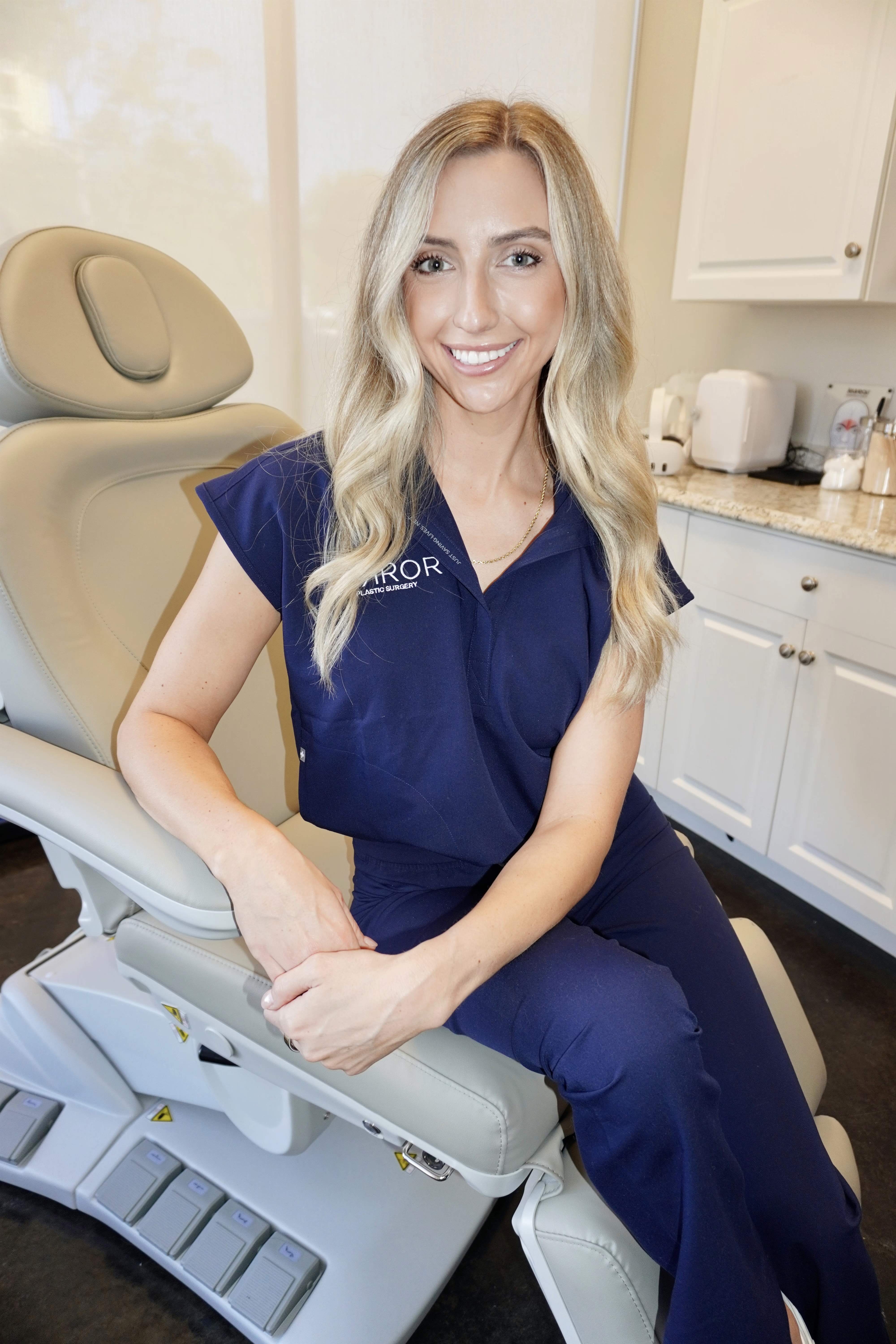
Written by: Ellie Pranckevicius, FNP-BC, Aesthetic Nurse Practitioner & Aesthetic Injector | Facial Restoration & Regenerative Injectable Specialist, Mirror Plastic Surgery
Key Takeaways Before You Start Peptides
- Skipping baseline lab work before starting peptides is the most common and dangerous mistake in biohacking.
- Ellie Pranckevicius, FNP-BC, at Mirror Plastic Surgery combines ICU experience, advanced nursing degrees, and esthetic training to guide safe, data-driven peptide protocols.
- Comprehensive baseline labs, including metabolic, thyroid, inflammatory, hormonal, and GH-axis markers, are required before any custom peptide stack is designed.
- Quality sourcing from licensed 503A/503B pharmacies with batch-specific Certificates of Analysis and ongoing clinical supervision are non-negotiable for safety and efficacy.
- Schedule your personalized lab-first peptide consultation at Mirror Plastic Surgery to begin a medically supervised biohacking journey.
Step 1: Order a Comprehensive Baseline Lab Panel
No peptide protocol should begin without a current baseline. Labs drawn months or years before therapy may not reflect your current physiology and make post-treatment comparisons unreliable. At Mirror Plastic Surgery, Ellie reviews existing results or orders a full panel before she designs any protocol.
The comprehensive baseline panel described in the key takeaways is mapped to specific Mirror stacks in the table below. This mapping shows how your lab data guides peptide selection and why thorough baseline testing matters before you start.
| Panel Category | Key Markers | Relevant Mirror Stack / Peptide |
|---|---|---|
| Metabolic & Glycemic | Fasting glucose, HbA1c, fasting insulin, CMP | GLP-3R, Sermorelin/Ipamorelin, NAD |
| Thyroid | TSH, Free T3, Free T4 | GLP-3R, NAD, Sermorelin/Ipamorelin |
| Inflammatory | hs-CRP, ESR | Glow Stack (BPC-157, TB500), KPV |
| Hormonal | Total/free testosterone, estradiol, LH, FSH, DHEA-S, SHBG, prolactin | Sermorelin/Ipamorelin, PT-141, Kisspeptin |
| GH Axis | IGF-1 (levels monitored relative to reference ranges) | Sermorelin/Ipamorelin |
| Hepatic / Renal Safety | ALT, eGFR (therapy paused if ALT >3× ULN or eGFR <30) | All protocols |
This mapping keeps every peptide choice tied to objective data from your own physiology. No stack is prescribed without a clear lab-based reason.
Markers such as fasting insulin, hs-CRP, and IGF-1 are not always included in standard primary-care panels, so a dedicated pre-peptide draw from a knowledgeable provider becomes essential. Mirror Plastic Surgery offers this consultation process in-person in St. Petersburg, Florida, and remotely across the United States, including Hawaii and Alaska.
Step 2: Map Your Results to a Custom Peptide Protocol
Lab results translate directly into protocol design. A client with elevated hs-CRP and ESR plus joint complaints becomes a candidate for the Glow Stack, which includes GHK-Cu, BPC-157, and TB500. This stack targets systemic inflammation, soft-tissue repair, and collagen and elastin production.1
A client with low-normal IGF-1, fatigue, and poor body composition may be directed toward Sermorelin or Ipamorelin to stimulate natural growth hormone release.1 Individuals with low-normal IGF-1 and symptoms may qualify for therapy initiation. Clients with higher IGF-1 values often start with more conservative dosing.
Beyond these foundational protocols, Ellie’s lab and history review can also highlight candidates for more specialized peptides that focus on metabolism, cognition, gut health, or sexual wellness:
- GLP-3R for clients with insulin resistance, weight management goals, or cardiovascular risk markers, using a newer-generation compound reported to cause fewer gastrointestinal side effects and less muscle wasting than earlier GLP-1 formulations.1
- NAD for clients with mitochondrial fatigue and anti-aging goals, supporting cellular energy production.1
- KPV for clients with gut inflammation markers or a history consistent with IBD.
- Selank for clients managing anxiety, acting on similar brain pathways as benzodiazepines without the same dependency risk.1
- PT-141 or Kisspeptin for clients whose sex-hormone panel (total and free testosterone, estradiol, LH, FSH, prolactin) supports a sexual wellness or fertility indication.
No two protocols are identical. Genetics, lifestyle, current medications, and your specific lab picture all shape the final stack.
Step 3: Secure Quality Sourcing and Medical Supervision
Sourcing often becomes the weak point in unsupervised biohacking. For high-purity research peptides, a lot-specific Certificate of Analysis from a reputable lab, showing HPLC purity greater than 98 percent and mass spectrometry confirmation of molecular weight, is recommended. Medically supervised peptide protocols must come from licensed 503A compounding pharmacies under valid patient-specific prescriptions or from 503B outsourcing facilities, with PCAB accreditation as a useful quality filter for 503A pharmacies.
Mirror Plastic Surgery sources peptides from vetted providers that perform rigorous batch testing. Every client receives clear reconstitution and self-administration instructions, often with video demonstrations for extra clarity. Ellie remains available by text around the clock for questions, dosing concerns, and refill requests, which offers a level of access that gray-market sellers and high-volume telemedicine platforms do not match.
Step 4: Follow Cycle Length, Monitoring Triggers, and Retesting Schedule
Peptide therapy works best as a structured, time-limited intervention rather than an indefinite routine. GH secretagogues are commonly cycled using practitioner conventions such as 8–12 weeks on and 4–6 weeks off to potentially reduce receptor desensitization risk, although no randomized controlled trials confirm a single required schedule. For most protocols at Mirror Plastic Surgery, an 8–12 week active cycle is standard, with retesting at the end of that window.
Clinicians re-test the relevant subset of baseline markers at 6–8 weeks after starting a peptide protocol to measure changes and evaluate efficacy. GH-axis peptides need more granular monitoring because IGF-1 responds quickly to dose changes. IGF-1 is rechecked at 6–8 weeks for dose titration, while a full panel follows at 3–4 months to capture broader metabolic and hormonal shifts. Once the protocol is stable, ongoing IGF-1 checks every 6–12 months help keep levels in the target range.
Triggers for earlier reassessment include unexpected fatigue, glucose changes, water retention, or any new symptom that appears during the cycle. Because Ellie maintains direct text access with every client, these signals are addressed in real time instead of waiting for a distant follow-up visit.
Important Considerations Before Beginning Peptide Therapy
Not every person qualifies for every peptide. Absolute contraindications for most peptide classes include active cancer and pregnancy or breastfeeding. Patients with kidney or liver disease should use peptides only with close medical supervision.
GLP-1 receptor agonists carry an FDA boxed warning and are contraindicated in patients with a personal or family history of medullary thyroid carcinoma or MEN 2. Ellie’s intake process screens for these and other relative contraindications, including concurrent prescription medications, whose interactions with research peptides are poorly characterized in the existing literature.
Realistic expectations matter as well. Results vary by individual, and the timeline for measurable change depends on peptide class, baseline labs, and lifestyle factors. Ellie explains this clearly during consultation and also explains when a peptide is not yet appropriate for a given client.
Practical Checklist for Your First Peptide Visit
Before your first consultation with Ellie, gather or prepare the following:
- Any lab work from the last 60–90 days, including CBC, CMP, lipid panel, thyroid panel, and hormone levels if available.
- A current medication and supplement list, including dosages.
- A written summary of your primary health goals, such as inflammation, weight, energy, recovery, aesthetics, or other priorities.
- A list of prior diagnoses, especially cancer history, autoimmune conditions, diabetes, or cardiovascular disease.
- Questions about specific peptides you have researched, including where you first learned about them.
During and after your protocol, track the following metrics:
- Subjective energy, sleep quality, and mood on a consistent weekly scale.
- Body composition changes if they relate to your goals.
- Any new symptoms, including injection-site reactions, unusual fatigue, or digestive changes.
- Lab results at each scheduled retest, compared with your baseline values.
How Peptide Biohacking Fits Into Your Broader Wellness Plan
Peptide therapy at Mirror Plastic Surgery supports and extends other wellness and aesthetic goals. Clients who undergo surgical procedures with Dr. Akash Chandawarkar, Mirror’s Harvard-educated, Johns Hopkins-trained plastic surgeon, may use post-operative peptide protocols with BPC-157 and TB500 to reduce inflammation and support faster tissue healing.1 Clients working on fertility goals may benefit from Kisspeptin, which has shown promise in IVF trial outcomes.1
Clients addressing sexual wellness concerns can access PT-141. Those seeking systemic anti-aging strategies can pair NAD for mitochondrial energy with GHK-Cu for collagen and elastin support. This integration across surgical recovery, fertility, sexual wellness, and longevity reflects the practice’s core philosophy: safety first, function second, aesthetics third, applied equally to non-surgical protocols and to the operating room.
Frequently Asked Questions About Peptides at Mirror Plastic Surgery
Are the peptides offered at Mirror Plastic Surgery FDA-approved?
Many peptides used in wellness and biohacking are not FDA-approved for human use. FDA career scientists have noted that human clinical evidence for several popular peptides remains limited, and the regulatory landscape continues to evolve. The main risk in this space comes from obtaining peptides from unregulated sources without medical oversight. Mirror Plastic Surgery addresses this by using reputable providers with batch testing and Certificates of Analysis, performing thorough intake evaluations with lab panels, and offering ongoing clinical supervision through Ellie Pranckevicius. Clients learn the regulatory status of each peptide before starting a protocol.
What happens if I stop taking peptides?
When a peptide protocol ends without a maintenance plan, the physiological effects it created will fade over time. For inflammation-targeting peptides, the underlying inflammatory process may return to its prior state. For growth hormone secretagogues, IGF-1 levels gradually move back toward baseline. This pattern does not mean you should avoid peptide therapy. It means you should plan your cycles, off-periods, and maintenance phases from the start, which is how Ellie structures each protocol.
Will everyone see the same results?
Results vary widely. Peptide outcomes depend on genetics, baseline lab values, diet, lifestyle, the specific stack, and adherence to the plan. A client with significantly elevated hs-CRP and a strong inflammatory picture may see faster, more pronounced changes from the Glow Stack than someone with borderline markers. This variability explains why Mirror Plastic Surgery uses a lab-first, personalized approach. A protocol built on your data is more likely to produce meaningful, measurable results than a generic stack chosen without clinical context.
Can I access Mirror Plastic Surgery’s peptide services if I do not live in Florida?
Yes. The entire process, including consultation, lab review, protocol design, prescription, and shipping, can occur remotely across the United States, including Hawaii and Alaska. Ellie remains available via text for ongoing support, and telemedicine visits cover scheduled check-ins and retesting reviews. Clients in the St. Petersburg and Tampa Bay area can also choose in-person consultations.
How is Mirror Plastic Surgery different from online peptide retailers or general telemedicine platforms?
Online peptide retailers sell products without medical supervision, lab requirements, or quality guarantees. General telemedicine platforms may offer some peptides but often lack the depth of one-on-one clinical engagement that a concierge model provides. Mirror Plastic Surgery limits patient volume on purpose. The same philosophy that leads the surgical practice to perform only one to two procedures per day also shapes non-surgical care. Every peptide client receives a 30–60 minute consultation, a lab-informed custom protocol, batch-tested sourcing, and direct 24/7 text access to Ellie throughout the protocol.
Making an Informed Decision About Peptide Therapy
The peptide space is expanding quickly, and unsupervised use is growing alongside it. Australia’s Therapeutic Goods Administration has reported serious adverse effects linked to unapproved peptide products, including liver damage and severe allergic reactions that required hospitalization, and notes that key safety information such as sterility, pharmacokinetics, and side-effect frequency remains unknown for many unapproved compounds. The same compounds flagged by international regulators remain available online without a prescription.
A lab-first, provider-guided protocol cannot remove all uncertainty, because the science on many peptides is still developing. It can, however, replace guesswork with data and isolation with clinical support. Mirror Plastic Surgery’s model centers on that difference through comprehensive baseline labs, a custom protocol mapped to your results, batch-tested sourcing, and a licensed practitioner available throughout your cycle and beyond.
For health-conscious adults who have already explored the biohacking space and want a structured, medically supervised entry point, that combination offers a clear and defensible path forward.
Book an appointment with Ellie to start your lab-first peptide protocol at Mirror Plastic Surgery.
1 Results may vary from person to person. Editorial content, before and after images, and patient testimonials do not constitute a guarantee of specific results.
Peptide therapy is intended for wellness and optimization purposes and is not prescribed to diagnose, treat, cure, or prevent disease unless specifically stated. Many peptides are not FDA-approved and may be used off-label. Some have limited long-term safety data, with a potential for unknown risks, complications, or desensitization with prolonged use.