
Written by: Ellie Pranckevicius, FNP-BC, Aesthetic Nurse Practitioner & Aesthetic Injector | Facial Restoration & Regenerative Injectable Specialist, Mirror Plastic Surgery
What Laser Hair Removal Really Does to Your Pores
- Laser hair removal does not directly shrink pores. It can modestly soften their appearance over time by removing hair shafts and triggering collagen remodeling.1
- Short-term redness and swelling can make pores look larger for a few hours up to seven days, then fade as the skin calms.
- Among hair-removal wavelengths, the 1064-nm Nd:YAG laser has the strongest evidence for reducing visible pore size and sebum, while resurfacing lasers create more measurable pore changes.1
- Facial skin usually shows more visible texture and pore improvement than thicker body areas like the thighs, so treatment location strongly influences results.1
- Schedule a consultation with Ellie at Mirror Plastic Surgery for a personalized, evidence-based plan that clarifies whether hair removal or resurfacing better fits your skin goals.
Why Pores Can Look Bigger Right After Laser Hair Removal
Three overlapping mechanisms explain the temporary enlargement many patients notice in the days after a laser hair removal session.
Perifollicular edema. Transient redness and follicular swelling, called perifollicular edema, is a common side effect of laser hair removal that usually resolves within hours to a few days. This inflammation changes the visual contour of the pore opening, making it appear temporarily wider until the tissue returns to baseline.
The orange-peel effect. Pores may look larger after treatment because skin texture can briefly feel rougher, which makes pore indentations easier to see. Localized swelling around each follicle can also stretch the pore opening, so pores can look wider during the first few days.
Follicular purging. Changes inside the follicle after treatment can alter how the pore looks until the skin normalizes. As loosened sebum and debris clear from the follicle, the opening can look more pronounced, then settle as healing completes.
The usual timeline for these changes ranges from a few hours to about seven days. Most people see the temporary texture flare-up that makes pores look larger fade within a week as the skin heals.
How Laser Hair Removal Can Make Pores Look Smaller Over Time
Laser hair removal can modestly and indirectly soften the look of pores over time. The treatment targets follicles, yet the controlled thermal injury also triggers a wound-healing response in the surrounding dermis.
This response can increase collagen and elastin production around follicle openings. As new collagen forms and tightens the surrounding skin structure, visible pore prominence can gradually decrease.1
The effect depends on wavelength. Treatment with the 1064-nm Nd:YAG laser can decrease pore size and sebum levels on treated skin compared with untreated areas.1
Results also build across a full treatment series. Laser hair removal usually involves multiple sessions spaced several weeks apart. Texture and tone improvements from collagen remodeling can become noticeable during the series and may continue for months after the final session.1
These gains are real but limited. Laser treatments do not permanently shrink pore size. They can only reduce the appearance of pores by stimulating collagen and tightening nearby skin. Patients who want more substantial, measurable pore reduction usually need a resurfacing laser protocol.
Schedule your skin-texture assessment with Ellie to decide whether laser hair removal’s collagen benefit is enough for your goals or whether resurfacing should come first.
Face vs. Thighs: How Treatment Area Changes Pore Results
Body area strongly affects how visible any pore-related change will be after laser hair removal. Skin thickness and follicular density drive most of this difference.
Facial skin, especially on the upper lip, jawline, and neck, is thinner, so the dermis sits closer to the surface. Areas with thinner skin often show more noticeable texture improvements from laser hair removal because dermal changes sit closer to view. Follicular density on the face is also higher relative to surface area, so more follicles receive thermal stimulation per square centimeter. This amplifies both the short-term edema response and the cumulative collagen benefit.
Thigh and body skin is substantially thicker, with a deeper dermis that absorbs more of the laser’s thermal energy before it reaches collagen-producing fibroblasts. As a result, pore-appearance changes, both temporary enlargement from edema and long-term improvement from remodeling, are far less visible on the thighs than on the face. Patients treating body areas mainly achieve hair reduction, while any texture benefit tends to be secondary and subtle.
This anatomical difference makes a top-to-bottom assessment essential before choosing a laser modality. The same device and fluence that create meaningful texture improvement on the chin may produce no noticeable pore benefit on the legs.
Laser Resurfacing vs. Hair Removal Lasers for Pore Refinement
To understand how different laser types compare for pore appearance, the table below outlines the most clinically relevant categories by pore impact, downtime, and collagen stimulation. Every data point is cited inline.
| Laser Type | Pore-Size Impact | Downtime | Collagen Stimulation |
|---|---|---|---|
| Diode / Alexandrite (hair removal) | Targets hair follicles, does not address pore appearance directly | Hours to a few days (perifollicular edema) | Mild, builds over multiple sessions |
| Nd:YAG 1064 nm (hair removal) | Can reduce pore size and sebum levels on treated skin compared to untreated areas | Hours to a few days (perifollicular edema) | Moderate, with increased collagen deposition in papillary and upper reticular dermis; strongest evidence among hair-removal wavelengths |
| Fractional CO₂ / Erbium (resurfacing) | Fractional erbium laser produces >51% improvement in dilated pores after a series of 3 treatments, with changes assessed at 3 months; fractional CO₂ yields a significant decrease in pore count after 3 sessions. | Several days to a few weeks depending on ablative vs. fractional settings | Robust, with peak synthesis 3–6 months post-treatment; remodeling continues 12–24 months; type III replaced by type I collagen |
| Ablative CO₂ (resurfacing) | New skin forms that is smoother and tighter, reducing pore prominence, often visible after a single treatment | Significant downtime that can last several weeks | Intense collagen contraction from epidermal and partial dermal removal, producing the most aggressive remodeling response |
The key clinical distinction is clear. A hair-removal laser session is tuned for follicle destruction, not maximal dermal heating, compared with nonablative, fractional, or ablative resurfacing lasers. Patients whose main concern is pore refinement, not hair reduction, usually benefit more from a resurfacing protocol from the start.
Aftercare Steps That Help Calm Temporary Pore Enlargement
Thoughtful aftercare can shorten and soften the post-treatment inflammatory window that makes pores look larger. The practices below align with what we know about perifollicular edema and barrier disruption.
- Sun protection: Pores and surrounding skin can be more reactive after laser hair removal, so gentle care and strict sun protection matter. Daily broad-spectrum SPF 30 or higher is essential throughout a treatment series.
- Gentle cleansing and moisturization: Consistent hydration supports barrier repair and smoother texture. Fragrance-free, non-comedogenic moisturizers can shorten the period of rougher-feeling skin.
- Avoiding heat and friction: Hot showers, saunas, and abrasive exfoliants during the first 48–72 hours can prolong perifollicular edema. Cool compresses and minimal rubbing or picking support faster resolution.
- Patience with the timeline: Collagen remodeling continues for months and often builds with each additional session. Visible texture improvement develops gradually rather than after a single visit.
How Mirror Plastic Surgery Designs Your Laser Plan
Choosing between a hair-removal laser, a resurfacing laser, or a sequence of both works best when guided by your anatomy and goals, not by a device list. Your provider should understand skin thickness, follicular density, sebum production, collagen baseline, and long-term texture priorities before recommending a path.
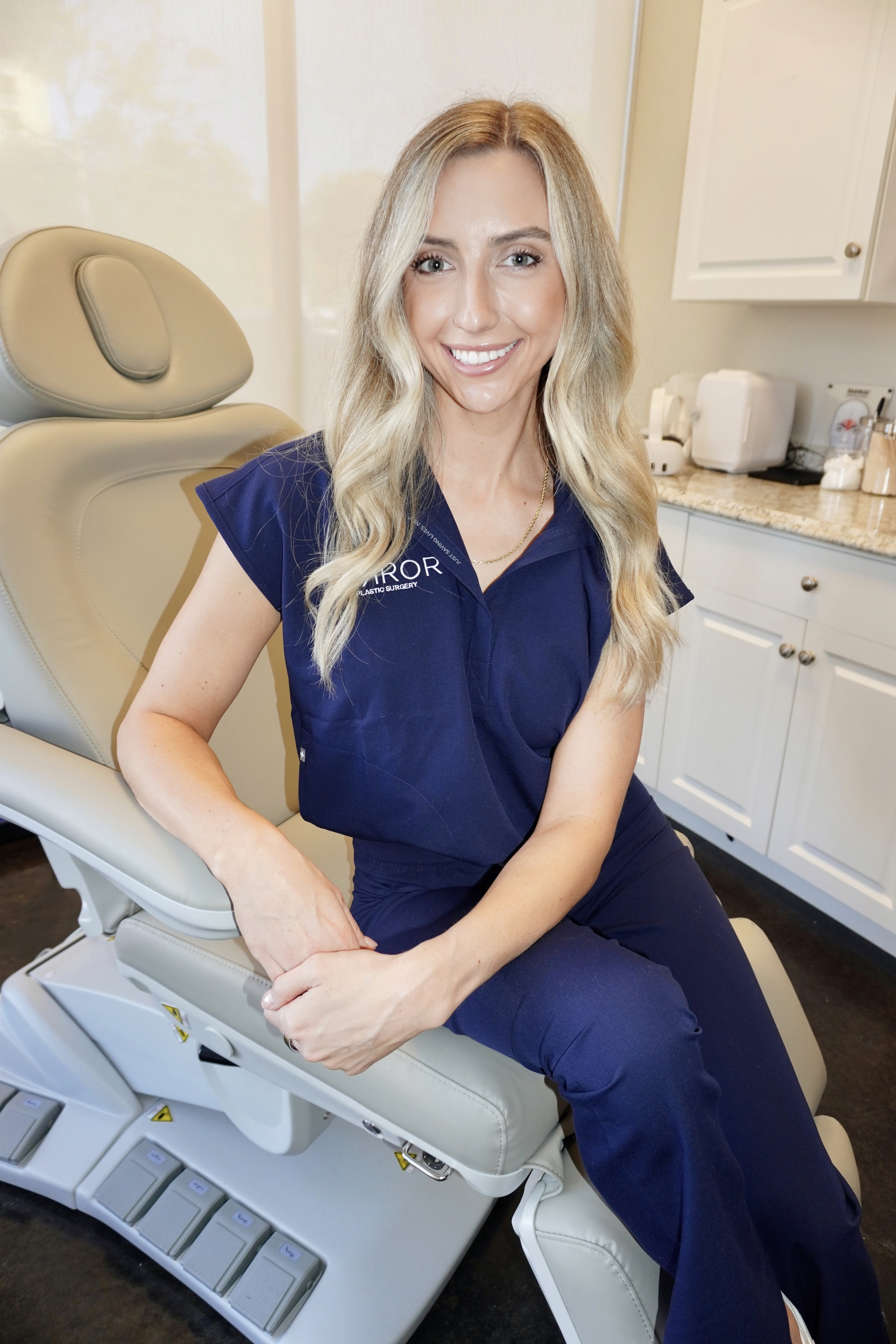
At Mirror Plastic Surgery, every laser and skin-texture consultation is conducted by Ellie Pranckevicius, FNP-BC. Her combined background in esthetics and advanced nursing gives her a detailed view of both surface and subdermal anatomy. Ellie’s assessments are unhurried, up to one hour, and structured around a top-to-bottom evaluation of your skin rather than a preset treatment package. When surgical or more intensive resurfacing options may help, Dr. Akash Chandawarkar, a Harvard-educated, Johns Hopkins-trained plastic surgeon with fellowship training in aesthetic surgery, provides clinical oversight and surgical planning.
The practice is supplier-neutral, so recommendations follow your anatomy and goals, not quotas or commissions. If a resurfacing laser better addresses your pore concerns, you will hear that clearly. If laser hair removal’s collagen benefit is sufficient, Ellie explains that choice in anatomical terms you can understand and question.
Get your personalized modality recommendation from Ellie and receive an evidence-based assessment grounded in your unique skin anatomy, not a one-size-fits-all protocol.
Frequently Asked Questions
Does laser hair removal permanently shrink pores?
No. Pore dimensions are determined mainly by genetics, skin thickness, and sebum production, which no laser can permanently change. As explained in the treatment section, laser hair removal can reduce the appearance of pores over time by stimulating collagen around follicle openings and removing the hair shaft that can stretch the pore.1 These improvements are modest and need maintenance because skin continues to age. Patients who want more dramatic pore refinement should discuss fractional or ablative resurfacing lasers, which deliver stronger collagen stimulation and documented improvements in perceived pore size.
How long does pore enlargement last after laser hair removal?
The temporary pore enlargement that follows a laser hair removal session stems from the three inflammatory responses detailed earlier in this article. As noted above, most patients see these effects resolve within the first week. Applying a fragrance-free moisturizer, avoiding heat and friction, and using broad-spectrum sun protection can shorten this window to just a few days. If redness, swelling, or texture changes persist beyond one week, contact your provider for an evaluation.
Which laser wavelength is most effective for pore reduction?
Among hair-removal lasers, the 1064-nm Nd:YAG has the strongest evidence for pore-size reduction. Controlled studies show statistically significant improvement in pore size and sebum levels compared to untreated skin by week three of treatment. Its deeper dermal penetration and greater collagen deposition in the papillary and upper reticular dermis explain this advantage over alexandrite or diode wavelengths. For patients whose primary goal is pore refinement rather than hair reduction, fractional CO₂ and fractional erbium resurfacing lasers carry the most clinical evidence, with studies documenting roughly 20–40% improvement in perceived pore size after a treatment series. The ideal wavelength depends on your skin type, goals, and treatment area, which a full anatomical assessment can clarify.
Can facial laser hair removal improve texture as well as remove hair?
Facial laser hair removal can improve both hair growth and texture, with some caveats.1 Facial skin is thinner than most body skin, so dermal collagen changes from laser hair removal are easier to see. Patients treating the upper lip, jawline, chin, or neck often notice gradual improvements in firmness and texture over a six-to-eight-session series, with changes continuing for up to a year after the final session. These texture gains are a secondary benefit of follicular heating rather than the main purpose of treatment. Patients who want both hair reduction and meaningful pore refinement on the face often do best with a sequenced plan, completing hair removal first, then addressing remaining texture concerns with resurfacing.
Conclusion: Where Laser Hair Removal Fits in Pore Care
Laser hair removal plays a specific role in pore appearance. It can temporarily make pores look larger through perifollicular edema and barrier disruption, then return them to baseline within about a week. Over a full treatment series, it can modestly reduce pore visibility through collagen remodeling, especially with Nd:YAG wavelengths and on thinner facial skin. It does not match the measurable pore-size reduction that fractional or ablative resurfacing lasers achieve through more intensive dermal remodeling.
The choice between these modalities depends on anatomy, skin baseline, and long-term goals. At Mirror Plastic Surgery, that decision follows a thorough, unhurried evaluation of your skin by a provider who can distinguish what your follicles need from what your dermis needs.
Start with an evidence-based skin assessment at Mirror Plastic Surgery in St. Petersburg, FL, and receive a laser and skin-texture evaluation tailored to your anatomy and long-term goals.
Disclaimer: Results may vary from person to person. Editorial content, before and after images, and patient testimonials do not constitute a guarantee of specific results.
1 Results may vary from person to person. Editorial content, before and after images, and patient testimonials do not constitute a guarantee of specific results.