
Written by: Ellie Pranckevicius, FNP-BC, Aesthetic Nurse Practitioner & Aesthetic Injector | Facial Restoration & Regenerative Injectable Specialist, Mirror Plastic Surgery
Key Takeaways for Mitochondrial Peptide Therapy
- Mitochondrial efficiency declines with age. Peptide therapy can support biogenesis, reduce oxidative stress, and improve metabolic flexibility under lab-guided protocols.1
- NAD+ precursors show consistent biochemical activity in human studies.1 MOTS-c and several other peptides are still supported mainly by preclinical data.
- Protocols at Mirror Plastic Surgery are tailored after baseline labs, contraindication screening, and ongoing biomarker monitoring to prioritize safety and measurable change.
- Peptide therapy works best when layered on strong habits such as resistance training, high-quality sleep, targeted nutrition, and evidence-based nutraceuticals.
- Book an appointment with Ellie at Mirror Plastic Surgery to start a personalized, medically supervised peptide plan for cellular energy and mitochondrial health.
Mitochondrial Function and Peptide Therapy at Mirror
Mitochondria generate the adenosine triphosphate (ATP) that powers every cell, and their efficiency declines measurably with age. Peptide therapy addresses this decline by introducing signaling molecules that support mitochondrial biogenesis, reduce oxidative stress, and improve metabolic flexibility. A 2026 PRISMA-guided systematic review of 113 eligible studies confirmed that NAD+ precursors demonstrate clear biological activity in humans, while investigational peptides such as MOTS-c show mechanistic promise in preclinical models. Because these compounds act on core metabolic pathways, individualized, lab-monitored protocols provide a safer and more targeted approach than generic supplementation.
Ellie’s Background and Role in Peptide Care
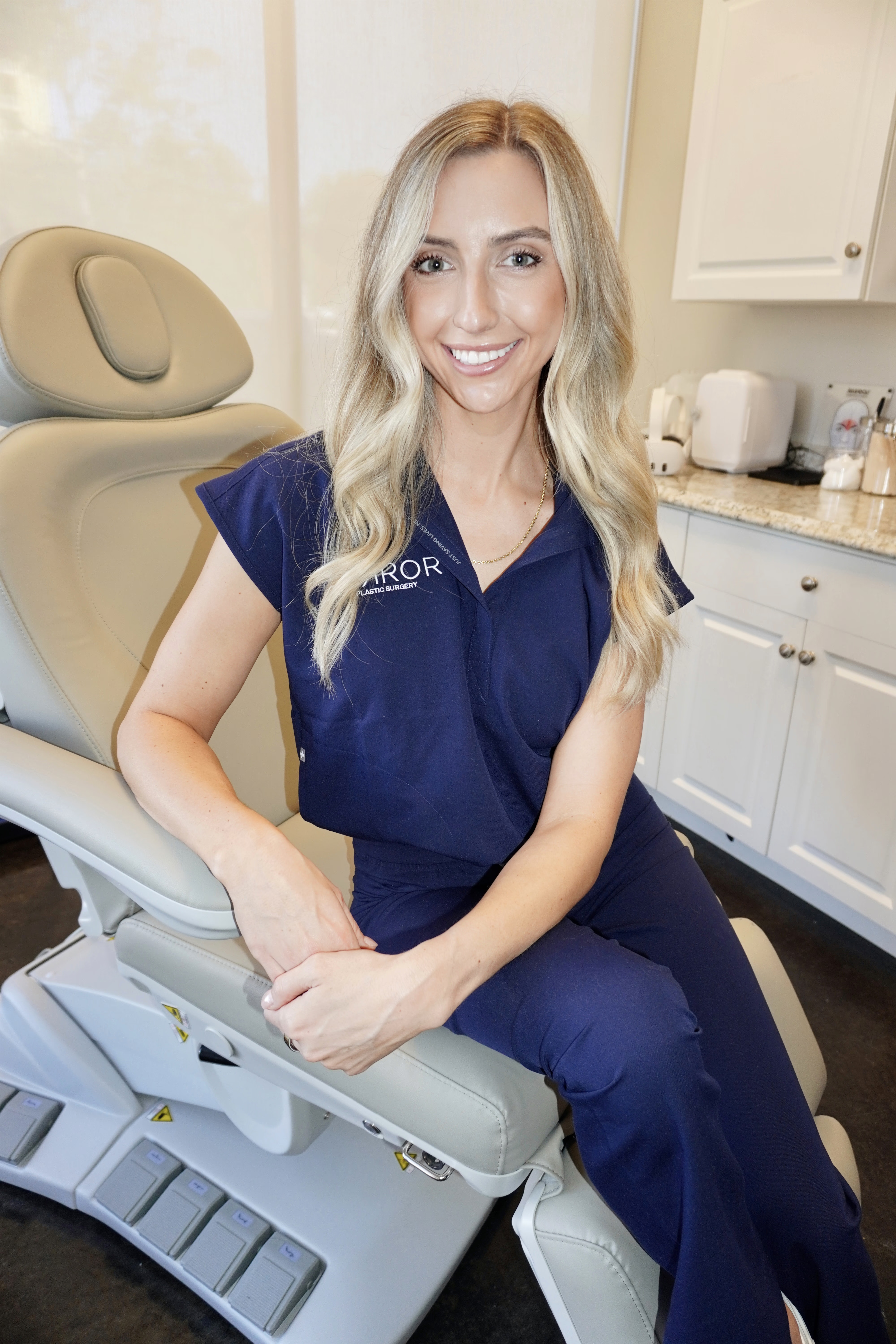
Peptide therapy at Mirror Plastic Surgery is led by Ellie Pranckevicius, FNP-BC, a board-certified Family Nurse Practitioner. Ellie holds a Bachelor’s in Health Science from Boston University, completed an aesthetics licensure program, and earned both her Bachelor’s and Master’s in Nursing from the University of South Florida. Her clinical foundation includes four years in the Neuroscience ICU at Tampa General Hospital, where she managed complex patients and developed a deep command of physiology, metabolic health, and recovery. That critical-care background, combined with her esthetician training and advanced nursing credentials, allows her to evaluate cellular energy concerns with scientific rigor and aesthetic precision.
Core Terms in Mitochondrial Peptide Therapy
Mitochondrial peptides are short amino acid chains that communicate with or originate from mitochondria to regulate energy metabolism, biogenesis, and cellular stress responses. NAD+ (Nicotinamide Adenine Dinucleotide) is a coenzyme essential to the electron transport chain; human whole-blood NAD+ levels do not vary with age. Supplementation with NAD+ precursors has been studied for potential benefits. The Glow Stack is Mirror Plastic Surgery’s proprietary combination of GHK-Cu, BPC-157, and TB-500, formulated to address systemic inflammation, collagen and elastin production, and skin, hair, and nail health at the same time.
How Mitochondria Change Over Time
Mitochondria are dynamic organelles, and their number, structure, and efficiency shift with age, nutrition, exercise, and hormonal status. While NAD+ levels in whole blood remain stable across the lifespan, circulating MOTS-c levels decline approximately 21% between ages 18–30 and 70–81. These changes reduce the cell’s capacity for oxidative phosphorylation, fatty acid oxidation, and mitophagy, the process that clears damaged mitochondria. Clinically, patients may notice persistent fatigue, slower exercise recovery, metabolic inefficiency, and signs of accelerated cellular aging, even when they maintain healthy diets and regular workouts.
Top Peptides Used for Cellular Energy at Mirror
The following table summarizes five peptides used in cellular energy and mitochondrial protocols at Mirror Plastic Surgery. Ellie selects and sequences each peptide based on lab results, medical history, and patient goals, rather than applying a single standard stack or timeline.
| Peptide | Primary Mechanism | Typical Timeline | Evidence Level (Human) |
|---|---|---|---|
| NAD+ | Replenishes NAD+ coenzyme to support electron transport chain function and ATP synthesis | Blood NAD+ elevation observed within weeks in multiple RCTs, while functional outcomes vary by individual1 | Consistent biochemical target engagement in human trials, with heterogeneous functional and healthspan outcomes |
| MOTS-c | Activates AMPK via folate cycle inhibition and AICAR accumulation, promoting glucose uptake, fatty acid oxidation, and mitochondrial biogenesis | Preclinical models show metabolic changes within weeks, while human timelines are not yet established in RCTs | Zero published human RCTs as of 2026, with efficacy data limited to cell culture and animal models |
| GHK-Cu | Stimulates collagen and elastin synthesis, supports tissue repair, and modulates inflammatory signaling | Skin and hair changes are typically observed over 8–12 weeks of consistent use1 | Supported by preclinical and observational data and included in Mirror Plastic Surgery’s Glow Stack for collagen support |
| BPC-157 | Modulates growth factor signaling to support muscle, tendon, ligament, and joint repair, while reducing systemic inflammation | Anti-inflammatory effects appear within weeks in animal models, and human timelines are tailored to individual response1 | Studied primarily in animal models, with no human pharmacokinetic data and no established dosing standards |
| GLP-3R | Next-generation GLP receptor agonist that targets insulin resistance, weight management, and cardiovascular risk factors, with a reported reduction in gastrointestinal side effects compared with older GLP-1 formulations | Metabolic markers may shift within 4–12 weeks, with timing adjusted based on baseline glucose and insulin panels1 | Emerging compound, with protocols guided by practitioner assessment and lab monitoring |
Understanding which peptides target specific mechanisms is only part of the picture. Sourcing quality products and pairing them with medical supervision determines whether those mechanisms translate into safe, measurable outcomes.
Safety and Quality Standards at Mirror Plastic Surgery
Patients should source peptides exclusively from FDA-regulated 503A/503B compounding pharmacies under valid prescription, as unregulated products carry documented risks of endotoxin contamination, incorrect peptide sequences, inaccurate concentrations, and non-sterility that HPLC testing alone does not detect. The regulatory landscape continues to evolve. An FDA advisory panel recommended in July 2026 that six peptides, including BPC-157, MOTS-c, KPV, TB-500, Epitalon, and Semax, be reclassified to allow compounding pharmacies to produce them, although formal rulemaking after such recommendations can take considerable time.
Mirror Plastic Surgery sources peptides only from reputable providers with rigorous batch testing. Ellie conducts 30–60 minute consultations that include a full medical history review, contraindication screening, and lab panel interpretation. Patients receive 24/7 text access to Ellie for ongoing questions, dosing guidance, and refill support, which provides continuity that online peptide retailers and high-volume telemedicine platforms do not offer.
How Ellie Personalizes Peptide Protocols with Labs
Every peptide protocol at Mirror Plastic Surgery begins with a baseline panel. Standard pre-protocol labs include CBC with differential, comprehensive metabolic panel, fasting glucose, fasting insulin (for HOMA-IR calculation), HbA1c, lipid panel, and thyroid function (TSH, free T4). For patients pursuing mitochondrial or metabolic peptides, additional markers such as hs-CRP, DHEA-S, free T3, IGF-1, cortisol, and body composition via DEXA are incorporated to evaluate mitochondrial-specific decline.
Follow-up labs are scheduled at 4–12 weeks depending on the peptide category. Ellie adjusts protocols based on objective biomarker changes, not symptom reports alone. The entire process, from initial consultation through prescription, shipping, and follow-up, is available in person at Mirror Plastic Surgery’s St. Petersburg, Florida location or remotely across the United States, including Hawaii and Alaska.
Foundational Habits Ellie Reviews Before Peptides
Peptide therapy works best when it builds on a strong lifestyle foundation. Mitochondrial peptide therapy is recommended only after foundational support, including NAD+ precursors, CoQ10, exercise, and sleep strategies, has been implemented and the patient still shows persistent fatigue not explained by thyroid, hormonal, or metabolic causes. Ellie follows this framework and first evaluates whether lifestyle factors, nutrient deficiencies, or hormonal imbalances explain a patient’s symptoms.
The following foundational pillars are assessed during consultation, moving from direct metabolic drivers to broader systemic influences:
- Resistance training and high-intensity interval training trigger mitochondrial biogenesis directly and often serve as the first-line intervention.
- Sleep quality and duration determine whether those training adaptations translate into cellular repair, as NAD+ metabolism depends on circadian rhythm integrity.
- Dietary protein adequacy and time-restricted eating patterns provide the substrate and metabolic signaling that support training recovery and mitochondrial turnover.
- Evidence-based nutraceuticals such as CoQ10 and creatine form a first-tier mitochondrial support layer when diet and training are in place but symptoms persist.
- Stress management addresses cortisol’s suppressive effect on mitochondrial function, which can blunt progress from all other interventions when left unmanaged.
Maintenance Planning and Realistic Outcomes
Peptide protocols at Mirror Plastic Surgery are cycle-based rather than indefinite. A 2026 protocol guide for longevity-oriented peptide stacks emphasizes biomarker tracking with baseline testing and reassessment every 8 to 12 weeks, along with cycle-based use and physician-guided personalization instead of unsupervised generic templates. Outcomes vary by individual based on genetics, baseline metabolic health, lifestyle adherence, and the specific peptides used.1
Patients who discontinue therapy without a maintenance plan usually see a gradual return of pre-treatment symptoms, similar to the loss of fitness gains after stopping exercise.1 Ellie explains this during consultation so patients begin therapy with clear expectations and a long-term strategy.
Risks, Limitations, and Common Challenges Patients Report
The most frequently cited concerns among patients who have previously used unsupervised peptides include the following:
- Batch testing gaps: Gray-market “research grade” peptides sold online lack the sterility and quality controls required of FDA-registered compounding facilities, so actual peptide concentration and purity remain unverified.
- Dosing variability: Research peptides including BPC-157 have no established human dosing standards, which makes self-directed dosing a trial-and-error process without a clinical safety net.
- Contraindication screening: GLP-1 receptor agonists carry the thyroid carcinoma contraindication discussed earlier, and many online retailers do not screen for this risk.
- Null or endpoint-specific results: Effects of NAD+ precursors on functional, metabolic, vascular, and other healthspan-relevant outcomes in humans are heterogeneous and often null or endpoint-specific, so not every patient responds to every peptide.
Common Misconceptions About Peptide Therapy
Several persistent misconceptions circulate in biohacking communities about peptide therapy:
- Peptides are only for weight loss. GLP-1 and GLP-3R compounds address weight and metabolic health, but the broader peptide landscape also covers cellular energy, inflammation, collagen production, neurological health, sexual wellness, and post-surgical recovery.
- Results are permanent after a single cycle. Benefits are maintained through ongoing or cyclical use.1 Stopping therapy without a maintenance protocol usually results in a gradual return of baseline symptoms.
- All peptide sources are equivalent. Legal eligibility for compounding under Section 503A is distinct from FDA approval status, and peptides sourced outside regulated compounding channels carry enforcement risk and quality uncertainty. Medically supervised sourcing from batch-tested providers is not interchangeable with gray-market online purchases.
- More peptides stacked simultaneously produce better results. Evolving clinical practice emphasizes temporal separation of agents and progression based on individual response rather than starting all compounds at once.
Frequently Asked Questions About Mirror’s Peptide Services
Are peptides FDA-approved?
Most peptides used in wellness and biohacking contexts are not FDA-approved for those indications. Some, such as semaglutide and sermorelin, have undergone full FDA review for specific medical conditions. Others, including MOTS-c, BPC-157, and GHK-Cu, are investigational compounds studied primarily in preclinical settings. An FDA advisory panel voted in July 2026 to recommend reclassifying six peptides for compounding pharmacy production, although formal rulemaking could extend into 2028. At Mirror Plastic Surgery, Ellie sources peptides from reputable, batch-tested providers and conducts thorough contraindication screening before starting any protocol so the risk profile of each compound aligns with each patient’s health status.
What side effects should I be aware of?
Side effects vary significantly by peptide class. GLP-1 and GLP-3R compounds can cause gastrointestinal symptoms, and GLP-1 agonists carry a black-box warning for medullary thyroid carcinoma risk in patients with relevant personal or family history. Growth hormone secretagogues such as sermorelin and ipamorelin can elevate IGF-1, which may cause fluid retention or worsened insulin resistance if not monitored. NAD+ precursors are generally well tolerated in human trials. Research peptides like BPC-157 and MOTS-c lack comprehensive human safety data, so medical supervision and baseline screening are essential. Ellie reviews your complete medical history, current medications, and lab results before recommending any peptide to reduce the risk of adverse outcomes.
What happens if I stop taking peptides?
Stopping peptide therapy without a maintenance plan usually results in a gradual return of pre-treatment symptoms.1 For example, if systemic inflammation was being managed with BPC-157 or the Glow Stack, inflammatory markers and related symptoms are likely to trend back toward baseline over time.1 The metabolic and energy benefits associated with NAD+ or MOTS-c protocols also diminish as the underlying age-related decline in those pathways continues.1 Ellie builds maintenance and cycling strategies into every protocol from the start so patients understand what to expect and how to sustain their results.
Do I need lab work before starting?
Yes. A baseline lab panel is a standard component of every peptide consultation at Mirror Plastic Surgery. At minimum, this includes a comprehensive metabolic panel, CBC, fasting glucose, fasting insulin, HbA1c, lipid panel, and thyroid function. For mitochondrial and metabolic peptide protocols, additional markers such as hs-CRP, IGF-1, DHEA-S, free T3, and cortisol may be ordered. If you do not have recent labs, Ellie will order them as part of the consultation process. Lab results guide peptide selection, dosing, and follow-up intervals and form the clinical foundation of a safe and effective protocol.
Can I access Mirror Plastic Surgery’s peptide services remotely?
Yes. The full peptide therapy process, including initial consultation, lab review, protocol design, prescription, and ongoing support, is available remotely across the United States, including Hawaii and Alaska. Consultations take place via telemedicine, and peptides are shipped directly to the patient. Ellie provides 24/7 text access for questions, dosing guidance, and refill requests throughout the treatment course, which replicates the concierge experience regardless of location. Patients in the Tampa Bay and St. Petersburg area may also be seen in person at Mirror Plastic Surgery’s office at 780 4th Ave S, St. Petersburg, FL 33701.
Choosing a Safe, Lab-Guided Peptide Strategy
Biohacking cellular health and energy with peptide therapy can be scientifically grounded when it is personalized and medically supervised. The evidence base for NAD+ precursors demonstrates reliable biochemical activity in humans, while investigational peptides like MOTS-c offer compelling mechanistic rationale supported by preclinical data. Neither category produces uniform results across all patients, and neither replaces foundational lifestyle work. The most defensible path combines objective lab data, a qualified practitioner who understands both the science and the regulatory landscape, and a protocol designed around your specific physiology rather than a generic stack from an unregulated online supplier.
Disclaimer
The peptides discussed in this article are not FDA-approved for anti-aging, cellular energy, or general wellness indications. Regulatory status may change as FDA advisory processes and rulemaking proceed. Individual outcomes vary based on genetics, baseline health, lifestyle, and protocol adherence. This content is educational and does not constitute medical advice. Consult a qualified healthcare provider before starting any peptide therapy.
1 Results may vary from person to person. Editorial content, before and after images, and patient testimonials do not constitute a guarantee of specific results.
Peptide therapy is intended for wellness and optimization purposes and is not prescribed to diagnose, treat, cure, or prevent disease unless specifically stated. Many peptides are not FDA-approved and may be used off-label. Some have limited long-term safety data, with a potential for unknown risks, complications, or desensitization with prolonged use.