
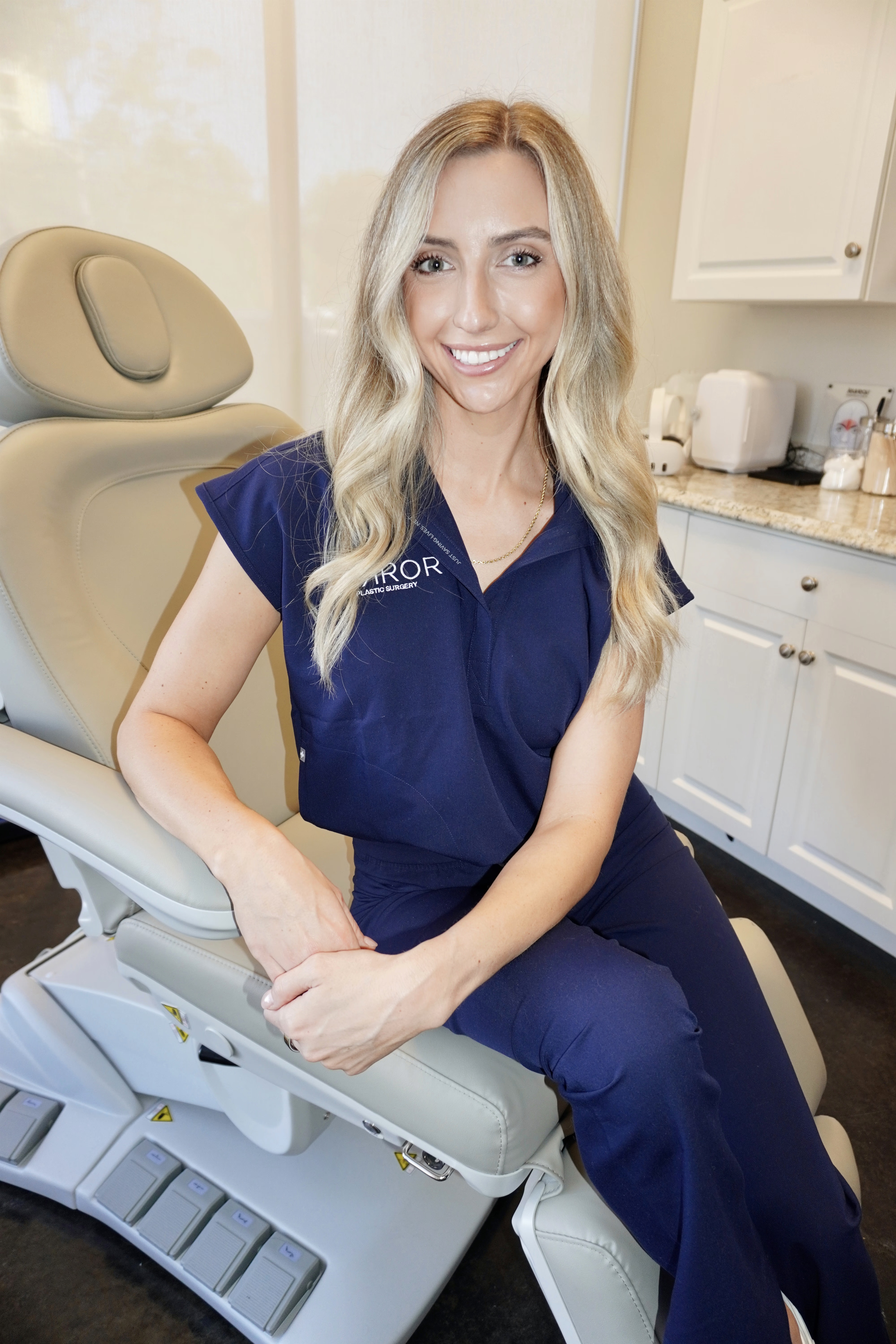
Written by: Ellie Pranckevicius, FNP-BC, Aesthetic Nurse Practitioner & Aesthetic Injector | Facial Restoration & Regenerative Injectable Specialist, Mirror Plastic Surgery
Key Takeaways for Safe Peptide Therapy
- Peptide therapy sits outside FDA regulation, so medical oversight and lab-guided protocols are essential for safety and consistent results.
- Always verify the credentials of the supervising physician or nurse practitioner and confirm they review baseline labs before prescribing treatment.
- Reputable providers source peptides from suppliers with documented batch testing for purity and accurate dosing.
- Concierge follow-up, including direct access to your provider and written post-treatment instructions, supports safe long-term peptide use.
- Schedule a personalized consultation with Mirror Plastic Surgery to receive lab-guided peptide care from board-certified providers, and book your appointment today.
Why Medical Spas, Not Day Spas, Should Handle Peptide Therapy
A medical spa blends elements of an aesthetic medical center and a day spa, with four defining characteristics: non-invasive or minimally invasive aesthetic medical treatments, oversight by a licensed physician or independent practitioner, services delivered by credentialed health care professionals, and a clinical-grade environment. A day spa, by contrast, focuses on the outer layer of the skin only and operates as a retail enterprise similar to a hair salon, with fewer ownership restrictions and no requirement for medical oversight.
The procedural boundary between the two settings is defined by tissue depth and prescription status. If a treatment penetrates beyond the outer skin layer, injects a substance, uses a Class IV laser, or requires a prescription, it belongs in a med spa rather than a day spa. Peptide therapies, administered subcutaneously or intramuscularly and compounded to patient-specific protocols, clearly fall within that medical category.
Regulatory requirements reinforce this distinction. As of 2026, 20 of 51 jurisdictions restrict med-spa ownership to physicians under CPOM rules. In Florida specifically, a licensed MD or DO must serve as medical director and supervise all medical procedures, and physician extenders such as nurse practitioners may perform certain medical procedures only under written protocols and physician supervision.
For peptide therapy specifically, medical supervision matters because protocols must account for pre-existing conditions, current medications, hormone panels, metabolic markers, and individual response variability. Without that clinical layer, dosing errors, contraindicated combinations, and unverified product quality become serious risks. Knowing why medical oversight matters sets the foundation; the next step is learning how to confirm that oversight at any provider you consider.
Step-by-Step Checklist to Vet a Medical Spa for Peptide Therapy
The following six checks apply whether you are evaluating a local St. Petersburg clinic or a remote telemedicine provider anywhere in the United States.
- Verify physician or NP oversight and board certifications. Every legitimate med spa performing medical procedures must have a named, verifiable medical director. Studies of medical spas (including a 2024 analysis of 63 Las Vegas spas) found that 61.9% lacked an on-site supervising physician, while another survey of 127 spas found 81.1% without on-site supervision; no 2022 JAAD survey reported a 25% figure. Confirm the director’s name, then cross-check their license status and disciplinary history directly on the state medical or nursing board website. At Mirror Plastic Surgery, Ellie Pranckevicius, FNP-BC, leads all peptide protocols under the oversight of Harvard-educated, Johns Hopkins-trained plastic surgeon Dr. Akash Chandawarkar, MD.
- Confirm in-house lab review and personalized protocols. A compliant peptide provider reviews baseline labs, including thyroid, liver, kidney, diabetes markers, and hormone panels, before prescribing any protocol. This lab review allows providers with deep anatomical and physiological knowledge to design individualized treatment plans instead of relying on one-size-fits-all dosing. A dedicated plastic surgery practice employs providers with a profound understanding of muscular structures, vascular systems, and skin biology, which further refines that planning. When you evaluate a practice, ask whether it orders labs if you do not have recent results, and confirm that your protocol will change based on those findings.
- Evaluate sourcing and batch testing. Because peptides are not FDA-regulated, product quality depends entirely on supplier standards. Providers must be able to name the exact product, batch number, and expiration date being used, and inability to do so signals an evasion that warrants refusing treatment. Mirror Plastic Surgery sources peptides exclusively from suppliers with documented batch testing for purity and accurate dosage.
- Assess ongoing concierge support. A single consultation without follow-up does not meet the standard for peptide therapy, which requires titration, monitoring, and protocol adjustment over time. Each peptide therapy protocol should include monitoring labs and timelines, common side effects, and steps to take if adverse effects appear. Ellie Pranckevicius is available to Mirror Plastic Surgery patients via direct text and scheduled telemedicine appointments throughout the entire treatment journey.
- Compare remote and in-person options carefully. Telehealth has expanded access to medically supervised peptide care significantly. Mirror Plastic Surgery conducts the full process, including consultation, protocol design, prescription, and shipping, both in-person at its St. Petersburg clinic and remotely across all 50 states, including Hawaii and Alaska. Confirm that any remote provider conducts a thorough intake, reviews labs, and maintains documented supervision instead of issuing standing orders without individualized assessment.
- Review post-treatment follow-up protocols. Patients who receive written post-procedure instructions often experience fewer complications than those given verbal instructions only. Ask whether the practice provides written reconstitution and self-administration instructions, video demonstrations, and a clear escalation pathway if adverse effects occur.
Peptide Stacks Offered at Mirror Plastic Surgery and Their Uses
Mirror Plastic Surgery builds custom peptide stacks based on each patient’s consultation findings and lab results. The following peptides represent the current protocol menu, with evidence-aware outcomes and individual variability noted for each.
- GHK-Cu (Copper Peptide): Primarily used for collagen and elastin production, skin rejuvenation, hair health, nail strength, and melasma management. Results vary by baseline collagen status and maintenance consistency.1
- BPC-157 (Body Protective Compound 157): A 15-amino acid peptide derived from human gastric juice that promotes tissue repair through increased VEGF and VEGFR2-mediated angiogenesis, nitric oxide modulation, and reduced local inflammation. Often used for systemic inflammation and musculoskeletal recovery.
- TB-500 (Thymosin Beta-4): Targets soft tissue inflammation and wound repair. Often combined with BPC-157 and GHK-Cu in the Glow Stack for coordinated anti-inflammatory and regenerative effects.
- GLP-3R Compounding: A newer-generation GLP receptor agonist reported to carry fewer gastrointestinal side effects than earlier GLP-1 formulations, with broader indications including insulin resistance, weight management, and cardiovascular risk factors. Individual metabolic response varies significantly.1
- NAD (Nicotinamide Adenine Dinucleotide): Targets cellular mitochondria to support energy production and cellular anti-aging. Outcomes depend on baseline mitochondrial function and lifestyle factors.1
- KPV: Targets gut microbiome inflammation, with potential applications in reducing risks associated with irritable bowel disease. Protocols require baseline GI assessment.
- Sermorelin/Ipamorelin: Growth hormone-releasing peptides that stimulate natural growth hormone production. Ipamorelin is the first growth hormone-releasing peptide shown in early studies not to significantly stimulate cortisol or ACTH secretion, which distinguishes it from earlier GHRPs. Often used for muscle retention and fitness goals.
- Selank: A nootropic peptide that acts on brain pathways similar to benzodiazepines but without the dependency component. Used for anxiety and depression management, including transitions from pharmaceutical SSRIs.
- PT-141 (Bremelanotide): Used for sexual arousal and libido enhancement in both men and women. Protocols require screening for cardiovascular contraindications.
- Kisspeptin: A fertility peptide showing promise in IVF trials for improving positive outcomes. Protocol design requires reproductive endocrinology context.
Individual variability in genetics, diet, lifestyle, and baseline health markers means outcomes differ across patients.1
Book an appointment with Ellie to review your labs and identify the peptide stack aligned to your specific health goals.
Tampa Bay Clinic Access and Nationwide Remote Care
Mirror Plastic Surgery is located at 780 4th Ave S, St. Petersburg, FL 33701, and serves the greater Tampa Bay area with in-person peptide consultations. The practice can be reached by phone or text at 727-361-6515 or by email at hello@mirrorplasticsurgery.com.
For patients outside Florida, the complete peptide therapy process is available remotely with the same comprehensive service model. This remote approach does not compromise the standard of care, and every patient receives the same in-depth intake, lab review, and ongoing provider access that in-person patients receive.
The unregulated online peptide market presents a meaningful contrast to this model. The FDA’s April 2026 warning letter to a Texas medical spa cited discrepancies between injectable products purchased from authorized manufacturers and the number documented as administered, indicating possible sourcing from unauthorized suppliers, and this risk extends to consumer-facing online peptide retailers where no such documentation exists at all. Purchasing peptides without medical supervision means no third-party batch testing, no contraindication screening, and no dosing oversight.
Essential Questions to Ask Before Starting Peptide Therapy
Use this checklist during any initial consultation with a prospective peptide provider:
- Who is the supervising physician or nurse practitioner, and can I verify their license independently?
- Will my protocol be based on lab results, or is it a standardized package?
- Which labs will you review before prescribing, and will you order them if I do not have recent results?
- Where are your peptides sourced, and can you provide batch-testing documentation?
- How will you monitor my response over time, and at what intervals?
- What are the contraindications for the peptides you are recommending given my medical history?
- How do I reach you if I experience an adverse effect between appointments?
- What written instructions will I receive for reconstitution and self-administration?
- Is remote service available, and does it include the same level of oversight as in-person care?
Frequently Asked Questions About Med Spas and Peptides
What is the difference between a day spa and a medical spa?
A day spa provides relaxation-focused, surface-level services such as facials, massage, body wraps, waxing, and manicures performed by licensed estheticians, massage therapists, and cosmetologists. These services do not penetrate beneath the outer skin layer and do not require medical oversight. A medical spa offers non-invasive or minimally invasive treatments that affect living tissue beneath the skin’s surface, including injectables, laser procedures, IV therapy, and peptide protocols, and must operate under the supervision of a licensed physician, nurse practitioner, or physician assistant. Medical spas are regulated as medical practices, not retail beauty businesses, and are subject to healthcare-specific facility, documentation, and oversight requirements.
How can I tell if a med spa is reputable?
A reputable med spa names its medical director publicly and can provide that person’s license number for independent verification on the state medical or nursing board website. It conducts a thorough intake including medical history review, discusses realistic risks and benefits before any treatment, and provides written informed consent documentation. It sources products from verified suppliers with batch-testing records and can identify the exact product, lot number, and expiration date for anything it administers. It also maintains clear post-treatment communication channels and written follow-up instructions. Practices that pressure same-day treatment, make unrealistic outcome guarantees, or cannot answer sourcing questions directly do not operate to a reputable standard.
What are the red flags to watch for at a med spa?
The most significant red flags include the absence of a named, verifiable medical director, inability or unwillingness to disclose product sourcing and batch-testing documentation, pressure to begin treatment during the initial consultation without a full medical history review, and claims of guaranteed outcomes. Additional warning signs include deep discounts that fall below the wholesale cost of legitimate products, no written post-treatment instructions, and no clear escalation pathway if complications arise. A December 2025 inspection of 15 medical spas in New York City found that 100% offered medical procedures without required licensure and oversight, which illustrates how widespread non-compliance remains in the industry.
Do I tip at a medical spa for peptide therapy?
Tipping norms at medical spas depend on the type of service and the credential of the provider delivering it. Services performed by licensed estheticians, such as facials, dermaplaning, or HydraFacials, follow standard spa tipping conventions of 15–20% of the service cost. Medical procedures performed by physicians, nurse practitioners, or physician assistants, including peptide consultations, injections, and IV therapy, fall under clinical care rather than hospitality services, and tipping is neither expected nor appropriate in those settings. A detailed online review naming your provider or a personal referral offers a more meaningful and professionally impactful form of recognition for clinical care.
What happens if I stop taking peptides?
Stopping peptide therapy will cause the benefits to diminish over time, similar to stopping any consistent health regimen.1 For example, if peptides were managing systemic inflammation, that inflammation is likely to return to its prior state once the protocol ends.1 For anti-aging applications such as collagen stimulation or mitochondrial support, the cellular benefits will gradually decline without continued use.1 Ellie Pranckevicius designs maintenance protocols for Mirror Plastic Surgery patients from the outset so that the transition from active treatment to long-term maintenance feels planned rather than reactive. The appropriate maintenance frequency and dosing depend on individual response, which the team assesses through ongoing lab review and direct patient communication.
Conclusion: Prioritize Safety-First Peptide Care
The six-step vetting process outlined above, which includes verifying oversight credentials, confirming lab-guided protocols, evaluating sourcing, assessing concierge support, comparing remote and in-person options, and reviewing post-treatment follow-up, provides a reliable framework for separating legitimate medical supervision from high-volume or unsupervised alternatives. The U.S. medical spa industry exceeds $17 billion in annual revenue with 10,488 locations as of 2023, so the volume of providers is not the problem. The quality and depth of clinical oversight determine your safety.
Mirror Plastic Surgery’s concierge model with Ellie Pranckevicius addresses every point on that checklist: board-certified NP oversight backed by the same physician supervision detailed earlier, in-depth lab review before any protocol begins, batch-tested sourcing from verified suppliers, direct 24/7 text access throughout treatment, and full remote availability across all 50 states for patients who cannot visit the St. Petersburg clinic in person.
Book an appointment with Ellie to start a personalized, lab-guided peptide consultation, whether you are in Tampa Bay or anywhere else in the United States.
1 Results may vary from person to person. Editorial content, before and after images, and patient testimonials do not constitute a guarantee of specific results.
Peptide therapy is intended for wellness and optimization purposes and is not prescribed to diagnose, treat, cure, or prevent disease unless specifically stated. Many peptides are not FDA-approved and may be used off-label. Some have limited long-term safety data, with a potential for unknown risks, complications, or desensitization with prolonged use.