
Written by: Ellie Pranckevicius, FNP-BC, Aesthetic Nurse Practitioner & Aesthetic Injector | Facial Restoration & Regenerative Injectable Specialist, Mirror Plastic Surgery
Key Takeaways for Semaglutide Microdosing
- Semaglutide microdosing uses weekly doses below the FDA-approved 0.25 mg threshold to support modest metabolic changes with fewer gastrointestinal side effects.
- Clinical data show that low-dose semaglutide can produce modest weight loss, reduced waist circumference, and noticeable appetite suppression even at sub-therapeutic levels.1
- GLP-1 receptor activity may influence mood and inflammation, so microdosing can sometimes support anxiety-related metabolic concerns.1
- Compounded semaglutide requires careful lab screening and ongoing medical oversight to reduce risks from unsupervised or unregulated sourcing.
- Patients who want a supervised, individualized microdosing protocol can schedule a personalized microdosing consultation at Mirror Plastic Surgery with Ellie Pranckevicius, FNP-BC.
Weight Loss Expectations at 0.25 mg of Semaglutide
The 0.25 mg weekly dose is the FDA-approved starting point for semaglutide titration, not a maintenance dose. At this level and below, weight outcomes remain modest. Meaningful weight loss with semaglutide at FDA-approved doses typically starts around 2.4 mg weekly; at very low doses, weight loss is usually about 5% to 6%1. A phase 2 dose-ranging trial found that 0.05 mg/day of semaglutide produced mean 6.0% weight loss at 52 weeks versus 2.3% for placebo1. This represents a clinically meaningful difference for people seeking mild, not maximal, weight management.
For busy adults managing mild weight concerns alongside demanding schedules, even a 5% to 7% reduction can improve metabolic markers and daily quality of life when pursued under proper supervision.1 Achieving these outcomes safely requires clinical expertise that goes beyond standard dosing protocols. This is where Ellie Pranckevicius, FNP-BC, plays a central role at Mirror Plastic Surgery.
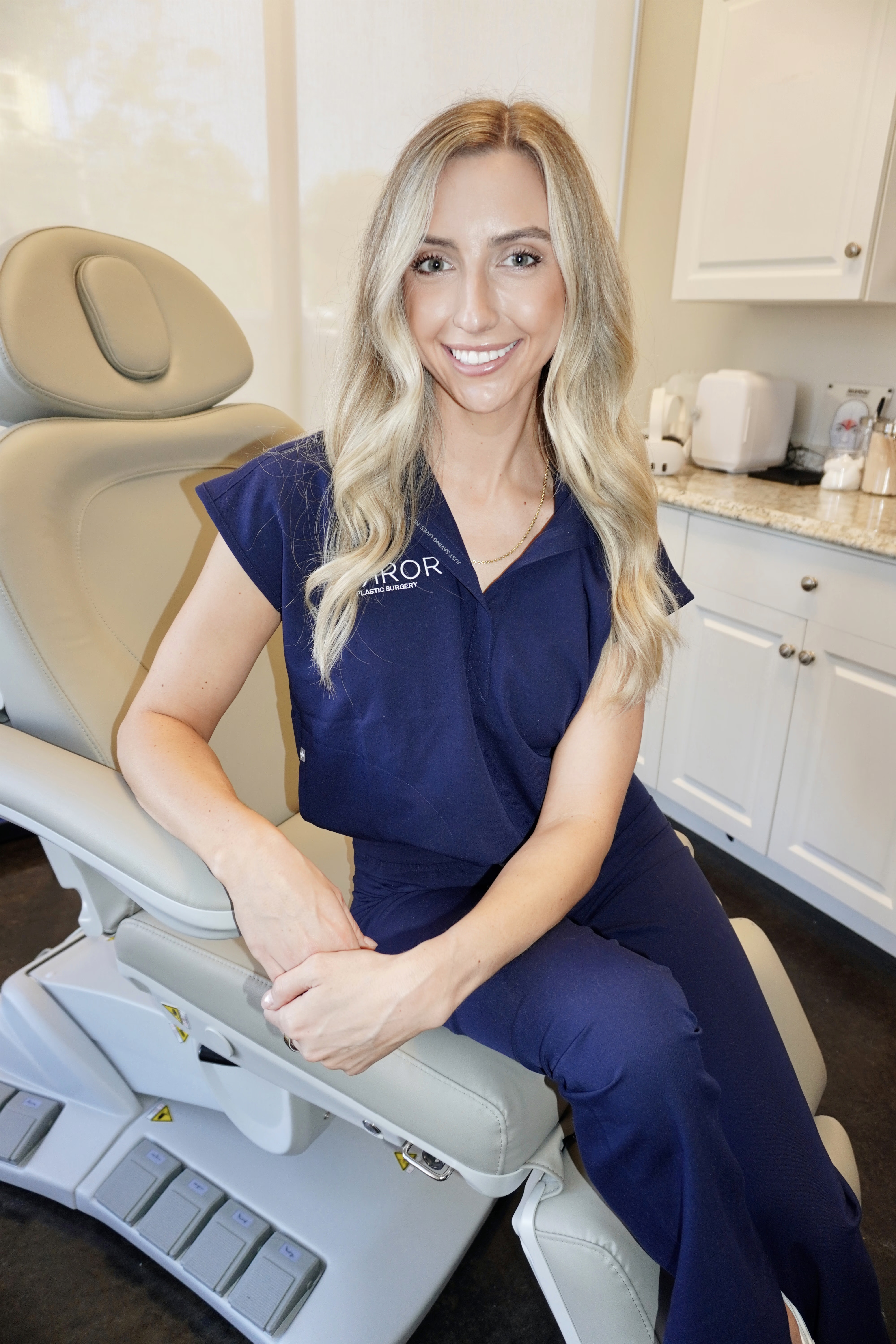
Ellie is a board-certified Family Nurse Practitioner with four years of Neuroscience ICU experience at Tampa General Hospital, which gives her a deep understanding of physiology, metabolic health, and recovery. She earned her Bachelor’s in Health Science from Boston University on the premedical track and completed both her Bachelor’s and Master’s in Nursing at the University of South Florida. Before becoming a nurse practitioner, Ellie worked at a high-end medical spa in Boston, developing expertise in skin physiology and aesthetic assessment that she now blends with advanced clinical science. Every semaglutide protocol at Mirror Plastic Surgery starts with an in-depth consultation that may include thyroid, liver, kidney, diabetes marker, and hormone panels. This approach allows each low-dose plan to match your individual physiology instead of following a generic schedule.
Schedule your comprehensive lab review and protocol consultation with Ellie to see whether supervised low-dose semaglutide aligns with your weight management goals.
How Semaglutide May Support Anxiety and Mood
GLP-1 receptors appear not only in pancreatic tissue but also in brain regions involved in mood regulation and stress response. A 2026 network meta-analysis in Translational Psychiatry found that once-weekly subcutaneous semaglutide produced substantial metabolic improvements in psychiatric populations1. A separate systematic review and meta-analysis of 80 randomized clinical trials involving 107,860 participants found no association between GLP-1 receptor agonist treatment and serious psychiatric adverse effects, and reported an improvement in mental-health-related quality of life1. These findings suggest that GLP-1 therapies can support overall mental well-being while addressing metabolic issues.
The connection between GLP-1 activity and anxiety relief likely involves several mechanisms. Reduced systemic inflammation, improved insulin sensitivity, and direct central nervous system receptor engagement may all play a role. At Mirror Plastic Surgery, Ellie addresses this overlap through detailed concierge lab review. She evaluates inflammatory markers, hormone panels, and metabolic indicators together, then considers whether semaglutide, a nootropic peptide such as Selank, or a combination protocol best fits the individual profile. This stacked, data-driven strategy sets her approach apart from high-volume or self-directed programs.
What to Expect When You Microdose Semaglutide
At sub-threshold doses, semaglutide’s pharmacological effects become milder but do not disappear. Clinical trial data on semaglutide show that lower doses during the titration phase still produce statistically significant reductions in energy intake and appetite. Metabolically, patients may notice mild appetite suppression, modest reductions in fasting glucose, and early improvements in waist circumference.1 These changes often occur without the pronounced nausea seen at higher doses.
From an inflammatory standpoint, GLP-1 receptor agonism has been linked to reductions in circulating inflammatory cytokines, although dedicated microdose trials on this outcome remain limited.1 No published trials yet exist specifically for microdoses of 0.1–0.5 mg, and no published clinical trials have specifically studied GLP-1 microdosing; current evidence comes from clinical observation and patient-reported outcomes. This evidence gap makes ongoing telemedicine support and lab monitoring essential parts of a responsible protocol, not optional extras. Ellie provides this support through direct text access and scheduled telemedicine appointments, so patients can adjust doses in real time without visiting the office for every check-in.
Comparing GLP-3R Compounding and Semaglutide for Microdosing
Semaglutide acts as a GLP-1 receptor agonist. GLP-3R compounding represents a newer generation of peptide formulations that work on related but distinct receptor pathways. At Mirror Plastic Surgery, GLP-3R is available as an alternative for patients who experience intolerable gastrointestinal side effects on semaglutide or who present with broader indications beyond weight management alone.
Tirzepatide’s dual GIP/GLP-1 agonism may partially reduce nausea and vomiting by modulating area postrema signaling, which contributes to a more favorable GI profile relative to pure GLP-1 agonists despite greater weight-loss efficacy. This pattern supports the rationale for next-generation receptor targeting such as GLP-3R. Newer GLP-3R formulations are reported to carry a lower risk of muscle wasting than older GLP-1 agents and to support broader indications, including insulin resistance, cardiovascular risk factor management, and weight management.1 A 2026 analysis of 19 RCTs involving 13,117 overweight participants concluded that there may not be a single best GLP-1 therapy for everyone, and that the optimal choice depends on individual goals and needs.
For patients who are sensitive to standard semaglutide side effects, or who have not reached their goals at lower doses, GLP-3R compounding under Ellie’s supervision can offer a potentially gentler profile with individualized titration. The decision between semaglutide microdosing and GLP-3R occurs collaboratively and relies on lab results and a detailed medical history review, not a one-size-fits-all algorithm.
Safe Semaglutide Microdosing Under Medical Supervision
No one should use GLP-1 medications without medical oversight, regardless of dose. The risks of unsupervised compounded semaglutide are well documented. The FDA has received reports of adverse events linked to compounded semaglutide, and between 2017 and 2022, 79.9% of single-substance GLP-1RA cases reported to US poison centers were attributable to therapeutic errors.
Safe microdosing under supervision at Mirror Plastic Surgery follows a structured pathway:
- In-depth consultation: A 30–60 minute session with Ellie covering full medical history, current medications, and health goals.
- Comprehensive lab review: Panels covering thyroid, liver, kidney, diabetes markers, and hormone levels are reviewed or ordered before any protocol begins.
- Personalized protocol design: Dose selection and titration pacing are tailored to lab findings, BMI, comorbidities, and side-effect history rather than a generic schedule.
- Quality-assured sourcing: Peptides come from reputable providers with rigorous batch testing, which contrasts sharply with unverified online suppliers.
- Ongoing concierge support: Ellie remains available via direct text for questions, side-effect management, and refill requests, with scheduled telemedicine appointments for formal reassessment.
- Remote access: The full process, including consultation, prescription, and shipping, is available to patients across the United States, not only those in the Tampa/St. Petersburg area.
Regular medical supervision with progress checks and appropriate laboratory testing is essential during semaglutide treatment. The six-step protocol outlined above, from initial lab review through ongoing concierge support, ensures that every patient receives this level of oversight throughout the microdosing journey, not only at the first prescription.
Frequently Asked Questions
Is semaglutide microdosing FDA-approved?
No. Semaglutide microdosing is an off-label practice with no dedicated FDA-approved protocol. Approved pens cannot deliver doses below the 0.25 mg starting threshold mentioned earlier, which is why microdosing requires compounded semaglutide from licensed pharmacies. These compounded products do not undergo the same FDA review for safety, effectiveness, or quality as brand-name formulations. At Mirror Plastic Surgery, Ellie sources compounded peptides from reputable providers with rigorous batch testing and performs thorough lab screening before starting any protocol. These steps meaningfully reduce risks associated with the unregulated compounding market.
What happens if I stop microdosing semaglutide?
When semaglutide is discontinued, its effects fade over time. The drug has an elimination half-life of about one week, so physiological effects taper within several weeks of stopping. Any appetite suppression, modest weight loss, or metabolic improvements achieved during therapy are likely to reverse without a maintenance strategy. Mirror Plastic Surgery plans for this from the beginning. Ellie works with each patient to decide whether a maintenance dose, a transition to another peptide, or a structured taper best supports long-term goals after initial results.
Will everyone see the same results from semaglutide microdosing?
No. Results vary widely based on genetics, baseline metabolic health, diet, lifestyle, and the specific protocol. Roughly 10% to 15% of patients lose little or no weight on GLP-1 drugs even at maximum doses, and there is no reliable way to predict response beforehand. At the microdose level, variability becomes even greater. This variability explains why Mirror Plastic Surgery’s approach starts with comprehensive lab analysis instead of a standardized schedule. Ellie builds each protocol around the patient’s unique physiology rather than population averages.
What are the risks of sourcing semaglutide without medical supervision?
The risks are substantial. Poison control centers across the United States have seen a more than 15-fold increase in calls related to injected weight loss drugs since 2019, with many relating to the dosing errors discussed earlier. These errors are easier to make with compounded products that lack standardized delivery mechanisms. Some compounded products use salt forms of semaglutide, such as semaglutide sodium or semaglutide acetate, which are different active ingredients from those in FDA-approved drugs and lack any lawful basis for use in compounding. Without a clinician reviewing your medical history, current medications, and lab results, there is no safeguard against contraindications such as a history of medullary thyroid carcinoma, pancreatitis, or gastroparesis, all of which preclude safe semaglutide use.
Who is a good candidate for supervised semaglutide microdosing at Mirror Plastic Surgery?
Supervised microdosing may suit adults with mild weight management concerns, documented sensitivity to standard GLP-1 doses, a BMI under 27 seeking modest metabolic improvement, or those restarting therapy after a lapse of more than eight weeks. It may also help individuals who experienced intolerable gastrointestinal side effects at 0.25 mg and want a slower acclimation pathway. Ellie determines candidacy through her in-depth consultation and lab review, not through self-assessment. Patients with a personal or family history of medullary thyroid carcinoma, multiple endocrine neoplasia type 2, type 1 diabetes, or severe gastroparesis are not appropriate candidates for semaglutide therapy of any kind.
Conclusion: Personalized Microdosing Requires Expert Guidance
Semaglutide microdosing benefits, including modest weight reduction, appetite modulation, reduced GI side-effect burden, and potential mood and inflammation support, are supported by a growing body of observational and dose-response data.1 The evidence base for dedicated microdose trials remains limited, and no FDA-approved protocol exists for doses below 0.25 mg weekly. These realities make medical supervision a requirement rather than a preference.
Mirror Plastic Surgery offers a concierge pathway for people seeking a lower-side-effect approach to mild weight management, inflammation reduction, or anxiety support. Ellie Pranckevicius’s ICU-trained clinical background, combined with in-depth lab review, quality-assured peptide sourcing, and ongoing direct access, provides the individualized oversight that responsible low-dose therapy demands. GLP-3R compounding is also available for patients who need a gentler receptor profile or broader metabolic support, as described earlier.
Every protocol at Mirror Plastic Surgery begins with a conversation, not a prescription.
1 Results may vary from person to person. Editorial content, before and after images, and patient testimonials do not constitute a guarantee of specific results.
Peptide therapy is intended for wellness and optimization purposes and is not prescribed to diagnose, treat, cure, or prevent disease unless specifically stated. Many peptides are not FDA-approved and may be used off-label. Some have limited long-term safety data, with a potential for unknown risks, complications, or desensitization with prolonged use.