
Written by: Ellie Pranckevicius, FNP-BC, Aesthetic Nurse Practitioner & Aesthetic Injector | Facial Restoration & Regenerative Injectable Specialist, Mirror Plastic Surgery
Key Takeaways for Florida Laser Hair Removal Patients
- Laser hair removal carries documented risks including pigmentary changes (up to 19%), paradoxical hypertrichosis (up to 16% on the face), and burns, particularly for Fitzpatrick skin types IV–VI and patients with hormonal conditions like PCOS.1
- High-risk patient profiles include those with darker skin tones, recent sun exposure, keloid history, photosensitizing medications, or unmanaged hormonal disorders that significantly reduce treatment effectiveness.
- Florida’s year-round UV exposure and diverse Fitzpatrick skin distribution amplify complication risks, so strict sun avoidance and proper device selection, such as Nd:YAG for darker tones, become essential.
- Patient regret is common, with an 83% regret rate in a 2026 survey, and many patients cited insufficient pre-treatment education, overstated permanence claims, and inadequate assessment of individual risk factors.
- Patients considering laser hair removal should schedule a thorough consultation at Mirror Plastic Surgery to receive an evidence-based evaluation before committing to treatment.
Four Highest-Risk Patient Profiles for Laser Hair Removal
Four patient groups face a disproportionate share of documented complications. These include individuals with Fitzpatrick skin types IV–VI, patients with active or unmanaged hormonal disorders such as PCOS, anyone with a personal history of keloids or active skin conditions, and patients who have had recent sun exposure or are using photosensitizing medications.
Common Side Effects and Who Experiences Them Most
Understanding how these risk factors translate into specific complications starts with the documented side-effect profile. The table below summarizes frequently reported, typically transient side effects with incidence ranges drawn from peer-reviewed literature and highlights which of the four high-risk groups face elevated rates for each complication.
| Side Effect | Reported Incidence / Notes | Elevated Risk Groups |
|---|---|---|
| Pigmentary changes (hyper- or hypopigmentation) | Up to 19% with shorter-wavelength devices, drops to 2–3% with Nd:YAG | Fitzpatrick IV–VI, recently tanned skin of any type |
| Redness, swelling, and follicular edema | Common, typically resolving within hours to days | Active eczema, psoriasis, or dermatitis raises risk of delayed healing |
| Burns or blistering | Risk increases sharply with recent sun exposure, tanned skin, or photosensitizing medications | Fitzpatrick IV–VI, patients on isotretinoin, tetracyclines, or immunosuppressants |
| Paradoxical hypertrichosis (increased hair growth) | 0.6–10% depending on area, technology, and skin type, pooled prevalence about 3% | Facial or neck treatment zones, Fitzpatrick III–IV, PCOS, fine or vellus hair |
Severe or Long-Term Complications You Should Know About
Less common but clinically significant complications appear in the table below and deserve careful attention during consultation.
| Complication | Reported Incidence / Notes | Key Risk Factors |
|---|---|---|
| Paradoxical hypertrichosis, facial | A 2025 prospective study of facial alexandrite laser found a 16.2% overall PH rate, with significant association to irregular menstrual cycles (33.3% vs. 12.6%) | PCOS, menstrual irregularities, Fitzpatrick III–IV, family history of hirsutism |
| Persistent hypopigmentation | Documented in Fitzpatrick IV patients after diode laser, and one published case resolved at one year with sun protection | Darker skin types, inadequate cooling, wrong device selection |
| Scarring or hypertrophic scarring | Rare, with risk elevated in individuals prone to keloids or hypertrophic scars if skin damage occurs | Keloid history, burns from incorrect settings |
| Treatment failure in hormonal conditions | Women with PCOS averaged only about 31% hair count reduction after six sessions of alexandrite laser1 | Unmanaged PCOS, NCAH, Cushing syndrome, idiopathic hirsutism |
The “treatment failure” row above deserves special emphasis because the underlying mechanism is often misunderstood. Underlying androgen excess can convert remaining vellus follicles into terminal pigmented hairs even after laser destruction of other follicles, according to Endocrine Society guidance. This mechanism makes unmanaged hormonal disorders a primary contraindication rather than a minor footnote.
What Patients Commonly Regret After Laser Hair Removal
A 2026 survey of 217 women who had undergone medical laser hair removal found that 83% reported some form of regret, and 40% attributed it primarily to insufficient pre-treatment knowledge. Another 41% had selected their clinic based on price, which often correlates with rushed assessments. Several recurring themes appear in recent patient accounts and case reports.
- Permanence was overstated. Laser hair removal may achieve substantial but variable permanent hair reduction depending on the operator, system used, and individual patient factors. Systematic reviews have reported varying long-term reduction rates across different lasers, with facial hair often demonstrating lower reduction percentages. This variability directly explains the next two regret patterns.
- Session counts exceeded expectations. Because reduction rates vary by individual biology and device choice, many patients require more than the commonly marketed six-to-eight session benchmark to approach their desired outcome.
- Maintenance is ongoing. Even after completing the initial series, maintenance treatments are often required as some follicles reactivate over time due to hormonal fluctuations, so the process rarely feels completely finished.
- Technology differences were never explained. Many patients proceed with laser hair removal without understanding that device type, such as Nd:YAG versus Alexandrite versus IPL, directly determines both safety and efficacy for their skin type, which helps explain why the previous three issues occur.
Provider and Technology Choices That Change Your Risk
Many of the regrets patients report, such as technology differences never explained, burns from incorrect settings, and results that fell short of promises, stem from provider choices rather than patient biology. Device selection and operator training act as independent determinants of outcome, separate from your underlying skin and hair characteristics.
- Device wavelength. Nd:YAG is safer for Fitzpatrick IV–VI skin, while Alexandrite lasers carry higher post-inflammatory hyperpigmentation risk for darker tones. This wavelength choice sets the baseline for both safety and effectiveness.
- Fluence calibration. Practitioners who lower fluence excessively to avoid epidermal burns in darker skin types leave follicles under-treated and stimulated rather than destroyed, which directly causes paradoxical hypertrichosis.
- IPL versus laser. IPL devices carry higher burn risk on darker skin because they emit a wide bandwidth of light that heats surrounding tissue, unlike targeted lasers. This broader spectrum explains why IPL is often a poor match for Fitzpatrick IV–VI patients.
- Operator training. Incorrect laser settings, inadequate operator training, or failure to assess skin type can cause burns, blistering, post-inflammatory hyperpigmentation, hypopigmentation, and permanent scarring. These complications usually reflect human error rather than unavoidable risk.
How Florida’s Climate and Population Affect Laser Hair Removal
Florida’s subtropical climate introduces constraints that are largely absent from national guidelines written for temperate regions. Patients in the state face unique challenges related to sun exposure, skin cancer risk, and diverse skin tones.
- Year-round UV exposure. Laser hair removal is contraindicated on recently tanned or sunburned skin because elevated melanin increases the likelihood of burns and blisters, a restriction that becomes difficult to maintain year-round in Florida without deliberate sun avoidance protocols.
- Post-treatment sun restrictions. European Society for Laser Dermatology guidelines flag tanned patients of any skin type as higher risk for pigmentary changes and recommend strict sun avoidance and sunscreen before and after treatment. Daily sun protection can help reduce the risk of complications including paradoxical hypertrichosis.
- Skin-cancer history. Individuals with suspicious skin lesions or a history of skin cancer in the treatment area require careful medical evaluation before laser hair removal. Florida’s high melanoma incidence makes this evaluation non-negotiable.
- Diverse Fitzpatrick distribution. Tampa Bay’s population includes a high proportion of Fitzpatrick III–VI skin types, the groups most vulnerable to pigmentary complications and paradoxical hypertrichosis when device selection or fluence is mismatched.
Decision Checklist: Are You a High-Risk Candidate?
Given the documented risks, Florida-specific constraints, and high regret rates when risk factors go unassessed, the logical next step is self-evaluation. Review the following factors before scheduling any laser hair removal treatment, because the presence of one or more signals the need for a thorough medical assessment rather than a walk-in consultation.
- Recent sun exposure, active tan, or sunburn within the past four weeks
- Fitzpatrick skin type IV, V, or VI
- Diagnosed or suspected PCOS, NCAH, Cushing syndrome, or idiopathic hirsutism
- Irregular menstrual cycles or family history of excessive hair growth
- Personal or family history of keloids or hypertrophic scarring
- Current use of isotretinoin, tetracycline antibiotics, fluoroquinolones, immunosuppressants, or blood thinners above low-dose aspirin
- Active eczema, psoriasis, dermatitis, open wounds, or skin infection in the treatment area
- History of skin cancer or suspicious lesions in the treatment area
- Expectation of complete, permanent hair removal rather than reduction
- Treatment target involving fine or vellus (light, unpigmented) facial hair
Why Thorough Assessment at Mirror Plastic Surgery Matters
High-volume laser clinics typically conduct brief intake screenings focused on basic contraindication checklists rather than individualized risk stratification. Dermatologists report seeing increasing numbers of patients with burns, pigmentation changes, and scarring after procedures performed at unregulated clinics where many individuals receive no risk disclosure or proper pre-treatment skin assessment.
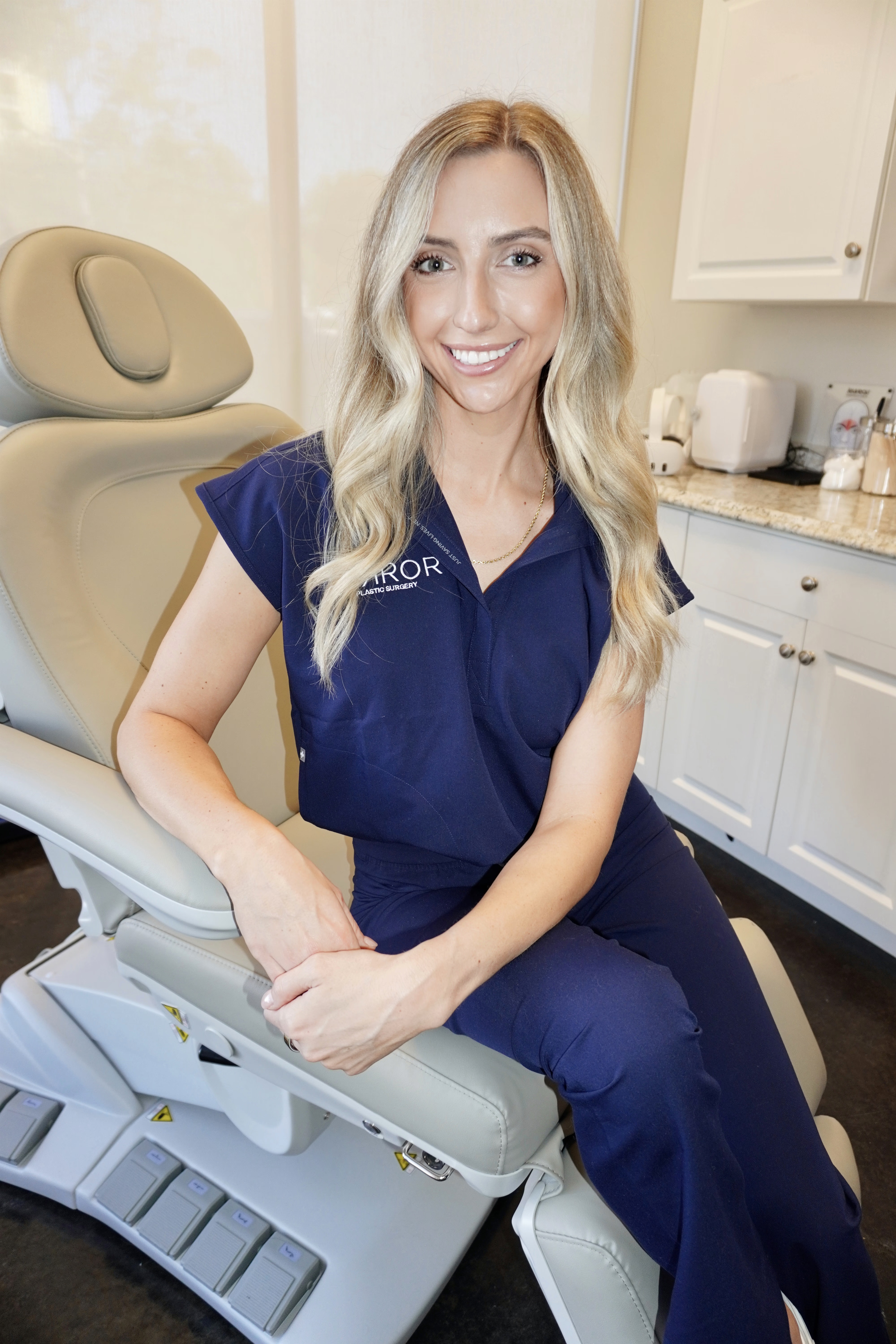
Mirror Plastic Surgery operates on a concierge medicine model that reverses this dynamic. Ellie Pranckevicius, FNP-BC, conducts up to a 60-minute top-to-bottom assessment before any treatment recommendation is made. Her dual background, including 600 hours of esthetics training combined with a Master’s in Nursing from the University of South Florida and four years in the Neuroscience ICU at Tampa General Hospital, means she evaluates skin physiology, hormonal history, medication interactions, and Florida sun exposure as an integrated clinical picture, not a checklist. The practice is supplier-neutral, so device and product recommendations are driven by evidence and individual anatomy, not commission or package quotas.
This approach directly addresses the documented sources of patient regret: technology not explained, permanence overstated, hormonal contraindications missed, and Fitzpatrick-appropriate devices not selected. The Canadian Dermatology Association states that laser hair removal and IPL procedures should only be performed after consultation with a dermatologist or under dermatologist supervision, a standard that high-volume mills rarely meet and that Mirror Plastic Surgery’s clinical structure is built to exceed.
Frequently Asked Questions
What is paradoxical hypertrichosis and how likely is it to happen to me?
Paradoxical hypertrichosis is a documented complication in which laser energy stimulates rather than destroys hair follicles, converting fine vellus hairs into thicker, darker terminal hairs.1 It occurs most commonly on the face, neck, and jawline of female patients. The overall pooled prevalence across large patient populations is approximately 3%, but the risk rises substantially in specific groups. The 2025 facial alexandrite study mentioned earlier showed rates reaching 16.2%, with the highest risk, 33.3%, among patients with irregular menstrual cycles.1 Fitzpatrick skin types III and IV, irregular menstrual cycles, family history of excessive hair growth, and treatment of fine or unpigmented hair are all independent risk factors. Daily sunscreen use can help reduce the risk, and a thorough pre-treatment assessment that identifies these risk factors remains the primary safeguard.
Is laser hair removal truly permanent?
Laser hair removal is cleared by the FDA for permanent hair reduction, not permanent hair removal. The FDA defines permanent reduction as a stable decrease in regrowing hairs measured at 6, 9, and 12 months after completing a full treatment course. In practice, clinical studies show varying rates of long-term hair reduction, so some follicles remain active or reactivate over time due to hormonal changes, and maintenance treatments are often required.
Facial areas such as the upper lip usually require more sessions than body areas because of higher follicle density and stronger hormonal influence, and some patients see around 60% residual hair after eight sessions.1 Electrolysis remains the only method recognized by the FDA as capable of permanent hair removal, meaning the treated follicle never produces hair again. Patients with hormonal conditions such as PCOS should be counseled that results may be substantially below the general population benchmark, and the 31% reduction rate documented in the complications table is far below the typical outcome for hormonally normal patients.
Which skin types are safest for laser hair removal, and which devices are recommended?
Laser hair removal works on the principle of selective photothermolysis, where the laser targets melanin in the hair follicle. This mechanism makes the procedure most straightforward on Fitzpatrick types I–III, where there is high contrast between dark hair and light skin. For Fitzpatrick types IV–VI, the risk of pigmentary complications rises because the laser cannot as cleanly distinguish follicle melanin from surrounding skin melanin.
The Nd:YAG laser, at 1064 nm, is the most widely recommended device for medium-to-dark skin tones because its longer wavelength penetrates deeper and is less absorbed by epidermal melanin, which reduces burn and hyperpigmentation risk to the 2–3% range noted in the complications table above. Alexandrite lasers carry a significantly higher association with paradoxical hypertrichosis and post-inflammatory hyperpigmentation in darker skin types. IPL devices are generally considered higher risk for Fitzpatrick IV–VI patients due to their broad light bandwidth. Device selection must be matched to an individual’s Fitzpatrick classification, and that determination requires a proper clinical assessment rather than a quick visual estimate at intake.
What medications or conditions require a waiting period before laser hair removal?
Several medications and medical states require a mandatory waiting period or full contraindication review before laser hair removal is safe. While the isotretinoin package insert advises a 6-month waiting period before cosmetic procedures because of scarring concerns, recent ASDS consensus recommendations and systematic reviews find no evidence of increased risk and do not require this delay for laser procedures. Tetracycline and fluoroquinolone antibiotics are commonly advised to have a one- to two-week clearance period before laser hair removal because they increase photosensitivity.
Immunosuppressants and other medications that may affect healing or photosensitivity require individualized assessment. Blood thinners should generally not be stopped before laser hair removal, as the low bleeding risk does not justify the thrombosis risk. Tricyclic antidepressants and certain antipsychotics can increase skin sensitivity and typically require a two-week break. Pregnancy is a general contraindication because of unpredictable hormonal effects on skin pigmentation and sensitivity. Active skin infections, open wounds, eczema or psoriasis flares, and recent sunburn are all reasons to postpone treatment. A history of skin cancer or suspicious lesions in the treatment area requires medical evaluation before proceeding.
How is Mirror Plastic Surgery’s approach different from a standard laser hair removal clinic?
Most laser hair removal clinics operate on a high-volume model that involves brief intake, package sale, and treatment on the same visit. Mirror Plastic Surgery’s concierge medicine model allocates up to 60 minutes for an initial assessment before any treatment is recommended. Ellie Pranckevicius, FNP-BC, reviews hormonal history, current medications, Fitzpatrick skin type, sun exposure patterns, keloid history, and realistic outcome expectations as part of a structured top-to-bottom evaluation.
The practice is supplier-neutral, so no device or product is recommended based on commission or inventory. Dr. Akash Chandawarkar, who is Harvard-educated, Johns Hopkins-trained, and fellowship-trained in aesthetic surgery, provides the surgical oversight framework that governs the entire practice’s safety-first philosophy. For patients in the St. Petersburg and Tampa Bay area who fall into high-risk categories such as Fitzpatrick III–VI, hormonal conditions, or complex medication histories, this level of pre-treatment diligence functions as the standard of care that current evidence supports.
Conclusion: Making an Informed Laser Hair Removal Decision in Florida
Laser hair removal is a widely performed procedure with a generally acceptable safety profile when patient selection, device choice, and operator training are properly matched. Evidence from 2023–2026 shows that complications are not rare edge cases, but predictable outcomes of identifiable risk factors that high-volume clinics often under-assess. Paradoxical hypertrichosis affects up to 16% of facial laser patients in prospective studies, and pigmentary changes reach 19% with mismatched devices. The high regret rate documented earlier, 83% in a 2026 survey, was rooted primarily in insufficient pre-treatment information.
Florida’s year-round UV environment and diverse patient population amplify each of these risks. The practical response is not to avoid the procedure categorically, but to insist on thorough, individualized assessment that makes a truly informed decision possible.
Disclaimer: Results may vary from person to person. Editorial content, before and after images, and patient testimonials do not constitute a guarantee of specific results.
1 Results may vary from person to person. Editorial content, before and after images, and patient testimonials do not constitute a guarantee of specific results.