
Written by: Dr. Akash Chandawarkar, Board Certified Plastic Surgeon, Mirror Plastic Surgery
Key Takeaways
- Buccal fat removal under local anesthesia is a 30–45 minute outpatient procedure with no external scars and same-day discharge.
- Local anesthesia limits whole-body stress, which means less swelling, faster comfort, and a quicker return to normal activities than general anesthesia.1
- Swelling peaks at 48–72 hours, most patients resume desk work within about a week, and final cheek contour appears between months 3 and 6.1
- Strictly following restrictions such as avoiding straws, smoking, strenuous exercise, and strong sun exposure supports smooth healing and natural-looking results.
- Choosing a board-certified facial specialist at Mirror Plastic Surgery provides conservative technique, accredited facilities, and concierge-level aftercare for a safe, refined outcome.
How Local Anesthesia Shapes Swelling and Comfort
General anesthesia creates whole-body stress through airway instrumentation, immobility, and systemic drug metabolism, which amplifies inflammation. Local anesthesia keeps the numbing effect focused on the surgical site, so the overall inflammatory burden stays lower. Patients avoid post-anesthesia grogginess, nausea, and fluid shifts from general anesthesia, which supports a faster return to baseline comfort.
This reduced inflammatory load matters because of the delicate anatomy involved. The buccal fat pad lies close to branches of the facial nerve and the parotid salivary duct, so measured, conservative removal helps reduce the risk of nerve or duct injury that could affect recovery. Because the incisions sit inside the mouth, recovery centers on intraoral healing and swelling control rather than external scar care.
Days 1–7: Your First Week After Surgery
This timeline outlines what most awake buccal fat removal patients experience during the first week. Some variation is normal.
- Day 1 (Surgery Day): Apply cold compresses to the cheeks for 10–15 minutes several times, rest with your head elevated, and follow a liquid or soft diet while avoiding straws. Mild soreness and tightness inside the cheeks are expected. A companion should drive you home.
- Day 2: Cool compresses on the cheeks work best during the first 48 hours. Continue salt-water or antiseptic mouthwash rinses after every meal. Swelling becomes more noticeable.
- Day 3: Swelling reaches its peak and then starts to ease. The cheeks may look fuller than before surgery, which is expected and temporary. Keep your head elevated during sleep.
- Day 4: Peak swelling levels off and begins a slow decline. Swelling remains most noticeable through days 3 to 5, then gradually improves over the first two weeks. Pain is usually mild and manageable with over-the-counter medication.
- Day 5: Pain is usually minimal by days 5 and 6. Soft foods such as yogurt, mashed potatoes, and smoothies remain the standard. Light walking around the home supports circulation.
- Day 6: Swelling has often decreased by roughly one-third from its peak. Talking and eating feel easier as tension inside the cheeks lessens.
- Day 7: By the end of week 1, tenderness fades and dissolvable stitches begin to soften, so talking and eating feel more natural. Light walking is fine, but workouts must still be avoided. Many patients with desk-based jobs feel ready to return to work.
Talking Comfortably Again After Buccal Fat Removal
Intraoral swelling and mild cheek tightness can make speech feel awkward during the first few days. Most patients notice that speaking feels strained or slightly muffled during days 1–3, when swelling is at its peak. By days 4–7, swelling has decreased by about 30–40 percent from peak and pain is usually minimal, so conversation feels easier. The majority of patients report normal or near-normal speech by the end of the first week.
Practical tips for the first week help protect your incisions. Speak in shorter sentences to limit jaw movement, which reduces stretching of the cheek tissue. This reduced motion protects the healing incisions inside the mouth. For the same reason, avoid wide yawning or exaggerated facial expressions such as loud laughing during the first week after buccal fat removal.
Activities and Habits to Avoid After Surgery
What you avoid after buccal fat removal can matter as much as what you do. The restrictions below protect the incisions, control swelling, and support a smooth contour.
- Strenuous exercise and heavy lifting: Avoid strenuous exercise and contact sports for a minimum of 2 weeks after surgery.
- Drinking through straws: Avoid drinking through straws for 2 weeks to protect intraoral incisions. Suction creates pressure that can disrupt healing tissue.
- Smoking: Do not smoke for at least 4 weeks, since smoking impairs blood flow and slows intraoral wound healing.
- Hot and spicy foods: Avoid hot, spicy, crunchy, or acidic foods for the first week after surgery.
- Alcohol: Avoid alcohol for at least 48 hours after surgery, because it widens blood vessels and can increase swelling.
- Sun exposure (Tampa-specific): Florida’s intense UV exposure increases inflammation and can worsen swelling. Avoid prolonged direct sun on the face for at least 4 weeks, and use SPF 50+ plus a wide-brimmed hat when outdoors.
- Pressing or massaging the cheeks: Do not press or massage the cheeks during recovery, as this can disturb healing tissue and contour.
- Chewing gum: Avoid chewing gum, which stresses incision sites inside the mouth and can slow healing.
- Dental work: Postpone dental procedures for 2 weeks to allow intraoral wounds to close and strengthen.
Weeks 2–4: Easing Back Into Your Routine
By week 2, many patients feel ready to re-engage with normal life while still respecting healing limits. Moderate exercise often becomes possible at two weeks, and swelling continues to fade between weeks 2 and 6, revealing more cheek definition. Most patients with office-based roles are fully back at their desks by days 8–10.
In weeks 2–3, light walking remains appropriate, but heavy lifting, intense cardio, contact sports, and facial massages must still be avoided to support proper tissue healing. These restrictions stay in place until most external swelling settles between weeks 3 and 6, when normal exercise and activity can usually resume. Even then, subtle internal remodeling continues and the cheek may still feel slightly firm, so facial massages should still be avoided.
Residual morning puffiness through week 3 is common and usually not a concern. Sleeping with your head elevated and drinking 2–3 liters of water daily support lymphatic drainage and help swelling resolve more quickly.
Months 3–6: Seeing Your Final Cheek Contour
Final, fully settled results after buccal fat removal under local anesthesia usually appear between 3 and 6 months after surgery.1 By this point, residual swelling has resolved and soft tissues have remodeled. Between weeks 4 and 6, mid-cheek definition becomes more noticeable, and patients can typically resume gentle exercise if healing is on track.
The intraoral scar tissue softens steadily during this period. The final aesthetic result usually appears by months 4–6, when cheek tissue has fully redistributed and scar tissue feels natural.1 Any later changes generally relate to weight shifts or normal aging.
Understanding this long settling window highlights why conservative technique matters from the start. Long-term volume considerations are clinically significant. Over-removal of buccal fat in patients with naturally slender faces or modest fat volume can create premature midface hollowing that worsens as age-related fat loss progresses. Conservative excision and careful patient selection are core principles at Mirror Plastic Surgery.
Red-Flag Symptoms After Buccal Fat Removal
Most post-operative symptoms fall within a normal range and improve on their own. Certain signs, however, require prompt contact with your surgical team.
- Fever above 101°F (38.3°C): A temperature above this level often signals infection after buccal fat removal.
- Swelling that worsens after day 3: Swelling should gradually improve after its day-3 peak. Worsening swelling or a firm lump that does not respond to ice may indicate an abscess.
- Foul-smelling or discolored drainage: Thick, cloudy, yellow, green, or foul-smelling drainage warrants same-day evaluation.
- Pain that does not improve or suddenly worsens: Pain that fails to improve by day 3 or worsens after initial relief requires immediate contact with your surgeon.
- Spreading redness or warmth: Expanding redness or warmth at the wound site may indicate infection and needs same-day attention.
- Asymmetry or a visible lump after week 1: New asymmetry after early swelling subsides may suggest a hematoma or uneven healing.
- Numbness persisting beyond 8 weeks: Temporary numbness in the lip, chin, or tongue usually resolves within 2–8 weeks. Persistent numbness beyond that point should be reported.
- Systemic signs of severe infection: High fever, chills, rapid heart rate, confusion, or feeling severely unwell require immediate emergency care.
Why Dr. Akash’s Training Supports Safer, Natural Results
Outcomes after buccal fat removal depend heavily on surgical technique and surgeon selection. Board-certified plastic surgeons with rigorous training show lower complication and revision rates. A 2025 PubMed-indexed systematic review and meta-analysis of 12 studies involving 308 patients found an overall postoperative complication prevalence of about 25 percent, which underscores the need for precise anatomical knowledge.
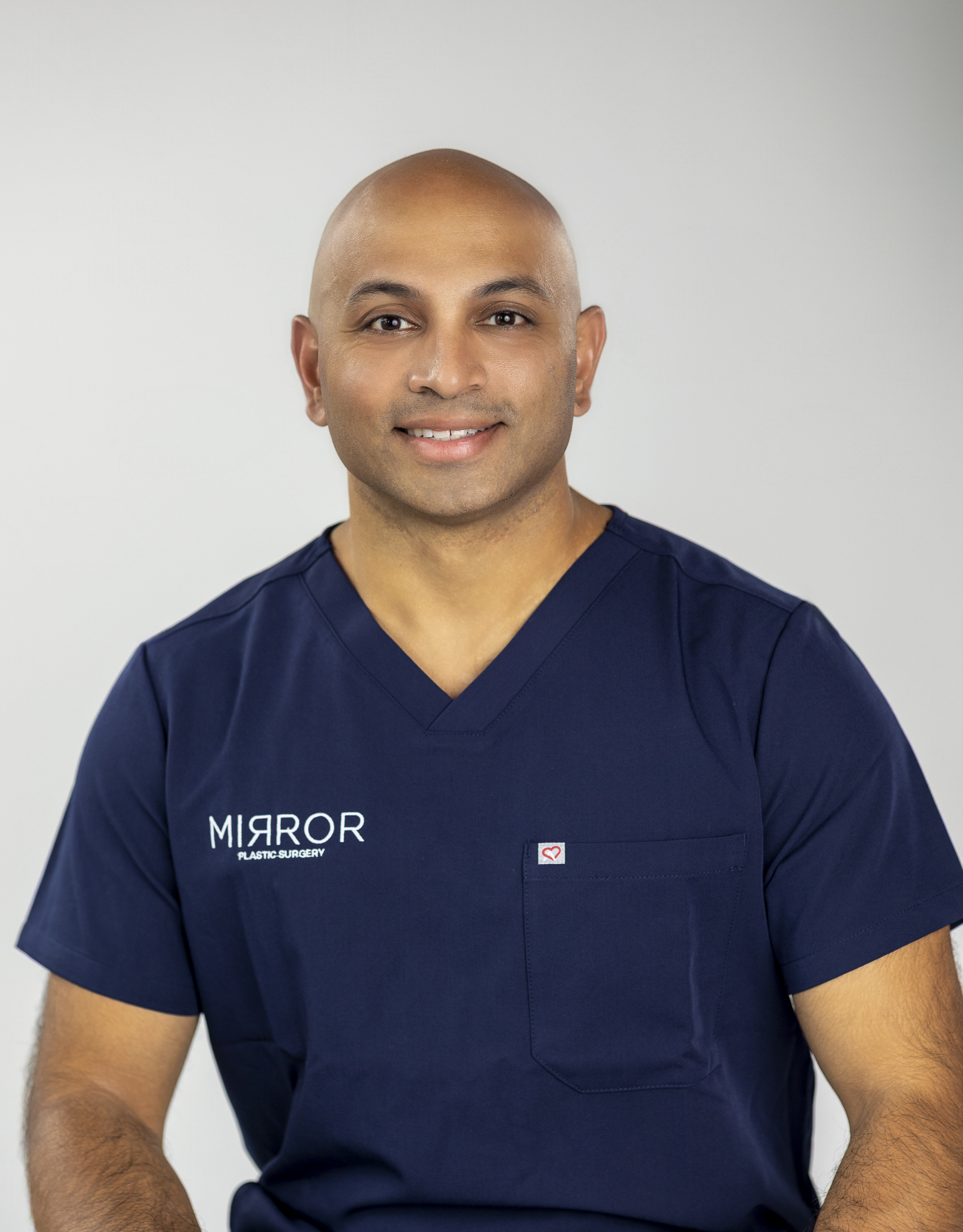
Dr. Akash, named to Newsweek’s America’s Best Plastic Surgeons list two years in a row, brings a training path tailored to complex facial work. He completed a seven-year integrated plastic and reconstructive surgery residency at Johns Hopkins University, then an aesthetic surgery fellowship at the Manhattan Eye, Ear and Throat Hospital (MEETH) at Lenox Hill, one of the most competitive aesthetic fellowships in the country. He earned his medical degree through the Harvard-MIT Health Sciences and Technology program and completed the Stanford Biodesign Innovation Fellowship in medical technology development. He is board-certified by the American Board of Plastic Surgery and holds hospital privileges that provide an added safety net in the rare event of a complication.
Mirror Plastic Surgery performs one to two surgeries per day, which allows the surgeon to focus fully on each patient before, during, and after the procedure. All surgeries take place in accredited facilities with board-certified physician anesthesiologists.
Tampa Bay Recovery Considerations
Tampa Bay’s subtropical climate adds recovery factors that patients in cooler regions may not encounter. Florida heat and humidity increase baseline facial blood flow, which can amplify swelling during the first two weeks. Air-conditioned environments are strongly recommended during peak recovery days 1–7.
Direct sun exposure to the face should be avoided for at least four weeks, because UV radiation promotes inflammation and can worsen residual swelling. When outdoors, wear SPF 50+ broad-spectrum sunscreen and a wide-brimmed hat, and avoid outdoor midday activities during the first two weeks.
Hydration matters even more in Florida’s heat. A daily intake of 2–3 liters of water supports lymphatic clearance of post-operative swelling. Limiting alcohol further helps control vasodilation and puffiness.
Mirror Plastic Surgery is located at 780 4th Ave S, St. Petersburg, FL 33701, with easy access from Tampa, Clearwater, and the broader Tampa Bay area. Patients should arrange a driver for the day of surgery and for any follow-up visits during the first 48 hours, since driving is usually postponed for 1–2 days after buccal fat removal.
Frequently Asked Questions
How long does numbness last after buccal fat removal under local anesthesia?
Some patients notice temporary numbness or altered sensation in the cheeks, lower lip, or chin after buccal fat removal. This usually reflects minor nerve irritation during the procedure rather than permanent damage. In most cases, sensation returns to normal within 2–8 weeks as tissue heals.1 Persistent numbness beyond 8 weeks should be reported to your surgeon. Permanent sensory changes are rare when a trained facial surgeon uses a conservative approach.
What can I eat after buccal fat removal, and when can I return to a normal diet?
During days 1–3, focus on cold or lukewarm liquids and very soft foods such as vegetable soup, yogurt, smoothies, and mashed potatoes. From days 4–7, a broader soft diet works well, including scrambled eggs, soft fish, and well-cooked vegetables, while still avoiding spicy, acidic, crunchy, or hard foods. Most patients return to a near-normal diet by the end of week 2, with full dietary freedom usually restored by days 10–14 once the surgeon confirms incision healing. Continue avoiding straws for the full two weeks, as mentioned in the restrictions above.
When can I exercise after buccal fat removal?
Light walking is encouraged from day 1 to support circulation and reduce blood clot risk. All strenuous exercise, heavy lifting, intense cardio, and contact sports must be avoided for a minimum of two weeks. Moderate exercise such as brisk walking or light cycling can usually resume at the two-week mark with surgeon clearance. Full high-intensity training is generally safe by weeks 3–4, provided swelling has resolved and your surgeon confirms healing, since vigorous activity raises blood pressure and can increase swelling and bleeding risk if started too early.
Can I drive myself home after awake buccal fat removal?
No. Local anesthesia does not impair consciousness the way general anesthesia does, but post-operative medications, mild sedation when used, and the stress of surgery make driving unsafe on the day of the procedure. Arrange for a responsible adult to drive you home and stay with you for the first several hours. Most patients can drive independently by day 2, once they are off prescription pain medication and feel fully alert. Confirm timing with Dr. Akash at your post-operative check.
When should I call the surgeon versus go to the emergency room after buccal fat removal?
Contact Mirror Plastic Surgery directly for fever above 101°F, swelling that worsens after day 3, pain not controlled by prescribed medications, foul-smelling or discolored drainage, or new asymmetry developing after the first week. Go to the emergency room immediately for high fever with chills and rapid heart rate, signs of severe allergic reaction, uncontrolled bleeding from the mouth, difficulty breathing or swallowing, or any symptom that feels life-threatening. Dr. Akash and the Mirror Plastic Surgery team provide direct post-operative access so questions receive prompt answers as part of the practice’s concierge care model.
Planning Your Buccal Fat Removal in Tampa Bay
Buccal fat removal under local anesthesia follows a predictable recovery pattern. Swelling peaks around 48–72 hours, most patients return to desk work within about a week, and final contour emerges between months 3 and 6. The awake approach avoids general anesthesia recovery burdens while still requiring attentive day-by-day management of oral healing, swelling, diet, and activity. Tampa Bay’s heat and sun add specific aftercare needs that patients in cooler climates may not encounter.
Surgeon selection remains the most powerful factor in both safety and outcome. A board-certified facial specialist with deep anatomical training, a conservative approach, and access to accredited facilities offers the strongest foundation for results that look natural at 28 and remain harmonious at 48.
Discuss your candidacy and recovery plan with Dr. Akash at Mirror Plastic Surgery in St. Petersburg.
1 Results may vary from person to person. Editorial content, before and after images, and patient testimonials do not constitute a guarantee of specific results.