
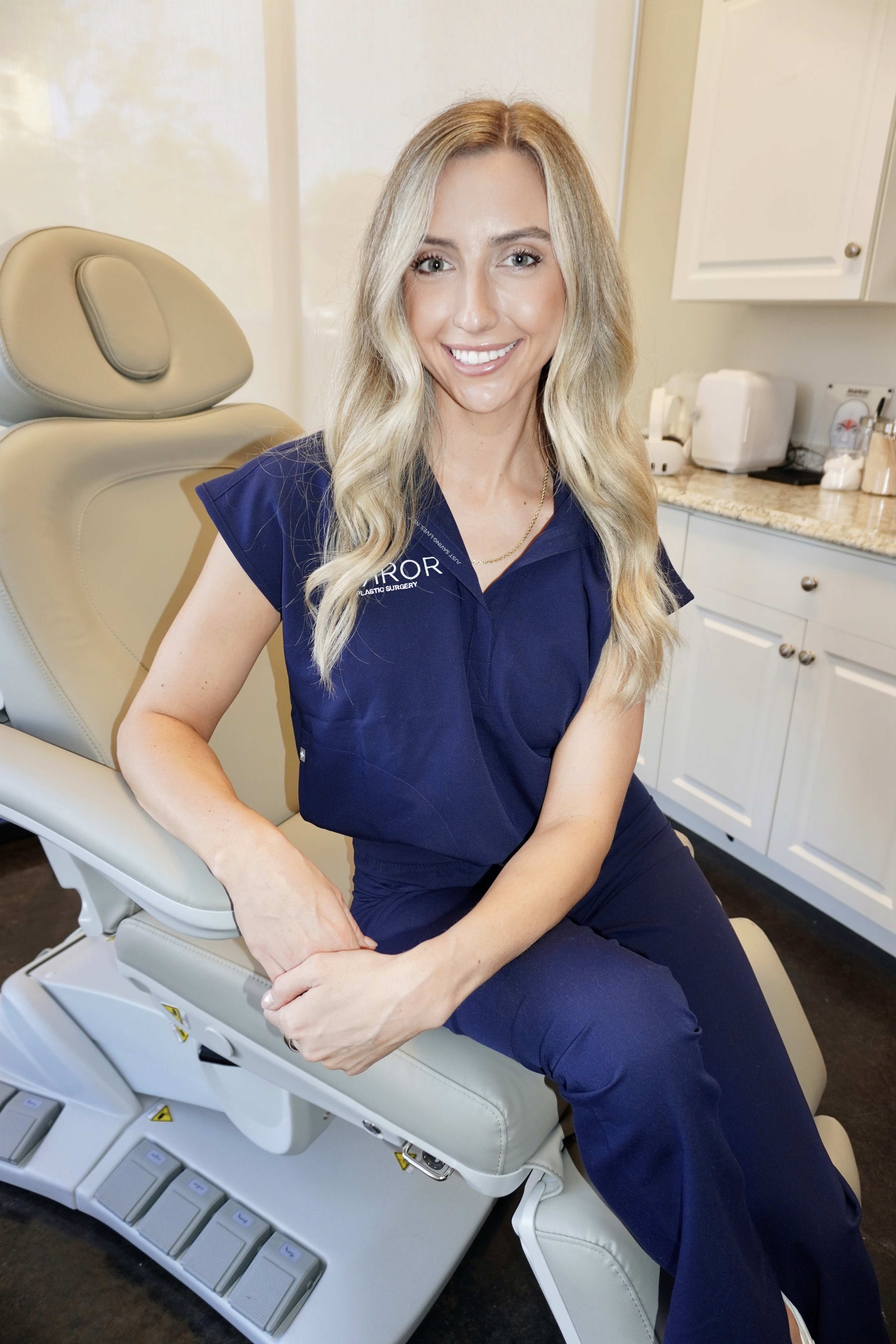
Written by: Ellie Pranckevicius, FNP-BC, Aesthetic Nurse Practitioner & Aesthetic Injector | Facial Restoration & Regenerative Injectable Specialist, Mirror Plastic Surgery
Key Takeaways From Dermal Filler Visits at Mirror Plastic Surgery
- Dermal filler appointments at Mirror Plastic Surgery follow four clear stages: consultation with facial mapping, numbing preparation, precise injection, and immediate post-treatment assessment.
- Appointments last 30–60 minutes so Ellie can perform a full-face evaluation instead of a rushed, single-area treatment that raises the risk of asymmetry and overfilling.
- Advanced topical lidocaine with occlusion and careful cannula technique help minimize discomfort and reduce vascular complications during injections.
- Swelling follows a predictable pattern, and final results usually settle over 1–4 weeks, with a two-week follow-up to review outcomes.1
- Patients who want personalized, anatomy-first care can schedule their initial assessment at Mirror Plastic Surgery.
How Long a Dermal Filler Appointment Takes at Mirror Plastic Surgery
Most dermal filler sessions last 30 minutes to one hour, depending on the number of treatment areas and filler type. At Mirror Plastic Surgery, this time is reserved for a full-face approach rather than an isolated, single-area treatment.
A concierge-level appointment at Mirror follows this sequence:
- Consultation and facial mapping: Ellie conducts a top-to-bottom assessment of facial anatomy, tissue quality, baseline asymmetry, previous injectable history, and risk factors. A thorough consultation evaluates facial proportion, tissue mobility, expectation realism, and contraindications, with the option to defer treatment when it is not currently appropriate. Her four years in the Neuroscience ICU at Tampa General Hospital sharpened the clinical judgment needed to read anatomy accurately and recognize when a patient is not a suitable candidate on a given day.
- Numbing preparation: Advanced topical lidocaine is applied with occlusion and allowed to reach peak efficacy before any injection begins. This step improves comfort and supports a calmer treatment experience.
- Injection: Filler is placed incrementally with intra-session reassessment at each stage. Ellie builds volume through a deliberate plan, checking how each small change affects overall balance.
- Immediate post-treatment assessment: Ellie evaluates symmetry, checks capillary refill, reviews aftercare instructions, and confirms the patient is comfortable before discharge.
A rushed 15-minute appointment compresses or eliminates the mapping and post-treatment assessment stages entirely. A standard dermal filler treatment follows a controlled sequence of mapping, aseptic preparation, precise incremental placement, intra-session reassessment, and post-treatment guidance. Skipping these stages raises the probability of asymmetry, overfilling, and undetected vascular stress.
Ellie’s full-face approach means she evaluates the upper, middle, and lower facial regions as a unified system. Treating one area in isolation without considering its relationship to adjacent structures often creates the “overdone” appearance that many Tampa Bay patients want to avoid.
What Filler Injection Feels Like During Treatment
Discomfort during dermal filler treatment stays manageable and predictable when proper numbing protocols are followed. Topical anesthesia reduces sensation and helps patients tolerate injections more comfortably.
Ellie uses advanced topical lidocaine formulations that use liposomal delivery systems to achieve absorption within approximately thirty minutes, which provides effective numbing. Occlusion with a non-porous film is applied where appropriate to enhance lidocaine penetration. Patients may experience a brief stinging or burning sensation as the filler is injected, but this usually passes quickly with adequate preparation.
The choice between cannula and needle technique also shapes the injection experience. Blunt-tipped microcannulas reduce bruising, swelling, pain, and vascular injury risk compared with sharp hypodermic needles by gliding through tissue planes rather than cutting them. A landmark retrospective cohort study by Alam et al. found that cannula use was associated with lower odds of vascular occlusion compared with needles.
Cannulas are not universally superior for every area. For tear-trough treatment, a needle is preferred for deep supraperiosteal placement because cannulas risk superficial placement and persistent edema in thin-skinned periorbital tissue. Ellie’s neuroscience-ICU background supports her ability to read patient comfort cues in real time and adjust technique accordingly. She developed this skill while managing critically ill patients whose physiological changes required immediate interpretation and response.
The safety of any technique ultimately depends on anatomical knowledge. Facial vascular anatomy shows significant individual variation, and textbook “standard anatomy” represents only statistical averages. Blood vessels may course in different positions even in patients treated by experienced injectors. Mirror’s extended consultation and mapping stage forms the foundation of safe injection.
When Fillers Start to Look Normal After Treatment
Immediate post-treatment appearance rarely reflects final results. Patients leaving Mirror Plastic Surgery after a filler appointment usually notice some swelling, mild redness, and possible asymmetry. These changes are expected and usually represent normal healing.
The post-treatment timeline follows a predictable pattern:
- Hours 0–72: Swelling after dermal fillers typically peaks within 24–72 hours and resolves in 1–2 weeks. Mild redness, bruising, and tenderness usually improve within a few days.
- Hours 24–72: During this peak swelling window, lips often swell most dramatically, and minor bruising may appear. Bruising in this period tends to fade over 7–14 days.
- Days 3–14: As peak swelling settles, minor temporary side effects usually clear within one to two weeks. Small palpable firmness is normal for 1–2 weeks as the gel integrates with surrounding tissue.
- Weeks 1–4: The final appearance settles over 1 to 4 weeks as swelling subsides.1 Some temporary asymmetry or unevenness during this integration phase is common and usually improves without intervention.
Ellie recommends reviewing the treatment area at least two weeks post treatment to evaluate results once swelling has resolved and to decide whether any refinement is helpful. This visit is built into Mirror’s concierge model and is not treated as an upsell opportunity.
Recognizing Normal Healing vs Concerning Filler Side Effects
The majority of post-treatment reactions are mild and self-resolving. Patients who understand the difference between normal healing and a developing complication feel more confident once they leave the office.
Normal side effects that usually do not require urgent contact:
- Mild swelling, redness, and tenderness that improve within 48–72 hours
- Minor bruising that appears within 24–48 hours and fades within one to two weeks
- Small palpable firmness or minor asymmetry in the first 1–2 weeks
When to contact your injector: red-flag symptoms that may cluster together:
- Sudden severe pain out of proportion to the procedure, which can signal vascular occlusion
- Skin blanching (turning white) or pale patches at or near the injection site
- Dusky, mottled, or livedo-pattern discoloration of the skin in the treated region
- Cool skin temperature or delayed capillary refill in the treated area
- Any vision change, including blurring, partial loss, or pain radiating to the eye, which requires emergency care immediately
- Worsening redness, warmth, swelling, or fever after the first 48 hours, which may indicate infection rather than normal healing
- Blistering or open wounds at or near injection sites
- Persistent or enlarging lumps beyond the initial 2-week settling period
Accidental injection of filler into blood vessels can block blood flow and may result in skin loss, wounds, or loss of eyesight if the eye is affected. Vascular occlusion requires prompt hyaluronidase treatment to protect tissue. Ellie’s ICU background means she is trained to recognize and respond to these presentations with appropriate urgency.
Serious side effects from dermal fillers occur more often when an injector lacks adequate medical training and experience.
Rushed Filler Appointments vs Mirror’s Concierge Visit
High-volume aesthetic practices often compress filler appointments to 15 minutes or less. At that pace, the consultation, facial mapping, post-treatment assessment, and aftercare review are abbreviated or absent. A dermal filler consultation should assess facial anatomy and proportion, tissue quality and mobility, baseline asymmetry, previous injectable history, and risk factors. None of that is realistic in a 15-minute slot.
Mirror Plastic Surgery’s model is structurally different. Ellie limits her schedule to allow for full-length appointments. She is supplier-neutral, so product recommendations are driven by patient anatomy and goals, not brand quotas or commission structures. Her initial focus is on restoring inherent facial characteristics before adding volume, which helps prevent the progressive distortion that can accumulate when providers add product to an unassessed face over multiple rushed visits.
The practice’s concierge approach also extends beyond the appointment itself. Patients can reach Ellie via call, text, or email for post-treatment questions. This level of access matters most in the 24–72 hours after treatment, when patients are most likely to wonder whether a symptom reflects normal healing or a developing complication.
Mirror Plastic Surgery is located at 780 4th Ave S, St. Petersburg, FL 33701. Patients can call or text 727-361-6515 or email hello@mirrorplasticsurgery.com.
Experience the concierge difference with a full-length, anatomy-first assessment.
Frequently Asked Questions
Which areas of the face are most uncomfortable to treat with dermal fillers?
Sensitivity varies by individual, but the lips and perioral region are consistently the most uncomfortable areas because they contain many sensory nerve endings. The tear trough and glabella are also sensitive regions. Ellie addresses this with advanced topical numbing protocols and occlusion to maximize lidocaine penetration before any injection begins. For the lips specifically, adequate topical anesthesia applied to the skin, vermilion border, and inner mucosal surface for a sufficient incubation period usually produces strong numbing. Ellie’s selection of cannula technique in appropriate regions also reduces procedural discomfort significantly compared with needle-only approaches, as cannulas glide through tissue rather than cutting it.
What aftercare steps support the best results after dermal fillers?
The first 24–48 hours form the most important window for aftercare. Applying a clean ice pack intermittently helps reduce swelling and bruising. Patients should avoid strenuous exercise, saunas, and very hot environments for the first 24–48 hours, because heat increases blood flow and can worsen swelling. Alcohol should be avoided for at least 24 hours. Ibuprofen and aspirin should be avoided unless medically necessary, since they thin the blood and increase bruising risk.
For lip filler specifically, eating soft foods and avoiding straws or smoking in the first few hours prevents unnecessary mechanical pressure on the treated area. Staying well-hydrated supports tissue recovery. Ellie provides written aftercare instructions at every appointment and remains accessible by phone or text for any questions that arise during recovery.
How long dermal fillers last and what affects longevity
Filler longevity depends on the product type, the area treated, the volume placed, and individual metabolism. Fillers in the lips typically last 6–12 months, while those placed in deeper structural areas such as the cheeks or jawline may last 12–18 months or longer.1 Biostimulatory fillers like Radiesse work differently, because they stimulate the body’s own collagen production and can produce results that extend beyond the filler’s physical presence.1
Patients with higher metabolic rates, significant sun exposure, or high levels of physical activity may metabolize filler more quickly. Ellie’s full-face approach and conservative volume philosophy also support longevity. Placing the right amount of the right product in the correct anatomical plane produces results that integrate naturally and often last longer than overfilled, superficially placed product.1 The two-week follow-up mentioned earlier also serves to evaluate integration and determine whether any refinement supports long-term outcomes.1
Can dermal fillers be reversed if I do not like the results?
Certain dermal fillers can be dissolved using the enzyme hyaluronidase, which breaks down the filler so the body reabsorbs it, often within days. This reversibility is one reason these fillers are the first-line choice for most facial areas. Biostimulatory fillers such as Radiesse work by stimulating collagen and are not reversible in the same way, which makes precise placement and conservative volumes especially important with these products.
Ellie’s transparent, education-first approach ensures patients understand exactly which product is being used and why before any injection takes place. This clarity reduces the likelihood of dissatisfaction and usually eliminates the need for reversal.
Conclusion: Choosing a Safety-First Filler Experience
A dermal filler appointment is a medical procedure that requires anatomical expertise, adequate time, and a structured safety framework. The four stages of care, from consultation and facial mapping through numbing, injection, and immediate post-treatment assessment, cannot be compressed without raising risk and lowering the quality of outcomes. Mirror Plastic Surgery’s concierge model, led by Ellie Pranckevicius’s combined background in esthetics and advanced nursing, is designed to deliver safer, more natural, and longer-lasting results for Tampa Bay patients who have experienced the limitations of rushed, high-volume care.1
Patients who prioritize anatomical safety, honest communication, and results that hold up over time are the patients Mirror Plastic Surgery is built to serve.
Begin your safety-first assessment at Mirror Plastic Surgery in St. Petersburg, FL, with a full-face evaluation that prioritizes your long-term outcomes.
Disclaimer: Results may vary from person to person. Editorial content, before and after images, and patient testimonials do not constitute a guarantee of specific results.
1 Results may vary from person to person. Editorial content, before and after images, and patient testimonials do not constitute a guarantee of specific results.