
Written by: Dr. Akash Chandawarkar, Board Certified Plastic Surgeon, Mirror Plastic Surgery
Key Takeaways
- Before-and-after photos vary widely in quality and standardization, so using clear, consistent criteria helps you avoid misleading or promotional images.
- The safety-function-aesthetics framework evaluates results in this order: safety first, preserved function second, and natural appearance third.
- Standardized photography uses matching lighting, angles, backgrounds, and patient preparation, with after photos taken at realistic healing intervals.
- Red flags such as inconsistent lighting, altered posture, missing timelines, digital manipulation, or impossible symmetry suggest a gallery may not reflect real outcomes.
- A consultation at Mirror Plastic Surgery lets you review standardized galleries and discuss realistic results tailored to your anatomy.1
10 Criteria for Evaluating Plastic Surgery Before and After Photos
Apply these ten criteria to every gallery you review. Trustworthy images meet all of them.
- Lighting is identical in both images, with the same color temperature, shadow direction, and no dramatic side-lighting in the after photo.
- Camera angle, distance, and framing match, with both ears visible in frontal facial views and the same body position throughout.
- Background stays neutral and unchanged, usually a blue, grey, or white clinical backdrop without props or environmental shifts.
- Patient preparation remains consistent, with no makeup on the treatment area, hair pulled back the same way, and identical or neutral clothing.
- The after photo is taken at least three months after most procedures, and six to twelve months after facelift and rhinoplasty.1
- Multiple angles appear, such as frontal, oblique, and profile views for facial procedures and front, side, and back for body procedures.
- Normal healing elements are visible, including subtle scars in expected locations and natural skin texture without airbrushed pores.
- The gallery shows a meaningful number of cases rather than only a few ideal outcomes.
- Results show the same person with clear improvement, not someone who looks like a different individual.
- The surgeon holds certification from the American Board of Plastic Surgery.
Why Consistent Photography Standards Protect Patients
Clinical and aesthetic photography guidelines from the American Society of Plastic Surgeons highlight four essentials for meaningful comparisons: identical lighting, identical distance and angle, a neutral unchanging background, and matching expressions and poses. When any of these variables change between images, the apparent improvement may reflect photography rather than surgery.
Inconsistent positioning, lighting, and camera settings can create the illusion of surgical change or hide real clinical improvement. For facial procedures, board-certified plastic surgeons use the Frankfort Horizontal Plane standard, an imaginary line between the tragus and infraorbital rim that stays parallel to the floor across images to keep head position consistent.
Professional before-and-after photography uses a dual 45-degree lighting setup with diffused daylight-balanced LEDs placed at or slightly above face height. Standard documentation includes a five-view facial series with frontal, left and right 45-degree obliques, and left and right true profiles, captured with the patient looking at a fixed eye-level point and relaxed shoulders.
For breast, abdominal, or hip surgery, clinical photos are taken without underwear or with the same neutral undergarment in both images, with relaxed posture and arms at the sides without tensing muscles. Any deviation from these standards introduces variables that can mislead even experienced observers. When you review galleries, watch for specific violations of these principles, because each one shifts perception away from the actual surgical result.
5 Red Flags in St. Petersburg Plastic Surgery Before and After Photos
The following red flags suggest that a gallery may not represent authentic, standardized surgical outcomes.
- Inconsistent lighting. Compare complexion and the symmetry of catchlights in the eyes between images; inconsistent complexion or asymmetric reflections suggest lighting changes rather than surgical improvement.
- Altered posture between images. Some facelift photos exaggerate results by having the patient tuck the chin in the before image and extend the neck in the after image. A 2023 analysis of 161 Instagram aesthetic surgery sets found that most favored the postoperative image through biased elements such as different backgrounds, view angles, coverage, or positioning.
- Missing or vague timelines. An after photo at six weeks does not show the final result; meaningful comparisons use images taken at least three months later, ideally six months, and up to twelve months for rhinoplasty and facelift.
- Signs of digital manipulation. Unnaturally smooth or warped skin, or backgrounds that bend near body contours, suggest editing tools such as clone stamp, liquefy, or blur filters. Distorted door frames or windows around the waist or thighs often reveal digital slimming in body contouring photos.
- Unrealistic or impossible symmetry. In breast augmentation photos, one breast that appears as a mirrored copy of the other usually indicates editing, because perfect symmetry is not surgically achievable. Authentic results preserve natural anatomical variation.
Book a consultation with Dr. Akash to review a comprehensive, standardized gallery and see what realistic outcomes look like for your anatomy.
How to Read Procedure-Specific Before and After Photos
Face and Neck
Natural facial results keep the person recognizable while improving balance and freshness; warning signs include a pulled facelift look, a pinched or hollow nose, or filler that distorts proportions. For facelifts, look for a smooth, natural jawline and neck without tension lines or a shifted hairline. For rhinoplasty, the nose should fit the surrounding features, with a bridge, tip, and nostrils that look proportionate rather than identical across different patients.
The safety-function-aesthetics lens favors facelifts that reposition the SMAS layer and restore underlying facial structure instead of relying only on skin tension. Normal facial animation and sensation should remain intact in every case.
Breast
Surgeons at The Aesthetic Meet 2026 roundtable reported a shift toward smaller, more natural-looking implants, with newer devices supporting a natural upper pole without animation deformity. When you review breast augmentation photos, look for a gentle slope from the upper pole to the nipple, projection that fits the patient’s frame, and symmetry that reflects anatomy rather than editing. Evaluating total breast volume, which combines native tissue and implant, helps you judge whether the result will stay proportionate as the patient ages.
For breast reduction and lift, check that the nipple-areolar complex sits in a natural position and that breast shape matches the patient’s overall proportions. Scars in expected locations signal honest documentation, not a flaw.
Body
A professional body-contouring gallery uses standardized clothing, neutral clinical lighting, and avoids digital reshaping. For abdominoplasty and liposuction, ask for front, oblique, side, and back views. Front-only images can hide residual fullness in flanks, thighs, back contour, and asymmetry. Look for a natural abdominal contour with a belly button in a believable position and body proportions that stay consistent with the patient’s frame.
Recovery Timelines Behind Realistic Results
Early post-operative photos often appear in marketing as if they show final results, which can mislead patients. The table below summarizes evidence-based recovery timelines for four common procedures.
About 80% of visible swelling resolved by week 3Return to non-strenuous work by week 2, social confidence by weeks 3–4Deep swelling improves for up to 6 months, with scars settling by 12 months1Return to non-physical work days 10–14, full exercise at 6–8 weeksMost visible change by month 6, with final tip refinement at month 121Standardized follow-up photos at 4–6 weeks help separate swelling from lasting changeMeaningful comparison usually starts at 3 months and improves by 6 months1Liposuction results refine for 3–6 months, with 70–80% of swelling gone by 6–8 weeks
| Procedure | Safety Milestone | Functional Recovery | Final Aesthetic Result |
|---|---|---|---|
| Facelift | |||
| Rhinoplasty | Swelling peaks at 48–72 hours, with 80–90% resolved by 3 months | ||
| Breast Augmentation | Implant position and tissue settling continue for several months | ||
| Abdominoplasty | Most professional after photos appear between 3 and 6 months, when swelling has eased | Final contour and scar maturation can take up to a year |
Natural Results Compared with Overdone Outcomes
Natural outcomes show consistent, believable improvements across many patients, with changes that enhance features without an operated look. Overdone results often share patterns such as exaggerated upper-pole breast fullness, a pinched or hollow nasal tip, facial skin pulled tight without structural support, or a jawline that looks unnaturally sharp.
Dr. Akash’s approach at Mirror Plastic Surgery places aesthetics after safety and function because that sequence produces results that age gracefully. Restoring underlying anatomy instead of only removing or adding volume creates harmony that stays appropriate over time. When more than one inch of tissue can be pinched along the jawline, non-surgical devices and fillers reach their limit and a surgical facelift becomes the durable option, often lasting around 10 years compared with 6–18 months for liquid lifts. Matching the treatment to the anatomy, rather than chasing the most dramatic change, defines natural, long-lasting results.
Expert Context: Why Surgeon Credentials Shape Photo Quality
The surgeon behind a gallery sets the standards for every image. Reliable before-and-after photos usually come from surgeons certified by the American Board of Plastic Surgery, who follow strict ethical rules for patient photography.
Dr. Akash is board certified by the American Board of Plastic Surgery and holds a medical degree from Harvard Medical School, earned through the highly selective Harvard-MIT Division of Health Sciences and Technology program. This foundation in evidence-based medicine supported his seven-year integrated plastic and reconstructive surgery residency at Johns Hopkins University, where he developed the anatomical depth needed to distinguish natural from overdone results. He then refined his aesthetic judgment during a fellowship at the Manhattan Eye, Ear and Throat Hospital (MEETH), one of the most competitive programs for advanced facial rejuvenation, breast surgery, and body contouring. His Stanford University Biodesign Innovation Fellowship added a physician-innovator’s perspective to technique selection and technology evaluation. Dr. Akash has been named in America’s Best Plastic Surgeons 2025 by Newsweek for two consecutive years and has testified before the U.S. Food and Drug Administration on breast implant safety. He serves on advisory boards for Motiva, Tiger Aesthetics, Cypris Medical, and Merz Aesthetics, and is the Next Generation Editor for the Aesthetic Surgery Journal.
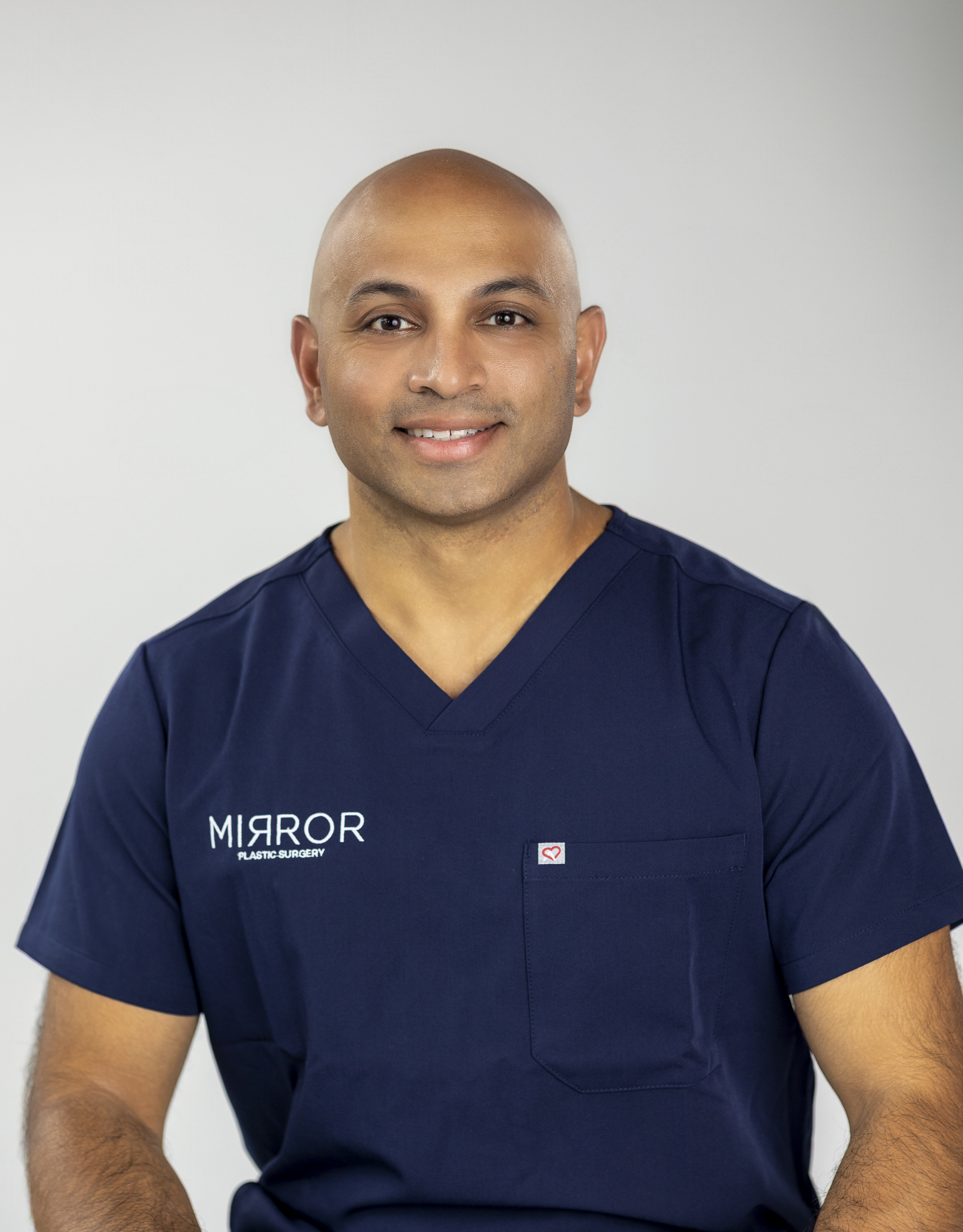
These credentials shape the anatomical insight, ethical standards, and evidence base applied to every patient case and every photograph in the gallery.
Key Questions to Ask During Your Consultation
Bring these questions to any plastic surgery consultation in St. Petersburg or Tampa Bay to see whether a practice follows the standards in this guide.
- Are all photos in your gallery taken by your practice under standardized conditions, or do any come from external sources?
- What is the minimum post-operative interval before you photograph a result for your gallery?
- Can I see multiple angles for cases similar to my anatomy and procedure complexity?
- Do you have long-term follow-up photos at six months and one year for the procedures I am considering?
- What safety protocols guide your facility, anesthesia team, and pre-operative evaluation process?
- How many surgeries do you perform per day, and how does that affect the attention my case receives?
- What is your approach if a result needs revision, and can I see examples of revision cases?
Safety-First Results Summary Table
The table below summarizes key criteria for evaluating any before-and-after gallery using the safety-function-aesthetics framework.
Consistent lighting, angle, distance, and background across imagesStable patient preparation, with no makeup on the treatment area and neutral clothingNo filters, lighting tricks, or digital retouchingAfter photos taken once early swelling has settled, with longer intervals for facelift and rhinoplastyExact postoperative timeframes listed for all body contouring imagesLarge case volume that includes typical outcomes, not only highlightsRange of facial and body anatomies that shows adaptabilityConsistent, believable improvements across the gallerySurgeon certified by the American Board of Plastic Surgery, with photos confirmed as their own patientsVisible normal healing, including subtle scars and natural skin textureResults that respect human anatomy, with natural proportions and no impossible symmetry
| Criterion | Safety | Function | Aesthetics |
|---|---|---|---|
| Photo standardization | |||
| Timeline documentation | Scar maturation photos at around 12 months for full result assessment | ||
| Volume and variety | |||
| Authenticity markers |
Conclusion: Using Photos to Make an Informed Decision
Evaluating St. Petersburg plastic surgery before and after photos works best as a learned skill rather than a gut feeling. Consistent criteria such as standardized lighting and angles, clear timelines, visible healing markers, and a meaningful volume of cases help you separate trustworthy galleries from pure marketing. The safety-function-aesthetics framework adds another filter, favoring results that protect anatomy and long-term harmony over dramatic short-term impact.
Studies report high satisfaction for breast augmentation, rhinoplasty in well-selected patients, and breast reduction when patients have realistic goals, stable life circumstances, and a genuine consultation with a trusted surgeon.1
Mirror Plastic Surgery applies rigorous photographic and clinical standards to every patient. The practice performs one to two surgeries per day so the team can focus fully on each case before, during, and after the procedure. Every consultation with Dr. Akash includes a detailed anatomical assessment, honest discussion of realistic outcomes1, and a review of standardized before-and-after photos that match your goals.
Book a Consultation with Dr. Akash
Reviewing photos starts the process, but a personalized consultation completes it. A visit with Dr. Akash at Mirror Plastic Surgery in St. Petersburg gives you time to evaluate your own anatomy, ask the questions listed above, and receive an evidence-based treatment plan that fits your goals rather than a one-size-fits-all approach.
Book a consultation with Dr. Akash at Mirror Plastic Surgery, located at 780 4th Ave S, St. Petersburg, FL 33701. Call or text 727-361-6515, or email hello@mirrorplasticsurgery.com.
Frequently Asked Questions
How can I tell if a plastic surgeon’s before-and-after photos are authentic and not digitally edited?
Authentic before-and-after photos share several consistent features. Lighting, background color, and shadow direction match in both images. The patient’s posture, head position, and camera distance stay the same. Normal healing appears in the after photo, including subtle scars in expected locations and natural skin texture with visible pores instead of airbrushed smoothness. Background lines remain straight near body contours, which rules out most digital slimming tools. In breast augmentation photos, each breast keeps its own natural shape instead of looking like a mirror copy. If you feel unsure about a specific image, a reverse image search can show whether the photo belongs to the practice or comes from another source. Reputable surgeons certified by the American Board of Plastic Surgery will confirm that all gallery images show their own patients.
What is a realistic timeline for seeing final results after a facelift or rhinoplasty?
For a facelift, about 80% of visible swelling resolves by week three, while deep healing and scar maturation continue for up to twelve months. Most patients feel socially presentable by weeks three to four, but the final neck and jawline definition usually appears between months three and six. For rhinoplasty, the nasal tip refines last, with 80–90% of visible change by month six and the final result at month twelve. Patients with thicker nasal skin may need up to eighteen months for complete settling. Any after photo presented as a final result before these timelines deserves careful scrutiny, no matter how polished it looks.
What does the safety-function-aesthetics framework mean in practice when evaluating results?
The safety-function-aesthetics framework guides every decision at Mirror Plastic Surgery. When you apply it to photos, you move through three questions in order. First, does the outcome look safe, without signs of complications, unexpected scarring, or tissue distortion that suggests a technical problem? Second, does the result preserve or restore normal function, such as natural facial animation after a facelift, normal breathing after rhinoplasty, or a smooth abdominal wall after abdominoplasty? Third, does the aesthetic result look natural and proportionate, with harmony between the treated area and the rest of the body? A gallery that satisfies all three questions is more likely to show durable, natural results.
Why does the volume of cases in a surgeon’s gallery matter?
A small group of standout results reveals very little about typical outcomes. A surgeon with five excellent photos may have selected only the best cases from a large pool, while a surgeon with dozens of consistently strong results across varied anatomies demonstrates reproducible quality. Volume also shows how a surgeon manages complexity, including asymmetry, revision work, and challenging tissue. When you review a gallery, look for patients with anatomy similar to yours, results at six to twelve months post-operatively, and a mix of moderate and exceptional outcomes. A practice that shows the full range of its work, not just highlights, signals transparency and reliability.
What questions should I ask about before-and-after photos during a consultation at a St. Petersburg plastic surgery practice?
The most useful questions focus on standardization, timing, and relevance to your situation. Ask whether all photos in the gallery were taken by the practice under consistent clinical conditions, and confirm that none come from stock libraries or external sources. Ask about the minimum post-operative interval before a result appears in the gallery, and follow up if this interval is under three months for most procedures or under six months for facelift and rhinoplasty. Request photos of patients with anatomy and case complexity similar to yours, including revision cases if that applies. Finally, ask whether one-year follow-up photos are available, since scar maturation and final tissue settling only appear at that stage. A surgeon who answers these questions clearly and directly usually maintains genuine clinical standards in their gallery.
1 Results may vary from person to person. Editorial content, before and after images, and patient testimonials do not constitute a guarantee of specific results.