Written by: Ellie Pranckevicius, FNP-BC, Aesthetic Nurse Practitioner & Aesthetic Injector | Facial Restoration & Regenerative Injectable Specialist, Mirror Plastic Surgery
Key Takeaways for Collagen and Tendon Recovery
- Taking 15–20 g hydrolyzed collagen peptides plus 50 mg vitamin C 30–60 minutes before tendon-loading exercise can increase tendon cross-sectional area and stiffness when performed consistently for 8–12 weeks.1
- Collagen supplementation produces meaningful tendon adaptation only when paired with concurrent heavy-slow resistance training at ≥70% of 1RM.1 Supplementation alone yields little benefit.
- Structural tendon changes require a minimum 8–12 week commitment. Initial pain and stiffness relief may begin between weeks 6–12 of consistent use.1
- Third-party tested products that meet NSF, USP, or Informed Sport standards with 2–5 kDa molecular weight and verified Type I/III bovine collagen support both safety and efficacy.
- Patients whose tendon pain persists beyond 12 weeks should consult Mirror Plastic Surgery for personalized assessment and to determine whether additional clinical evaluation is warranted. Start your tendon recovery consultation with Ellie.
How Collagen Peptides Support Tendon Healing
Collagen peptides for tendons are among the most evidence-supported nutritional tools in connective-tissue rehabilitation. Tendons are composed predominantly of Type I collagen, which accounts for approximately 90% of the body’s total collagen and provides tensile strength. Because tendons receive limited blood flow, they heal slowly and respond poorly to passive rest alone.
Hydrolyzed collagen peptides are broken into small fragments at an ideal 2–5 kDa molecular weight. These fragments are absorbed as di- and tripeptides containing hydroxyproline and reach target tissues intact. A 2025 systematic review of eight randomized tendon collagen trials evaluated hydrolyzed collagen peptides for tendon support, with higher doses often used for acute tendinopathy or post-surgical recovery. Critically, collagen supplementation without concurrent eccentric resistance training produces little to no meaningful tendon adaptation. The mechanical stimulus directs circulating amino acids toward tendon repair.
The Evidence-Based 15 g Collagen and Vitamin C Protocol
This five-step protocol reflects the methodology used in foundational human trials, including Shaw et al. (2017, American Journal of Clinical Nutrition) and Praet et al. (2019, Nutrients).
- Dose: Measure 15–20 g of fully hydrolyzed collagen peptides (bovine Type I/III) at the 2–5 kDa molecular weight discussed earlier. Plasma glycine and proline levels reach the threshold needed for tendon extracellular-matrix synthesis only with doses in the 10–15 g range. Doses of 5 g produce insufficient amino-acid spikes.
- Add vitamin C: Co-administer 50 mg vitamin C. Vitamin C acts as a cofactor for prolyl hydroxylase and lysyl hydroxylase enzymes, which enable hydroxylation, triple-helix formation, and cross-linking of collagen chains during tendon synthesis.
- Timing: Consume the mixture 30–60 minutes before your loading session. Human pharmacokinetic studies show collagen-derived peptides such as Pro-Hyp and Gly-Pro-Hyp appear in plasma within 60–120 minutes after ingestion. This timing aligns peak amino-acid availability with the increased tendon blood flow during exercise.
- Load the tendon: Perform heavy-slow resistance (HSR) exercises targeting the affected tendon at ≥70% of 1RM, as noted in the foundational overview. The loading stimulus is essential for tendon remodeling.
- Repeat daily for 8–12 weeks minimum: Connective tissue remodeling requires a minimum of 8–12 weeks of consistent daily collagen supplementation before meaningful structural changes are expected. Tendon turnover rates are slow because of limited vascularity.
The table below organizes this protocol into three progressive phases, showing how dosing and training intensity evolve across the 12-week minimum commitment.
| Phase | Weeks | Daily Dose | Vitamin C | Training Focus |
|---|---|---|---|---|
| Foundation | 1–4 | 15 g hydrolyzed collagen | 50 mg co-ingested | Establish HSR form, 3×/week at 70% 1RM |
| Loading | 5–8 | 15–20 g hydrolyzed collagen | 50 mg co-ingested | Progress load, monitor pain response |
| Remodeling | 9–12 | 15–30 g hydrolyzed collagen | 50 mg co-ingested | Maximize progressive overload, assess VISA scores |
Schedule your personalized protocol review to determine whether collagen supplementation alone is the right starting point for your tendon condition.
Pairing Collagen with Heavy-Slow Resistance Loading
Collagen without targeted progressive heavy-slow loading is unlikely to produce meaningful tendon improvement in chronic tendinopathy. Effective loading typically uses the 6–12 RM range, a slow tempo, and three sessions per week. The mechanical stimulus increases blood flow to the tendon during peak circulating amino acids and provides the tensile signal that directs fibroblasts to lay down aligned collagen fibers.
For Achilles tendinopathy, bilateral and unilateral calf raises on a decline board at controlled tempo are the standard loading vehicle, as used in Praet et al. (2019). For patellar tendinopathy, Spanish squats and leg press at slow eccentric tempo are appropriate. When two tendon-remodeling sessions occur on the same day, space them 6–8 hours apart and time the collagen-plus-vitamin-C dose 60 minutes before each loading bout.
Timeline Expectations for Pain Relief and Structural Change
Pain relief and structural tendon remodeling follow different timelines. Confusing these timelines often causes patients to stop the protocol too early.
Pain and stiffness in tendon issues typically begin improving between 6–12 weeks of consistent collagen peptide supplementation at 15 g with 50 mg vitamin C taken 45–60 minutes before loading exercise.1 Structural changes, including measurable increases in tendon cross-sectional area and stiffness, require the full minimum timeframe noted in the protocol.1 Most trials reporting pain reduction, function, or return-to-sport outcomes followed participants for 3–6 months.
In a 14-week randomized placebo-controlled trial of 40 healthy men performing heavy resistance training, 5 g per day of specific collagen peptides increased Achilles tendon cross-sectional area by about 11% versus about 4.7% with placebo.1 Chronic tendon issues present for more than one year may require longer than 6 months of collagen peptide supplementation with loading exercises before meaningful improvement occurs.
Quality Standards for Safe, Effective Collagen Products
Product quality significantly influences collagen peptide outcomes. Consumer testing organizations have periodically flagged elevated levels of heavy metals (Pb, Cd, Hg, As) in some collagen products, especially those sourced from hides or marine sources without rigorous testing.
A quality collagen peptide product for tendon use should meet the following criteria:
- Hydrolyzed to 2–5 kDa molecular weight for optimal absorption
- Type I and Type III collagen from bovine sources, which are most relevant for tendons and ligaments
- Third-party verified by NSF, USP, or independent Certificate of Analysis (COA) confirming purity and accurate dosing
- NSF Certified or Informed Sport certified for athletes subject to anti-doping regulations
- Dissolves in cold liquid without preparation, which confirms full hydrolysis
When to Move Beyond Collagen to Targeted Peptide Therapy
Collagen peptides and targeted peptides such as BPC-157 act through different mechanisms and have very different evidence profiles. Collagen peptides are the only peptide class in sports medicine with multiple randomized, double-blind, placebo-controlled trials in human athletes showing effects on tendon remodeling, joint pain reduction, and musculotendinous stiffness.
BPC-157 has zero completed Phase I, II, or III human randomized controlled trials for musculoskeletal indications. The efficacy literature for BPC-157 consists of hundreds of preclinical animal studies and no published Phase 2 or Phase 3 randomized controlled human trials for any indication. The FDA classified BPC-157 as a Category 2 compound in 2023, restricting compounding, and the World Anti-Doping Agency bans it for athletes. No direct comparative human trials exist between collagen peptides and BPC-157 for tendon healing.
For patients whose tendon pain persists beyond 12 weeks of a properly executed collagen protocol, medically supervised peptide oversight is the appropriate next step. This oversight includes imaging confirmation, lab panels, and individualized dosing. Unsupervised online purchasing is not appropriate for this decision.
Clinical Decision Points and Safety Considerations
If VISA scores have not improved by at least 10 points after 12 weeks of combined loading plus supplementation, referral to a sports medicine physician is appropriate. At that point, options include extracorporeal shockwave therapy (ESWT), high-volume injection, or surgical consultation.
Collagen peptides are generally well-tolerated. Mild GI upset such as bloating or fullness is the most common side effect at doses up to 30 g per day. Allergic reactions are rare but occur more often with marine collagen in fish-allergic individuals. The World Anti-Doping Agency classifies hydrolyzed collagen and gelatin peptides as non-prohibited nutritional supplements, which makes them suitable for competitive athletes.
Practical Checklist for Starting Your Collagen Protocol
Confirm each item below before beginning the protocol:
- Product meets the quality standards detailed in the previous section, including hydrolyzed 2–5 kDa Type I/III bovine collagen and third-party certification
- Dose is 15–20 g per serving. Low-dose products under 10 g per serving largely show no significant between-group effects on tendon outcomes.
- Fifty milligrams of vitamin C is taken at the same time as the collagen
- Supplement is consumed 30–60 minutes before the loading session, not after
- A structured HSR program targeting the affected tendon is in place
- Commitment to a minimum 8–12 week trial is in place before assessing results
- A clinician has ruled out partial tear, calcific tendinopathy, or referred pain before beginning
Get your supplement and training protocol reviewed to confirm your loading program is appropriate and to discuss whether your tendon condition warrants additional clinical evaluation.
How Collagen Fits into Your Broader Recovery Plan
Tendon remodeling occurs within a larger recovery context. Adequate total protein intake of 1.2–1.5 g per kg body weight, high-quality sleep, and management of systemic inflammation all influence the rate of connective-tissue adaptation. Tendon healing follows three distinct phases: inflammation from days 1–7, proliferation from weeks 1–6, and remodeling from months 2–12. Healing can stall because of scar tissue or limited blood flow, which may require medical evaluation before adding adjunctive options.
For Tampa Bay-area adults managing chronic tendinopathy alongside other health goals such as systemic inflammation, metabolic health, or post-surgical recovery, Mirror Plastic Surgery’s concierge peptide oversight integrates tendon-focused protocols within a comprehensive wellness assessment that includes lab panels and ongoing one-on-one support.
Frequently Asked Questions
Are collagen peptides FDA-approved for tendons?
Collagen peptides are sold as dietary supplements and have not been approved to treat, cure, or prevent any medical condition, including tendinopathy. The International Olympic Committee’s 2018 consensus statement classifies collagen as a low-risk supplement that increases collagen production and may reduce pain. The evidence base for collagen peptides in tendon remodeling includes multiple human randomized controlled trials, which represents a higher standard than most supplements. Regulatory approval and available evidence differ. Collagen peptides have human RCT data, while many medications lack comparable connective-tissue-specific trial data.
How long until I see results from collagen peptides for tendons?
Most people following the 15–20 g collagen plus 50 mg vitamin C pre-exercise protocol notice initial reductions in pain and morning stiffness between weeks 6 and 12.1 Measurable structural changes, such as the cross-sectional area increases discussed in the timeline section, require a minimum of 8–12 weeks and often 3–6 months for full clinical benefit.1 Chronic tendon conditions present for more than one year may require longer. Stopping the protocol at 2–4 weeks is the most common reason for perceived failure because tendon turnover is inherently slow.
Can I buy collagen peptides online safely?
Collagen peptides are widely available and generally safe when purchased from reputable brands with third-party testing. The main risks relate to product quality, not the supplement itself. Consumer testing has identified elevated heavy metals in some products, especially those without independent certification. Look for NSF Certified for Sport, Informed Sport, or USP verification, and confirm that the product discloses collagen source, molecular weight as hydrolyzed, and provides an accessible Certificate of Analysis. For collagen peptides specifically, unsupervised use carries low risk when quality standards are met. The risk profile changes significantly for injectable peptides such as BPC-157, where unsupervised online purchasing carries meaningful safety and regulatory concerns.
What if collagen alone is not enough for my tendon pain?
If a properly executed 12-week collagen plus loading protocol does not produce at least a 10-point improvement on a validated symptom score such as the VISA-A, the next step is clinical evaluation rather than simply adding more supplements. Options at that stage include extracorporeal shockwave therapy, high-volume injection, imaging-guided assessment, or medically supervised peptide therapy. At Mirror Plastic Surgery, Ellie Pranckevicius conducts an in-depth consultation that may include lab panels and imaging review to determine whether targeted peptide protocols, administered under medical supervision with batch-tested products, are appropriate for your situation.
Will tendon improvements disappear if I stop taking collagen peptides?
Structural tendon adaptations built through 8–12 weeks of combined collagen supplementation and heavy-slow resistance loading do not disappear immediately when you stop the supplement. The collagen fibers laid down during that period remain in the tendon matrix. The ongoing stimulus for collagen synthesis decreases without continued supplementation and loading. Maintenance protocols, typically a lower daily dose alongside continued resistance training, are commonly recommended to preserve gains. This pattern resembles the relationship between gym training and muscle, where adaptations persist for a period after stopping but detraining eventually reverses them.
About Your Practitioner
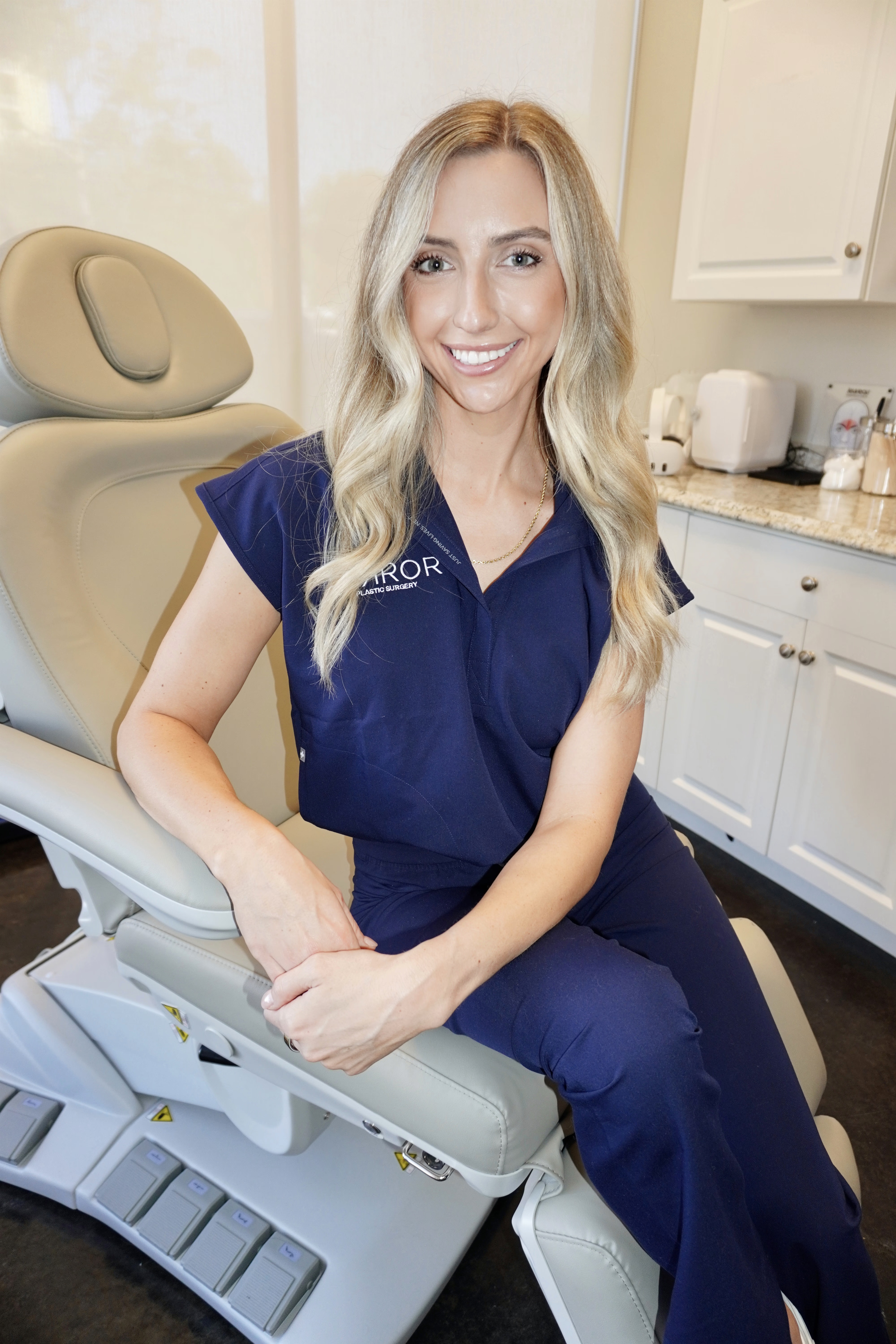
Ellie Pranckevicius, FNP-BC, is the lead practitioner for peptide therapies and non-surgical aesthetics at Mirror Plastic Surgery in St. Petersburg, Florida. A board-certified Family Nurse Practitioner, Ellie holds degrees from Boston University and the University of South Florida and completed four years in the Neuroscience ICU at Tampa General Hospital, which provides a deep foundation in physiology and metabolic health. Her combination of esthetician training and advanced clinical nursing expertise supports a practice philosophy built on education, transparency, and personalized protocols. Ellie often tells patients when a therapy is not yet necessary and prioritizes long-term outcomes over short-term revenue. When surgical evaluation is warranted, her work is complemented by Dr. Akash Chandawarkar, MD, a Harvard-educated physician, Johns Hopkins-trained plastic surgeon, and fellowship-trained aesthetic surgeon.
Summary and Next Steps for Tendon Support
The evidence-based protocol for collagen peptides and tendon remodeling is specific. It uses 15–20 g hydrolyzed collagen peptides plus 50 mg vitamin C, consumed 30–60 minutes before heavy-slow resistance loading, and maintained for a minimum of 8–12 weeks with a third-party tested product. Pain relief typically precedes structural change, and realistic expectations require a 3–6 month commitment for full clinical benefit. When this protocol plateaus or when tendon pathology is complex, medically supervised peptide oversight provides the safest and most evidence-aligned next step. Begin your personalized tendon health assessment at Mirror Plastic Surgery to evaluate your recovery goals.
1 Results may vary from person to person. Editorial content, before and after images, and patient testimonials do not constitute a guarantee of specific results.
Peptide therapy is intended for wellness and optimization purposes and is not prescribed to diagnose, treat, cure, or prevent disease unless specifically stated. Many peptides are not FDA-approved and may be used off-label. Some have limited long-term safety data, with a potential for unknown risks, complications, or desensitization with prolonged use.