Written by: Ellie Pranckevicius, FNP-BC, Aesthetic Nurse Practitioner & Aesthetic Injector | Facial Restoration & Regenerative Injectable Specialist, Mirror Plastic Surgery
Key Safety Takeaways for Peptide Therapy
- Patient complaints against medical spas have risen sharply in 2025–2026 due to counterfeit injectables, unlicensed practitioners, infections, and improper peptide dosing.
- Many states still lack regulations for medical spas, which leaves patients vulnerable to unsafe practices and limited legal recourse when harmed.
- Key red flags include absent medical directors, gray-market peptide sourcing, lack of lab screening, and no way to verify practitioner credentials or product batch testing.
- Florida patients can protect themselves by verifying licenses through state portals, confirming board certification, and ensuring written supervision agreements and on-site oversight exist.
- For safe, medically supervised peptide therapy with verified sourcing and lab-informed protocols, book a consultation at Mirror Plastic Surgery.
Real Patient Complaints and Horror Stories
These complaint categories come from regulatory reports, enforcement actions, and documented patient accounts from 2023 through 2026.
- Counterfeit injectables: A Massachusetts med spa owner pled guilty to importing and dispensing counterfeit Botox, Sculptra, and Juvéderm from China and Brazil, performing thousands of injections while posing as a nurse despite holding only an aesthetician registration. In Pennsylvania, a woman was hospitalized with infections after receiving dermal filler injections at a med spa.
- Unlicensed practitioners performing injections: In Flushing, Queens, a cosmetologist performed repeated neck injections of a substance represented as Botox and stem cells over multiple visits, causing severe blistering and scarring in multiple patients; her cosmetology license was revoked and the matter was referred to the Attorney General.
- Post-treatment infections and hospitalizations: In 2018 the New Mexico Department of Health and CDC began investigating presumptive HIV transmission among four former clients (plus one sexual partner) who received PRP microneedling facials at a New Mexico spa, with results published in 2024. The investigation revealed reuse of disposable equipment and absent infection controls.
- Incorrect peptide dosing and contaminated products: Analyses of peptide samples from various vendors have found that some are mislabeled, under- or overdosed, or contaminated with toxins or bacteria, with documented contaminants including lead in BPC-157 samples, endotoxins in TB-500, and microbial contamination across multiple products.
- Absence of lab screening before treatment: Growth hormone secretagogues carry absolute contraindications including active malignancy, uncontrolled diabetes, and untreated pituitary tumors. These conditions go undetected when no baseline labs are ordered before therapy begins.
- Absentee medical director oversight: In July 2023, a patient died after receiving IV therapy administered by an unlicensed spa owner with inadequate medical director oversight. The incident led to the passage of Jenifer’s Law in Texas in 2025.
- Gray-market peptide sourcing: In July 2025, two women were hospitalized at a Las Vegas anti-aging festival after receiving peptide injections, developing swollen tongues, breathing difficulties, and elevated heart rates.
- No legal recourse for harmed patients: Patients harmed at unregulated medical spas often face barriers to legal recourse because many facilities carry no malpractice insurance, which leaves victims without a viable path to compensation even for documented injuries.
Regulatory Warnings and Recent 2025–2026 Cases
Federal and state enforcement activity against medical spas and peptide vendors has accelerated dramatically since 2025.
FDA and DOJ actions: On April 1, 2026, the FDA issued its first DSCSA warning letter to a Texas med spa after cross-referencing authorized Botox purchase records against patient administration charts and identifying a mismatch suggesting sourcing from unauthorized distributors. That same day, a Utah-licensed osteopathic physician was indicted for selling misbranded, non-FDA-approved peptides to more than 200 patients. The FDA has substantially increased its warning letter output on GLP-1 and peptide products compared to 2024.
Peptide vendor shutdowns: A major U.S. research peptide vendor voluntarily shut down in March 2026 following 18 months of escalating federal enforcement. At least seven other research peptide companies closed during 2025 alone as the “research use only” business model collapsed under federal pressure.
New York statewide sweep: On January 8, 2026, the New York Department of State announced the results of statewide inspections of 223 med spas, citing 87 for possible violations. Enforcement outcomes included fines, suspensions, and license revocations.
Ohio Board of Pharmacy: The Ohio Board of Pharmacy suspended the licenses of 49 medical spas and their suppliers since January 2025 after inspections uncovered counterfeit Botox and illegal drugs at facilities across the state.
Florida exposure: A peer-reviewed study in Plastic and Reconstructive Surgery found that many Florida med-spa providers are nonphysicians with limited core-specialty MD supervision at some clinics. Florida med spas face heightened exposure in the Southern and Middle Districts of Florida as FDA and DOJ coordinate enforcement using DSCSA supply-chain tracing alongside Medicare claims analytics.
Iowa medical director fine: In December 2025, the Iowa Board of Medicine fined a physician $10,000 for inadequate medical director supervision at a med spa where he was physically on-site only 2–3 hours per month instead of the required minimum of 4 hours per week.
Schedule your consultation with Ellie to discuss safe, supervised peptide therapy with a board-certified nurse practitioner who sources from reputable, batch-tested providers.
Red-Flag Checklist for Med Spa Safety
These warning signs suggest a medical spa may not provide adequate oversight or product safety. Confirm each point before committing to any provider.
- No named medical director, or one whose oversight cannot be described in concrete terms. The clearest red flag when evaluating a med spa is a medical director whose oversight cannot be described in concrete terms.
- Absentee or “ghost” medical director. A common structural defect in 2026 injectables programs is the absentee medical director, a physician who provides only a name and signature without documented recurring involvement in approving procedures, reviewing adverse events, or supervising delegation.
- Price presented as the primary selling point. Discount pricing on injectables or peptides often signals sourcing from unauthorized distributors or gray-market vendors.
- Inability to show original product packaging or certificates of analysis. As of June 2026, practices purchasing steep-discount neurotoxins or fillers from unauthorized sources have faced board discipline, product seizures, criminal exposure, and patient harm when products bypass the authorized U.S. cold chain.
- No pre-treatment clinical assessment. Every injectable patient should receive a clinical conversation reviewing medical history for contraindications rather than a digital check-box intake form.
- Injector credentials are unlicensed or outside scope of practice. Injecting neurotoxins and dermal fillers constitutes the practice of medicine and may only be performed by a licensed physician or delegated to an NP, PA, or RN within scope under required state supervision. Estheticians, medical assistants, and unlicensed staff are prohibited from injecting regardless of certifications.
- Vague or absent complication protocol. A clinical practice should specify that hyaluronidase is stocked on-site, a physician is available to assess complications, and a defined escalation pathway exists.
- Peptides sourced from “research use only” vendors. The FDA has ruled that “Research Use Only” disclaimers on peptide products are legally meaningless when marketing context, including sales of bacteriostatic water, syringes, or dosing guides, demonstrates intent for human use.
How Florida Patients Can Verify Credentials and Oversight
Florida residents can use these steps to confirm that a med spa and its practitioners hold valid, active credentials before any treatment.
- Verify the medical director’s physician license. Search the Florida Department of Health Medical Quality Assurance (MQA) online license verification portal by name or license number. Confirm the license is active, unrestricted, and issued in Florida. In Florida, an MD or DO must serve as medical director for any physician-delegated procedures.
- Cross-reference national disciplinary data. Use the Federation of State Medical Boards (FSMB) Physician Data Center to check for disciplinary actions, malpractice judgments, or board sanctions across all states where the physician has held a license.
- Confirm board certification. Verify board certification status through the American Board of Medical Specialties (ABMS) verification tool. Florida requires medical directors of medical spas to hold board certification in dermatology, plastic surgery, or another relevant specialty, in addition to an active physician license in the state.
- Verify the injector’s nursing or NP license. Search the Florida DOH MQA portal for the specific nurse practitioner or RN who will perform your treatment. Confirm the license type, active status, and that no restrictions are noted.
- Confirm a written supervision agreement exists. Ask the practice directly whether a current, signed medical director agreement is on file. Florida requires the medical director to be “immediately available” during procedures, which most practitioners interpret as on-site or within the building.
- Check the facility’s Health Care Clinic Act registration. Verify the clinic’s registration with the Florida Agency for Health Care Administration (AHCA). Florida’s AHCA enforces the Health Care Clinic Act (Chapter 400, Part X) against med spas, with fines of $5,000 per violation per day that can escalate to $10,000 for repeat or serious violations.
- File a complaint if needed. Report concerns about unlicensed practice or unsafe conditions to the Florida Department of Health complaint portal or to AHCA.
Peptide-Specific Risks Without Medical Supervision
Peptide therapy carries a distinct risk profile when patients obtain and administer products outside a supervised clinical setting.
Sourcing from unregulated vendors: Third-party analyses of peptides from unregulated online retailers and overseas sources have documented incorrect peptide identity, potency ranging from 50 to 200 percent of labeled concentration, and contamination with endotoxins, heavy metals, and microbes. These contamination risks stem directly from sourcing peptides outside regulated channels, where no batch testing or quality controls exist.
Absence of batch testing: Spending on third-party purity verification for gray-market peptides fell an estimated 88 percent per buyer as retail demand grew, with buyers instead relying on vendor-supplied certificates that often do not screen for sterility.
Incorrect dosing without clinical context: Self-treatment models introduce dosing risks from generic online protocols that ignore individual metabolic status or contraindications, and create a monitoring gap with no baseline or follow-up labs. Growth hormone secretagogue therapy can transiently reduce insulin sensitivity, particularly in the first 4 to 8 weeks, which can compound existing metabolic dysfunction in patients with pre-existing insulin resistance.
Missing contraindication screening: BPC-157 and TB-500 carry an absolute contraindication in patients with active malignancy because they promote angiogenesis, which could theoretically support tumor growth. This risk goes undetected without a thorough clinical history and lab review.
Regulatory reclassification risk: The FDA published a Federal Register notice on April 15, 2026, removing twelve peptides, including BPC-157, TB-500, GHK-Cu, and KPV, from § 503A Category 2, leaving them in regulatory limbo pending Pharmacy Compounding Advisory Committee review. Patients who obtain these peptides from gray-market sources have no assurance of continued supply, quality, or legal standing.
How Mirror Plastic Surgery Delivers Safe Peptide Care
At Mirror Plastic Surgery in St. Petersburg, Florida, peptide therapy follows a concierge model that addresses every major risk category described above.
The process starts with a comprehensive 30–60 minute consultation with our lead practitioner for peptide therapies and non-surgical aesthetics. She is a board-certified Family Nurse Practitioner who earned her Bachelor’s in Health Science from Boston University on the premedical track, completed a rigorous aesthetics licensure program, and obtained both her Bachelor’s and Master’s in Nursing from the University of South Florida. Her clinical foundation includes four years in the Neuroscience ICU at Tampa General Hospital, where she developed deep expertise in physiology, metabolic health, and complex patient management. She began her career at a high-end medical spa in Boston, which gives her a dual perspective that connects aesthetic goals with clinical science.
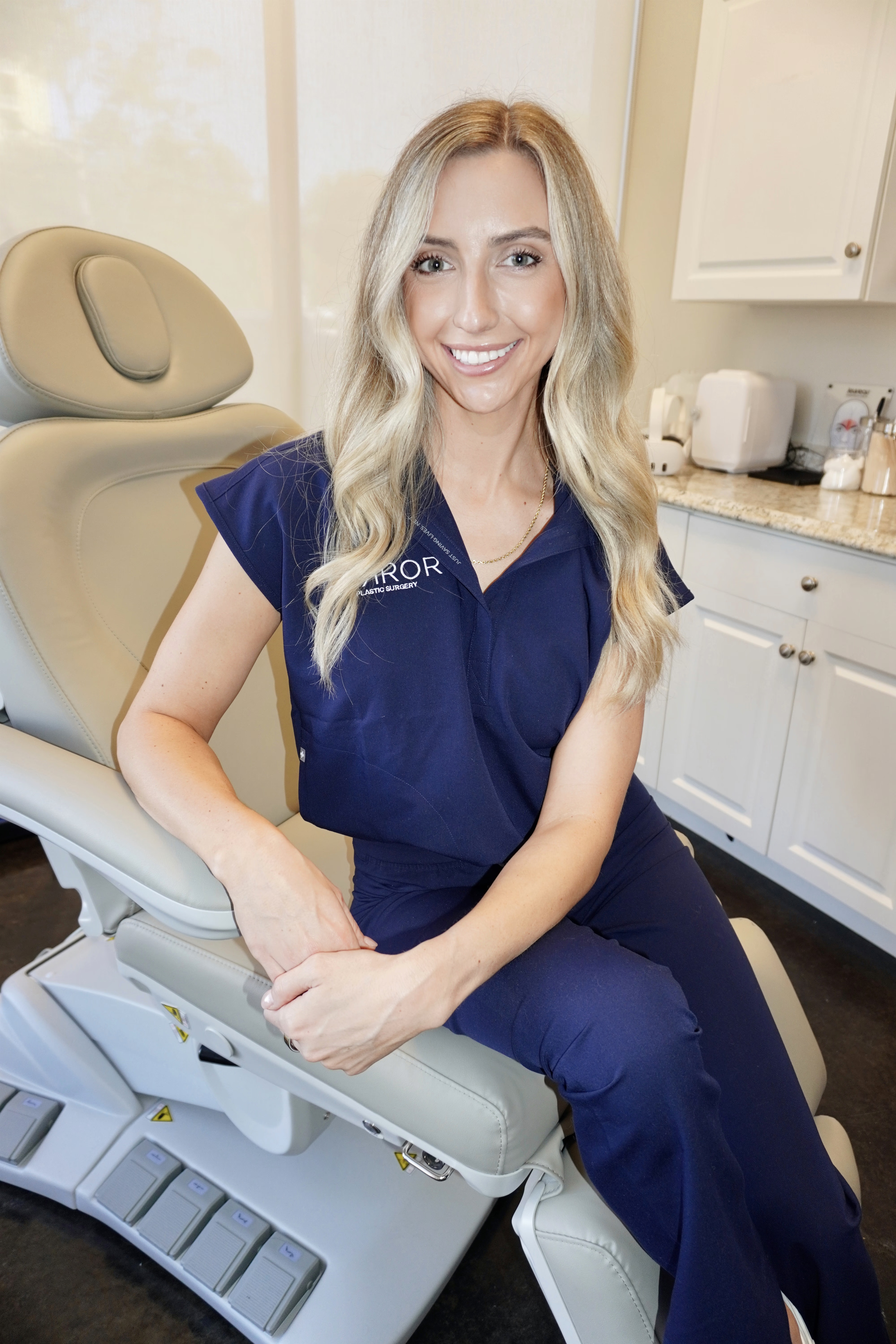
Her approach includes a detailed review of medical history, lab panels such as thyroid, liver, kidney, diabetes markers, and hormone panels when indicated, and a personalized peptide protocol built around each patient’s physiology. Peptides come from reputable providers with documented batch testing that confirms identity, potency, and sterility. Patients receive direct 24/7 access to our practitioner by text for ongoing support, refill requests, and clinical questions. This continuity of care contrasts with the limited access typical of high-volume discount spas. When surgical or complex medical needs arise, her work is complemented by our board-certified plastic surgeon and founder of Mirror Plastic Surgery.
Start your personalized peptide assessment and receive a protocol grounded in lab data, clinical oversight, and verified sourcing.
The following comparison shows how supervised concierge care at Mirror Plastic Surgery differs from unsupervised online purchases and high-volume discount spas. It highlights where safety gaps appear when no true medical oversight exists.
Supervised vs. Unsupervised Care Comparison
| Category | Mirror Plastic Surgery (Supervised Concierge Care) | Unsupervised Online Purchase | High-Volume Discount Med Spa |
|---|---|---|---|
| Sourcing | Reputable providers with documented batch testing, certificates of analysis on file | Many gray-market peptide samples are mislabeled, under- or overdosed, or contaminated | Practices purchasing steep-discount injectables from unauthorized sources have faced board discipline, product seizures, and patient harm |
| Oversight | Board-certified FNP-BC with active physician collaboration, written protocols and supervision agreements on file | No physician oversight, generic online protocols that ignore individual metabolic status or contraindications | Many Florida med-spa providers are nonphysicians with limited core-specialty MD supervision |
| Monitoring | Baseline and follow-up lab panels, individualized dosing adjustments, 24/7 direct practitioner access | No baseline or follow-up labs, no protection against monitoring gaps | A December 2025 NYC Council inspection found 86 percent of med spas were missing required safety records and 73 percent had no medical professional on site |
| Outcome Accountability | Licensed NP with malpractice coverage, physician collaboration available, documented adverse-event protocols | No licensed provider, no legal accountability, no recourse pathway | Patients harmed at unregulated medical spas often face barriers to legal recourse because many facilities carry no malpractice insurance |
Practical Questions to Ask Before Starting Peptides
Before beginning peptide therapy with any provider, ask these questions and request clear, documented answers.
- What is the full name and license number of the medical director, and can you show me their active Florida license verification?
- Who will administer my peptide therapy, and what is their license type and board certification status?
- Where are the peptides sourced, and can you provide certificates of analysis or batch-testing documentation?
- Will I receive a baseline lab panel before starting, and how will dosing be adjusted based on results?
- What is the protocol if I experience an adverse reaction, who do I contact, and how quickly can a clinician respond?
- How many other facilities does the medical director currently oversee, and how often are they physically present at this location?
- Is the medical director’s malpractice insurance active, and does it specifically cover the supervisory role at this practice?
Frequently Asked Questions
Are peptides FDA-approved?
Most peptides used in wellness and anti-aging protocols are not individually FDA-approved for those specific indications, though some peptide-based drugs have received FDA approval for distinct medical uses. The main regulatory risk comes from how and where peptides are obtained. Peptides sourced from unregulated gray-market vendors carry documented risks of contamination, mislabeling, and incorrect dosing. At Mirror Plastic Surgery, Ellie Pranckevicius conducts an in-depth consultation that may include lab panels, sources peptides from reputable providers with known quality and batch testing, and provides ongoing medical support before, during, and after therapy. This supervised model addresses the primary safety concerns associated with unregulated sourcing.
What happens if I stop taking peptides?
When peptide therapy stops, benefits gradually diminish, similar to stopping any structured health regimen. For example, if peptides help manage systemic inflammation, that inflammation often returns to its prior state once therapy ends.1 For patients using growth hormone secretagogues to support muscle retention or metabolic function, those benefits taper as the peptide’s influence on natural hormone signaling fades.1 Many patients transition to a maintenance protocol at a lower dose or reduced frequency to sustain results over time. Ellie works with each patient to design a long-term plan that fits their goals and lifestyle rather than treating peptide therapy as a one-time intervention.
Will everyone see the same results with peptides?
Results from peptide therapy vary significantly from person to person based on genetics, baseline health status, diet, lifestyle, existing conditions, and the specific protocol used.1 A peptide stack that produces rapid anti-inflammatory results in one patient may require dosing adjustments or a different combination for another.1 This variability explains why a personalized approach, grounded in a thorough medical history review and lab analysis, produces better outcomes than generic online protocols. Mirror Plastic Surgery’s model builds a custom peptide stack for each patient based on their physiology and goals, with ongoing monitoring to refine the protocol as the body responds.
What are the risks of using peptides without supervision?
The main risks of obtaining and using peptides without medical supervision include receiving a product that is contaminated, mislabeled, or contains no active ingredient at all, dosing incorrectly without knowledge of individual metabolic factors or contraindications, missing a pre-existing condition such as active malignancy, insulin resistance, or a pituitary disorder that makes certain peptides dangerous, and having no clinical support if an adverse reaction occurs. There is also no reliable legal accountability pathway if harm results from an unlicensed or uninsured provider. Supervised care at Mirror Plastic Surgery reduces each of these risks through verified sourcing, lab-informed dosing, and direct practitioner access.
Conclusion: Making Informed Choices About Peptide Care
Enforcement actions from 2025 and 2026 show a consistent pattern. Patient harm in the medical spa and peptide space usually traces back to counterfeit or gray-market products, unlicensed or undertrained practitioners, and absent or nominal medical director oversight. A study published in Dermatologic Surgery discussed higher rates of adverse events associated with non-physician providers. The verification steps and red-flag checklist in this guide give Florida residents practical tools to distinguish genuine clinical oversight from a compliance form with a physician’s name on it.
Mirror Plastic Surgery’s concierge peptide program, led by Ellie Pranckevicius, FNP-BC, and backed by the clinical standards established by Dr. Akash Chandawarkar, MD, follows the opposite model. The program relies on verified sourcing, individualized lab-informed protocols, active supervision, and direct practitioner access at every stage of care. The practice serves patients in St. Petersburg, Tampa Bay, and remotely across the United States.
Begin your supervised peptide consultation at Mirror Plastic Surgery and move forward with a clear, medically guided plan.
1 Results may vary from person to person. Editorial content, before and after images, and patient testimonials do not constitute a guarantee of specific results.
Peptide therapy is intended for wellness and optimization purposes and is not prescribed to diagnose, treat, cure, or prevent disease unless specifically stated. Many peptides are not FDA-approved and may be used off-label. Some have limited long-term safety data, with a potential for unknown risks, complications, or desensitization with prolonged use.