

Written by: Dr. Akash Chandawarkar, Board Certified Plastic Surgeon, Mirror Plastic Surgery
Key Takeaways
-
BBL carries serious risks such as fat embolism, so surgeon training and anatomical precision become the most critical safety factors.
-
Patients should verify ABPS board certification, integrated residency type, and dedicated aesthetic fellowship training instead of relying on social media or unverified claims.
-
Elite credentials include an ACGME-accredited plastic surgery residency followed by a competitive aesthetic fellowship such as the program at MEETH.
-
Additional safety checkpoints include hospital privileges, accredited facilities, ultrasound-guided technique, and thorough one-hour consultations that avoid high daily case volume.
-
Schedule your personalized BBL consultation with the experts at Mirror Plastic Surgery to review credentials and discuss your goals in detail.
Why Rigorous Training Matters for BBL Safety
The BBL requires a surgeon to harvest fat through liposuction, process it, and re-inject it into the gluteal region at precise anatomical depths. Injecting fat into or below the gluteal muscle, rather than into the subcutaneous layer above it, dramatically increases the risk of intravascular fat injection and fatal embolism. This depth distinction demands years of structured anatomical training and cannot come from a short cosmetic fellowship or high-volume repetition alone.
Surgeons trained in accredited, multi-year integrated plastic surgery residencies build the anatomical foundation to understand fascial planes, vascular territories, and tissue behavior under different conditions. Surgeons who complete abbreviated cosmetic-surgery certificate programs do not receive equivalent exposure to reconstructive anatomy, trauma, or microsurgery. These experiences shape safe body-contouring judgment. A practice that performs eight to ten surgeries per day may advertise high annual case volume, yet that schedule can compress the time available for individualized pre-operative planning.
Safety takeaway: Verify the type of residency completed, not just the number of procedures performed.
The Benchmark: Elite Academic and Aesthetic Training
The training path of Dr. Akash at Mirror Plastic Surgery in St. Petersburg, Florida shows what elite credentials look like in real life. Dr. Akash completed his undergraduate studies in neuroscience and nuclear engineering at MIT. He then earned his M.D. with Honors from Harvard Medical School through the Harvard-MIT Division of Health Sciences and Technology, a program that combines rigorous scientific research with clinical medicine.
He completed a seven-year integrated plastic and reconstructive surgery residency at Johns Hopkins University. His training included rotations at the Johns Hopkins Hospital, the R Adams Cowley Shock Trauma Center, and the Curtis National Hand Center. After residency, he completed a dedicated aesthetic surgery fellowship at the Manhattan Eye, Ear and Throat Hospital (MEETH), one of the most competitive aesthetic fellowship programs in the United States. He also completed the Stanford University Biodesign Innovation Fellowship. Dr. Akash has been named in America’s Best Plastic Surgeons 2025 by Newsweek for two years in a row.
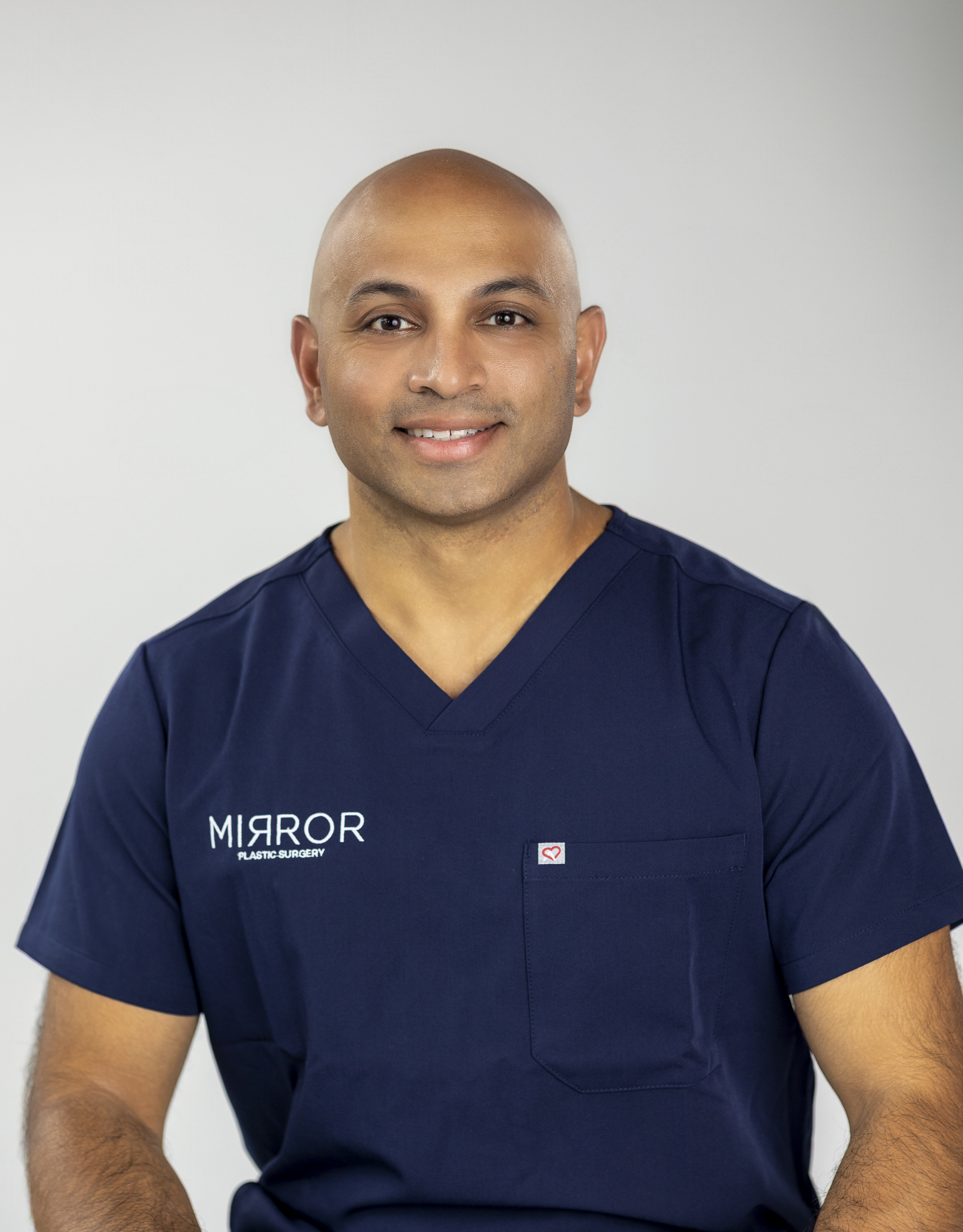
This training sequence, integrated residency followed by a dedicated aesthetic fellowship, represents the highest verifiable standard for a BBL surgeon.
Benchmark takeaway: An integrated plastic surgery residency plus a dedicated aesthetic fellowship at an institution such as MEETH forms the credential combination that sets the safety benchmark.
Step-by-Step Credential Verification Checklist
Step 1 — Confirm ABPS Board Certification
The American Board of Plastic Surgery (ABPS) public directory allows anyone to verify whether a surgeon holds current board certification. The American Society of Plastic Surgeons (ASPS) surgeon finder provides a parallel lookup. ABPS certification requires completion of an accredited plastic surgery residency, passage of written and oral examinations, and ongoing maintenance of certification. Confirm the surgeon’s name appears in both directories before you move forward with surgery.
Takeaway: If a surgeon’s name does not appear in the ABPS directory, no other credential compensates for that absence.
Step 2 — Distinguish Integrated Residency from Cosmetic-Surgery Fellowships
An ABPS-certified plastic surgeon completes a five-to-seven-year integrated or independent plastic surgery residency accredited by the Accreditation Council for Graduate Medical Education (ACGME). Some practitioners hold certification from boards not recognized by the American Board of Medical Specialties (ABMS) and use titles such as “board-certified cosmetic surgeon.” These certificates typically require shorter training periods and do not cover the same anatomical scope. Ask any prospective surgeon to specify the name of their residency program, its length, and its ACGME accreditation status.
Takeaway: ABMS recognition of the certifying board functions as a non-negotiable filter.
Step 3 — Verify Aesthetic Fellowship Training
After residency, some plastic surgeons complete an additional one-to-two-year aesthetic surgery fellowship at programs such as MEETH/Lenox Hill Hospital in New York. These fellowships provide concentrated, supervised training in body contouring, facial rejuvenation, and breast surgery under surgeons who focus exclusively on aesthetic outcomes. Ask whether the surgeon completed a fellowship, at which institution, and under whose supervision.
Takeaway: An aesthetic fellowship after an integrated residency signals the highest level of specialization for elective procedures including BBL.
Step 4 — Check Hospital Privileges and Facility Accreditation
Surgeons with active hospital privileges undergo independent credentialing review by a hospital’s medical staff committee. This process adds a separate layer of vetting beyond board certification. Confirm that the surgical facility holds accreditation from the AAAASF or the AAAHC. Accredited facilities meet defined standards for equipment, staffing, emergency protocols, and anesthesia care.
Takeaway: Accredited facility plus active hospital privileges create two independent safety checkpoints beyond the surgeon’s own claims.
Step 5 — Evaluate Annual BBL Case Volume and Ultrasound-Guidance Protocols
Case volume matters, yet context matters more. A surgeon performing one to two carefully planned BBL procedures per day with full pre-operative ultrasound assessment offers a different safety profile than one performing eight to ten procedures daily without imaging. Ask specifically whether the practice uses ultrasound for pre-operative anatomical mapping of the gluteal vasculature and fat compartments. Ultrasound guidance reduces the risk of intramuscular injection by allowing real-time visualization of needle depth and tissue planes.
Takeaway: Prioritize ultrasound-guided technique and low daily volume over raw case counts.
Step 6 — Review Before-and-After Galleries for Consistent Natural Outcomes
A surgeon’s gallery should show consistent proportionality across diverse body types, not a single exaggerated aesthetic template. Look for results that appear anatomically plausible, with projection and width that match the patient’s skeletal frame. Check for smooth transitions at the hip and thigh and absence of visible surface irregularities from liposuction donor sites.
Takeaway: Consistency across varied body types signals technical skill more reliably than a small set of ideal cases.
Step 7 — Assess Consultation Thoroughness and Practice Philosophy
A safety-first surgeon spends significant time in consultation, typically one hour or more. During that visit, the surgeon performs a top-to-bottom anatomical assessment, discusses realistic outcomes, and advises against combining too many procedures at once. Practices that schedule fifteen-minute consultations, push same-day booking, or encourage stacking multiple major procedures in a single session place throughput ahead of patient safety.
Takeaway: The consultation itself functions as a diagnostic tool. A rushed consultation predicts a rushed surgery.
Credential Scorecard: ABPS + Fellowship vs. Alternative Paths
The following comparison table highlights three common training paths so you can see how ABPS certification combined with aesthetic fellowship training creates multiple independent safety checkpoints that alternative routes do not match.
|
Training Path |
Board Certification |
Fellowship Requirement |
Ultrasound Protocol |
|---|---|---|---|
|
ABPS-certified plastic surgeon + dedicated aesthetic fellowship (e.g., MEETH) |
American Board of Plastic Surgery (ABMS-recognized), requires ACGME-accredited integrated residency, written and oral board exams, and ongoing MOC |
Optional but available through ACGME-accredited or Aesthetic Surgery Education and Research Foundation (ASERF)-affiliated programs, adds 1–2 years of focused aesthetic training post-residency |
Ultrasound used for pre-operative anatomical mapping and real-time depth guidance during fat transfer |
|
ABPS-certified plastic surgeon without aesthetic fellowship |
American Board of Plastic Surgery (ABMS-recognized), same residency and examination requirements as above |
No dedicated aesthetic fellowship completed, aesthetic training occurs within general plastic surgery residency curriculum |
Ultrasound use varies by individual practice protocol |
|
Non-ABMS cosmetic surgery certificate holder |
Certifying board not recognized by the American Board of Medical Specialties, training duration and examination standards differ from ABPS requirements |
Certificate programs vary widely, some require only a short cosmetic-surgery fellowship without prior plastic surgery residency |
Ultrasound use not standardized across certificate-holder practices |
Scorecard takeaway: The ABPS plus dedicated aesthetic fellowship path provides the most verifiable, multi-layered credential stack for a BBL surgeon. Each column in this table represents an independently verifiable data point, so confirm all four before you schedule surgery.
Red Flags to Avoid When Choosing a BBL Surgeon
-
Rushed consultations under 30 minutes: This time frame rarely allows enough opportunity to assess anatomy, review medical history, and discuss realistic outcomes.
-
Pressure to combine multiple major procedures: Stacking a BBL with a tummy tuck, breast augmentation, and other surgeries in a single session increases anesthesia time and complication risk exponentially.
-
No ultrasound in the pre-operative protocol: Lack of imaging-guided planning removes a critical safety layer for intramuscular injection avoidance.
-
Opaque complication data: A surgeon who cannot or will not discuss their complication rates, revision rates, or emergency protocols does not operate transparently.
-
Non-ABMS board certification presented as equivalent to ABPS: Always verify the certifying board’s ABMS recognition status independently.
-
Same-day booking pressure: High-quality surgical planning requires pre-operative labs, imaging, and medical clearance, not same-day sign-off.
Red-flag takeaway: Any single red flag on this list warrants pausing the process and seeking a second opinion from an ABPS-certified surgeon.
Florida-Specific Verification Resources for BBL Patients
Florida patients can independently verify surgeon credentials and facility accreditation through the following official resources.
-
Florida Department of Health — Medical License Verification: Confirms active licensure, any disciplinary actions, and license type for any physician practicing in Florida.
-
ABPS Public Certification Directory: Confirms current ABPS board certification status.
-
ASPS Surgeon Finder: Lists ASPS members, who must hold ABPS certification.
-
AAAASF Accredited Facility Lookup: Verifies outpatient surgical facility accreditation.
-
AAAHC Accredited Organization Search: Provides alternative accreditation verification for ambulatory surgical centers.
A downloadable version of this seven-step credential checklist is available through Mirror Plastic Surgery’s resource library for patients who want a printable reference to bring to consultations.
Verification takeaway: All five resources above are free, publicly accessible, and take under ten minutes to check, so treat this step as mandatory.
Frequently Asked Questions About BBL Credentials and Safety
What is the difference between ABPS board certification and cosmetic surgery board certification?
The American Board of Plastic Surgery is recognized by the American Board of Medical Specialties, the governing body that sets standards for physician specialty certification in the United States. ABPS certification requires completion of an ACGME-accredited plastic surgery residency of five to seven years, passage of both written and oral examinations, and ongoing maintenance of certification through continuing education and peer review.
Several other organizations issue “board certification” in cosmetic surgery but are not recognized by the ABMS. Their training requirements, examination standards, and oversight mechanisms differ substantially from ABPS requirements. When a surgeon describes themselves as “board certified,” ask which board granted certification and whether that board is ABMS-recognized.
How does ultrasound guidance reduce fat embolism risk during a BBL?
Fat embolism during a BBL occurs when fat is inadvertently injected into or near a gluteal blood vessel, allowing fat particles to enter the circulatory system. The gluteal region contains large-caliber vessels, including the superior and inferior gluteal arteries and their perforating branches, that can be difficult to avoid without real-time visualization.
Ultrasound guidance allows the surgeon to visualize the cannula tip in relation to the gluteal muscle and vascular structures during injection. This visualization enables precise depth control within the subcutaneous fat layer above the muscle. Practices that incorporate ultrasound into their pre-operative planning and intraoperative protocol add a measurable safety layer that practices relying on tactile feedback alone do not provide.
How should I interpret a surgeon’s annual BBL case volume when comparing credentials?
Case volume offers a useful data point but only in context. A surgeon performing one to two BBL procedures per day in a low-volume concierge setting, with full pre-operative workup, dedicated anesthesia, and post-operative monitoring, creates a different safety environment than a surgeon performing six to eight procedures daily in a high-throughput setting.
Higher daily volume compresses pre-operative planning time, increases cumulative anesthesia exposure for the surgical team, and reduces the individualized attention available to each patient. When you evaluate volume, ask how many surgeries the practice performs per day in total, not just the annual BBL count.
Why does aesthetic fellowship training matter if a surgeon is already ABPS-certified?
ABPS certification confirms that a surgeon has completed the foundational requirements for plastic surgery practice, including reconstructive and aesthetic training within a broad residency curriculum. A dedicated aesthetic fellowship, such as the program at MEETH, provides an additional one to two years of concentrated, supervised training focused exclusively on elective aesthetic procedures including body contouring, facial rejuvenation, and breast surgery.
Fellowship-trained surgeons perform a higher volume of aesthetic cases under direct expert supervision before practicing independently. They also gain exposure to a wider range of aesthetic techniques, complication management scenarios, and outcome refinement strategies than residency alone provides.
What should I expect from a thorough BBL consultation?
A thorough BBL consultation usually lasts at least 45 to 60 minutes and includes a full medical history review and a physical examination of the donor and recipient sites. The surgeon should discuss your anatomical proportions and realistic outcome expectations and explain the surgical technique and anesthesia plan.
You should also receive a clear review of potential complications, how the practice manages them, and what combination of procedures, if any, is safe to perform simultaneously. The surgeon should explain why they recommend a specific fat-transfer volume and injection technique based on your individual anatomy, not a standardized template. If a consultation omits these elements, consider it incomplete.
Conclusion: Choose BBL Surgeons With Safety-First Training
Selecting a BBL surgeon creates permanent anatomical consequences, so training and safety systems must guide your decision. The seven-step framework above, ABPS verification, residency type, aesthetic fellowship, hospital privileges, facility accreditation, ultrasound protocols, and consultation quality, gives you a complete, independently verifiable credential picture that no single data point can replace.
Surgeons who hold ABPS certification plus dedicated aesthetic fellowship training from institutions such as MEETH, who operate in accredited facilities, and who limit daily surgical volume to ensure individualized care represent the highest verifiable standard available to patients today.
Dr. Akash at Mirror Plastic Surgery in St. Petersburg, Florida meets every criterion on this checklist. With the Newsweek recognition mentioned earlier, he brings Harvard-MIT, Johns Hopkins, and MEETH training to every BBL consultation, along with a concierge philosophy that limits the practice to one to two surgeries per day so each patient receives the focused attention their safety requires.
Book a consultation with Dr. Akash at Mirror Plastic Surgery and bring this checklist with you.



