
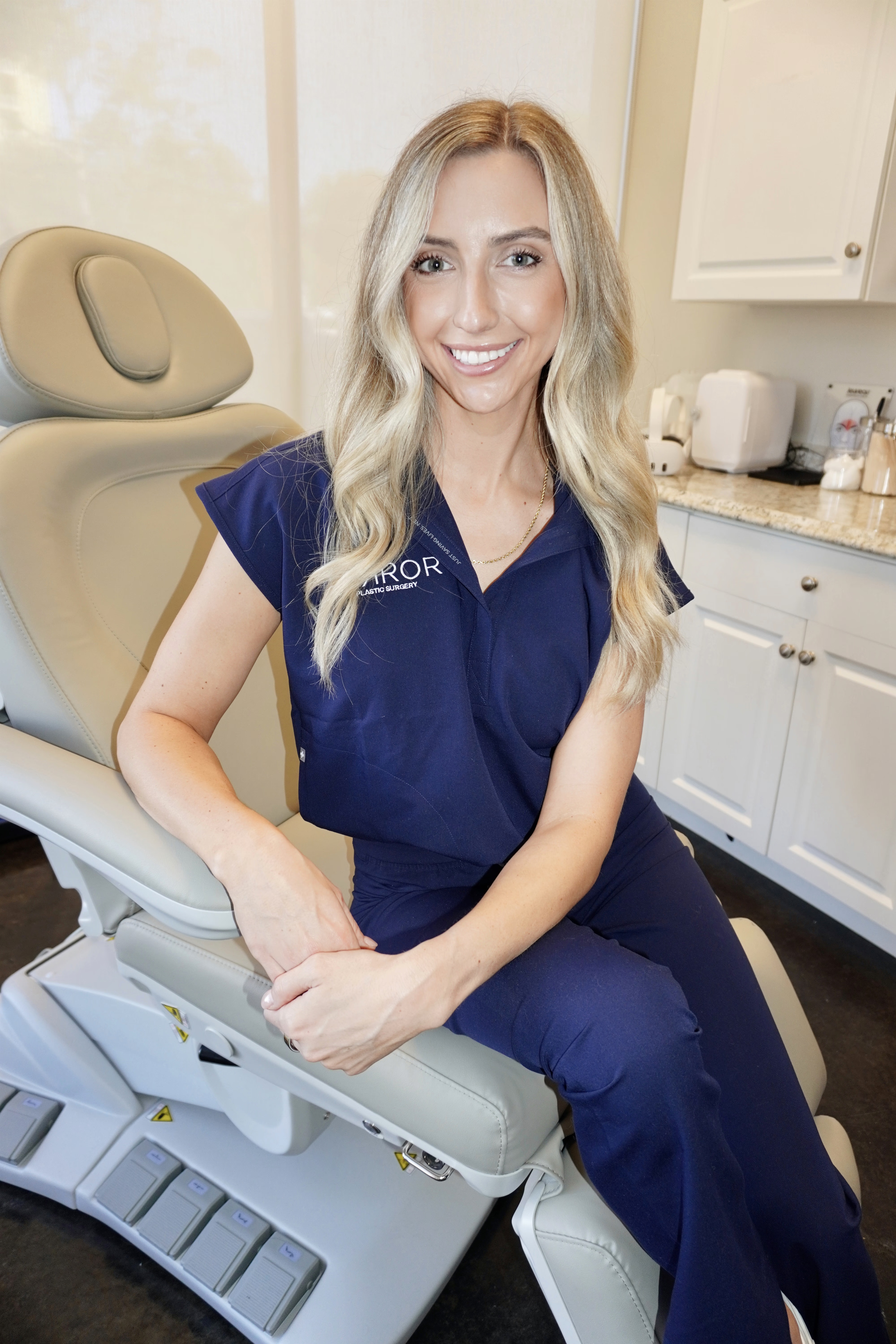
Written by: Ellie Pranckevicius, FNP-BC, Aesthetic Nurse Practitioner & Aesthetic Injector | Facial Restoration & Regenerative Injectable Specialist, Mirror Plastic Surgery
Key Takeaways for Tampa BBL Patients
- Premier BBL centers focus on safety-first protocols, personalized anatomical assessments, and access to both surgical and non-surgical options instead of volume-driven procedures.
- Surgical BBL results last for many years but still change with aging and weight shifts.1 Non-surgical options using biostimulatory fillers like Radiesse and AlloClae provide several years of results with minimal downtime.1
- Candidacy for surgical BBL requires sufficient donor fat and good overall health. Non-surgical BBL suits patients with less body fat or those who prefer to avoid surgery.
- Age alone does not disqualify patients. Non-surgical BBL with collagen-stimulating fillers works especially well for mature skin and can improve texture while adding volume.
- Patients seeking a concierge-level assessment for surgical or non-surgical gluteal enhancement in the Tampa Bay area can schedule their concierge assessment with Ellie at Mirror Plastic Surgery.
Three Pillars of a Premier BBL Center in Tampa
A premier BBL center rests on three non-negotiable pillars: safety-first protocols, personalized anatomical assessment, and access to both surgical and non-surgical pathways. The first pillar, safety-first protocols, means the practice prioritizes patient well-being over volume targets, which shapes how much time providers spend with each patient. This time investment supports the second pillar, personalized assessment, where a provider spends up to an hour learning your anatomy, health history, and emotional motivations before recommending any procedure. That detailed assessment only matters when it guides honest recommendations, which is why the third pillar, access to multiple pathways, ensures patients are not pushed toward surgery when a non-surgical option fits better, or the reverse.
Mirror Plastic Surgery in St. Petersburg follows this model in daily practice. Harvard-educated, Johns Hopkins-trained plastic surgeon Dr. Akash Chandawarkar and aesthetic nurse practitioner Ellie Pranckevicius, FNP-BC, limit the practice to one to two surgeries per day and conduct comprehensive top-to-bottom consultations that can last a full hour. Ellie performs non-surgical BBL services and brings dual expertise in esthetics and advanced nursing, including four years in the Neuroscience ICU at Tampa General Hospital.
Request your personalized candidacy evaluation to receive a tailored assessment of your gluteal anatomy, health profile, and suitability for surgical or non-surgical enhancement.
How Long Do Brazilian Butt Lifts Last?
Longevity differs substantially between surgical fat grafting and non-surgical biostimulatory fillers, and neither pathway produces permanent results.
Surgical BBL transfers processed fat from your own body into the gluteal region. Fat survival rates depend on technique, surgeon skill, and post-operative care. Results last for many years but still respond to aging, significant weight changes, and natural volume loss over time.1 Patients who gain or lose a large amount of weight after surgery will see their results change accordingly.
Non-surgical BBL at Mirror Plastic Surgery uses biostimulatory fillers, primarily Radiesse and AlloClae, an FDA-registered injectable made from donor-derived adipose tissue. AlloClae requires no liposuction, incisions, or general anesthesia. The procedure takes place in-office under local anesthesia in 30 to 60 minutes, and most patients return to normal activity within one to two days. AlloClae results can last several years and work well for subtle volume, hip-dip correction, or contour refinement without surgery.1 Radiesse, a calcium hydroxylapatite biostimulatory filler, stimulates your own collagen production, with results that develop gradually and typically last 12–18 months (up to 24 months with appropriate maintenance).1
The non-surgical pathway requires periodic maintenance sessions. Surgical BBL involves a larger upfront commitment and offers more durable results, although those results still change with aging and lifestyle.
Who Qualifies or Is Disqualified for a BBL?
Candidacy criteria apply to both surgical and non-surgical pathways, and the thresholds differ in meaningful ways.
For surgical BBL, good candidates are generally in good health, do not smoke or can stop smoking before surgery, have sufficient donor-site body fat available for transfer, maintain a stable weight, and hold realistic expectations about outcomes. A full pre-operative evaluation usually includes blood work, cardiac screening, BMI assessment, and medication review. Patients are typically disqualified if they have significant obesity, serious heart or lung conditions, uncontrolled diabetes, or clotting disorders. Smoking must stop before surgery because it materially increases complication risk.
BBL candidacy extends beyond body-fat percentage alone. Even leaner patients may qualify when they have adequate donor fat in strategic areas such as the lower abdomen, flanks, inner thighs, or bra line. Patients without sufficient donor fat often receive guidance toward alternative body-contouring options, including non-surgical biostimulatory fillers.
For non-surgical BBL with biostimulatory fillers, the qualification bar is lower. No general anesthesia, liposuction, or donor fat is necessary. Patients with limited fat for surgical transfer, those who prefer to avoid surgery, or those with health conditions that elevate surgical risk often qualify for the injectable pathway. Ellie’s hour-long assessment at Mirror Plastic Surgery evaluates skin quality, tissue laxity, gluteal anatomy, and individual goals to determine the most appropriate approach.
Is 50 Too Old for a BBL?
Age alone does not disqualify a patient from either surgical or non-surgical gluteal enhancement. BBL procedures can succeed across a wide age range, although younger patients often benefit from greater skin elasticity that supports better outcomes. For surgical candidates over 50, the main considerations include skin laxity, overall health status, and the ability to tolerate anesthesia and recovery. Providers evaluate these factors during a thorough pre-operative workup.
For non-surgical candidates, age-related skin changes guide product selection and technique. Biostimulatory fillers like Radiesse suit mature skin because they stimulate collagen production, which can improve skin quality while adding volume. Ellie’s assessment at Mirror Plastic Surgery considers skin texture, elasticity, and subdermal anatomy when designing a non-surgical treatment plan. This approach adapts well to patients across a broad age spectrum. Patients over 50 who are in good general health, maintain realistic expectations, and have appropriate skin quality often make excellent candidates for non-surgical BBL.
Surgical vs. Non-Surgical BBL: Key Differences
Beyond age and candidacy, patients need a clear view of how safety profiles, procedures, and outcomes differ between surgical and non-surgical approaches. Plastic surgery is an ABMS-approved residency training program that includes liposuction and fat transfer. Surgical BBL performed by board-certified plastic surgeons in accredited facilities, using subcutaneous-only fat grafting and intraoperative ultrasound guidance, carries a substantially lower risk profile than earlier techniques. Mortality rates have improved significantly after adoption of these updated protocols. Non-surgical BBL with biostimulatory fillers removes the risks associated with general anesthesia, liposuction, and intravascular fat injection entirely.
The following comparison shows how consultation quality, safety protocols, and patient-centered care differ across three common BBL pathways:
| Factor | High-Volume Surgical Mill | Board-Certified Surgical BBL | Mirror Plastic Surgery Non-Surgical BBL |
|---|---|---|---|
| Consultation Length | Typically brief, limited anatomical review | Varies by practice | Up to 1 hour, top-to-bottom anatomical assessment |
| Daily Case Volume | Budget clinics located in strip malls associated with 92% of BBL deaths in South Florida per 2023 study | Accredited facilities, limited daily cases | 1–2 procedures per day, full-team focus per patient |
| Safety Measures | Variable, intramuscular injection risk documented | Subcutaneous-only technique, intraoperative ultrasound, board-certified anesthesiologist | No general anesthesia, no liposuction, biostimulatory fillers only, no intravascular fat risk |
| Long-Term Maintenance | Results subject to weight change, revision costs higher | Durable but not permanent, weight-dependent | Several years per AlloClae session, periodic maintenance, adjustable over time |
Red Flags in Rushed Consultations and the Value of an Hour-Long Assessment
A 2023 study in the Aesthetic Surgery Journal confirmed the pattern noted in the comparison above: the overwhelming majority of BBL deaths in South Florida occurred at budget clinics located in strip malls. The common thread in these cases involves more than technique. These clinics often deprioritize individual patient assessment in favor of throughput.
Several red flags signal a rushed or unsafe consultation. Warning signs include a provider who does not ask about your health history, medications, or smoking status. Another concern appears when a recommendation arrives before a physical assessment is complete. Pressure to book immediately or accept a package deal, and no discussion of disqualification criteria or realistic outcome limits, also indicate a poor-quality consultation.
Mirror Plastic Surgery’s hour-long initial assessment is designed to uncover the information rushed consultations miss. Ellie starts by learning the emotional drivers behind a patient’s interest in gluteal enhancement, including body image goals, lifestyle context, and long-term expectations. She then performs a structured physical evaluation of gluteal anatomy, skin quality, tissue laxity, and symmetry. Product selection follows the assessment, not the reverse. Because Mirror operates as a supplier-neutral practice, Ellie recommends the biostimulatory filler that best fits each patient’s anatomy instead of defaulting to a single product or volume target.
Experience Mirror’s hour-long assessment process and see the difference between a quota-driven appointment and a concierge evaluation built around your anatomy and goals.
Practical Decision-Making Factors for Your BBL Pathway
Several practical variables should guide the choice between surgical and non-surgical BBL beyond safety statistics alone.
Downtime compatibility. Surgical BBL requires weeks of restricted sitting and activity. AlloClae and Radiesse-based non-surgical BBL usually allow a return to normal activity within one to two days, which often fits better with demanding professional or family schedules.
Volume goals. Patients seeking dramatic gluteal projection or large volume increases usually achieve better outcomes with surgical BBL techniques than with biostimulatory filler treatments.1 Patients who want subtle enhancement, hip-dip correction, cellulite smoothing, stretch mark reduction, or symmetry correction often do well with the non-surgical pathway.
Donor fat availability. Surgical BBL requires sufficient harvestable fat. Patients with lean body compositions who lack adequate donor sites do not qualify for surgery and benefit from the non-surgical option, which does not require liposuction.
Skin quality and anatomy. Individual skin texture, elasticity, and subdermal structure influence both product selection and expected outcomes. Ellie’s assessment evaluates these factors directly so that treatment plans reflect actual anatomy instead of standardized protocols.
Maintenance commitment. Non-surgical results require periodic maintenance sessions. Patients who prefer a set-and-forget approach may lean toward surgical BBL. Patients who value the ability to adjust their results gradually over time often prefer the non-surgical pathway.
Frequently Asked Questions
What is a non-surgical BBL and how does it work?
A non-surgical BBL uses injectable biostimulatory fillers, at Mirror Plastic Surgery primarily Radiesse and AlloClae, to add volume and refine contour in the gluteal region. These treatments can smooth cellulite, reduce the appearance of stretch marks, and correct asymmetries. The fillers stimulate your own collagen production over time, which produces gradual, natural-looking results without surgery, liposuction, or general anesthesia. The procedure takes place in-office under local anesthesia and typically lasts 30 to 60 minutes. Most patients return to normal activity within one to two days.
What disqualifies someone from getting a surgical BBL?
The main disqualifying factors appear in the candidacy section above and center on conditions that elevate surgical risk. These include health issues such as cardiovascular disease, uncontrolled diabetes, or clotting disorders, along with significant obesity. Insufficient donor fat and active smoking also disqualify many patients. Unrealistic expectations, such as viewing BBL as a weight-loss procedure, give ethical providers a reason to decline surgery. Many patients who do not qualify for surgical BBL still qualify for the non-surgical biostimulatory filler approach.
Is 50 too old for a non-surgical BBL?
Age functions as one factor among many, not a standalone disqualifier. For non-surgical BBL, the more relevant considerations include skin quality, tissue laxity, and overall health. Biostimulatory fillers like Radiesse suit mature skin because they stimulate collagen production, which can improve skin texture and firmness while adding volume. Ellie’s assessment at Mirror Plastic Surgery evaluates each patient’s anatomy and skin condition to determine the most appropriate product and technique. This process keeps the non-surgical pathway accessible and effective across a wide age range.
How many sessions are needed for a non-surgical BBL, and how long do results last?
The number of sessions depends on starting anatomy, volume goals, and the specific products used. Some patients reach their desired outcome in a single session. Others benefit from a staged approach over two to three visits. AlloClae results can last several years. Radiesse results develop gradually as collagen production increases, with the longevity described in the section above. Ellie designs a personalized treatment plan during the initial consultation that outlines a realistic timeline and maintenance schedule based on individual anatomy and goals.
How do I identify a safe, qualified BBL provider in Tampa?
For surgical BBL, look for a board-certified plastic surgeon who operates in an accredited facility and uses subcutaneous-only fat grafting with intraoperative ultrasound guidance. Avoid providers who perform very high daily case volumes, offer far below-market pricing, or cannot clearly explain their safety protocols. For non-surgical BBL, seek a provider with advanced anatomical training, a supplier-neutral approach to product selection, and a consultation process that includes a thorough physical assessment instead of an immediate product recommendation. Mirror Plastic Surgery’s concierge model, with hour-long assessments, biostimulatory-filler expertise, and a safety-first philosophy, is designed to meet these criteria for Tampa-area patients.
Conclusion: How to Choose a Premier BBL Center in Tampa
The defining characteristics of a premier BBL center in Tampa stay consistent whether a patient chooses a surgical or non-surgical pathway. Safety-first protocols, unhurried and anatomy-focused consultation, honest communication about candidacy and realistic outcomes, and provider credentials that reflect genuine expertise in gluteal anatomy all matter.
Patients who are not surgical candidates, prefer to avoid the risks associated with general anesthesia and liposuction, or want subtle and adjustable enhancement can look to Mirror Plastic Surgery’s non-surgical BBL program. Ellie Pranckevicius leads this program using Radiesse and AlloClae within a clinically rigorous, concierge-level framework. Patients who may ultimately need surgical intervention can work with Dr. Akash Chandawarkar, whose Harvard and Johns Hopkins training supports a complementary surgical pathway within the same practice.
The decision between surgical and non-surgical gluteal enhancement depends on anatomy, personal preference, and health status. This type of decision deserves more than a rushed appointment and benefits from a careful, hour-long assessment.
Begin a thorough, honest assessment of your options with Ellie at Mirror Plastic Surgery in St. Petersburg and explore your choices for gluteal enhancement in the Tampa Bay area.
Disclaimer: Results may vary from person to person. Editorial content, before and after images, and patient testimonials do not constitute a guarantee of specific results.
1 Results may vary from person to person. Editorial content, before and after images, and patient testimonials do not constitute a guarantee of specific results.