
Written by: Dr. Akash Chandawarkar, Board Certified Plastic Surgeon, Mirror Plastic Surgery
Key Takeaways
-
Body contouring surgery treats excess skin, stubborn fat, and weakened muscles that do not respond to diet and exercise.
-
The right procedure depends on your anatomy, functional goals, recovery tolerance, and long-term maintenance, not marketing claims.
-
Full abdominoplasty, liposuction, mommy makeovers, body lifts, and high-definition contouring each serve different needs and trade-offs.
-
Choosing a board-certified plastic surgeon with accredited facilities and conservative surgical volume improves safety and outcomes.
-
Book a consultation with Dr. Akash at Mirror Plastic Surgery for a personalized, anatomy-first body contouring plan.
How to Decide Which Body Contouring Procedure Works Best for You
There is no single “most effective” procedure for every patient. The right choice depends on four core factors: anatomical candidacy, functional restoration goals, recovery timeline tolerance, and long-term maintenance commitment.
Anatomical candidacy means evaluating the specific structures involved, including skin quality, fat distribution, muscle integrity, and tissue elasticity. These structures determine whether a procedure creates meaningful correction or only surface change.
For example, a patient with significant rectus diastasis (abdominal muscle separation) after pregnancy needs muscle repair, not just fat removal, because fat removal alone will not restore core strength. A patient with hanging skin after major weight loss needs surgical excision; non-surgical energy-based treatments provide only modest improvement when more than an inch of loose skin can be pinched or skin hangs in folds.
Functional restoration separates procedures that rebuild support structures from those that only change contour. Stable weight also matters. Patients should maintain a stable weight for at least six months before body contouring surgery to help results last.1 For post-bariatric patients, body contouring procedures are usually performed 12–18 months after reaching and maintaining goal weight.1
Tummy Tuck (Abdominoplasty): Restoring the Abdominal Wall and Skin
With these candidacy factors in mind, abdominoplasty offers the most comprehensive approach to abdominal restoration because it treats all three anatomical layers at once. Abdominoplasty addresses excess skin, subcutaneous fat, and the abdominal wall musculature.
A full tummy tuck repairs the rectus muscles from the chest to the pubic area, removes redundant skin, and repositions the navel. This approach restores core integrity and improves appearance at the same time.
Limited or “mini” tummy tuck techniques treat only the lower abdomen below the navel. This method leaves upper abdominal laxity and muscle separation uncorrected, which often creates a “pooching” effect above the scar.
For patients with diastasis that extends above the navel, which includes most post-pregnancy patients, a mini approach produces an incomplete anatomical result. At Mirror Plastic Surgery, full abdominal wall restoration is the standard because muscle repair is a functional goal, not just a cosmetic preference.
Recovery from a full abdominoplasty follows a predictable pattern. Most patients return to desk work within 1–2 weeks, resume light activity by 4–6 weeks, and see final abdominal contour between 3–6 months, with complete scar maturation taking up to one year.1
Liposuction: Targeted Fat Removal for Shaping
Liposuction removes localized fat deposits from specific areas such as the flanks, abdomen, thighs, arms, and back through small cannulas. Modern techniques include traditional suction-assisted, ultrasound-assisted (UAL), and laser-assisted (LAL) methods. Each technique suits different fat densities and tissue characteristics.
Liposuction works best when skin elasticity allows the skin to contract over the reduced fat volume. In patients with significant skin laxity, removing fat without tightening the skin envelope can worsen sagging.
Removing fat from areas with loose skin can sometimes make laxity look worse by eliminating the volume that was filling out the skin. When surgeons combine liposuction with abdominoplasty or body lift, they can create more durable and proportional contours by treating both fat volume and skin excess at the same time.
Mommy Makeover and Body Lift: Strategic Combination Procedures
This principle of strategic combination, where complementary procedures address multiple anatomical concerns together, forms the basis of both mommy makeovers and body lifts. A mommy makeover combines breast and abdominal or body procedures in a single operation to treat the areas most affected by pregnancy and breastfeeding.
Typical combinations include a breast lift or augmentation with full abdominoplasty and liposuction. The main advantage is a single recovery period. The trade-off is a longer operative time, which requires careful patient selection and detailed planning to maintain safety.
A body lift, whether upper, lower, or circumferential, removes excess sagging skin from the abdomen, flanks, lower back, hips, and buttocks after major weight loss. A circumferential body lift is often combined with liposuction, arm lift, thigh lift, or buttock lift to complete the transformation and smooth irregularities.
Combining too many procedures in one session increases risk. Mirror Plastic Surgery advises against aggressive procedural stacking, as studies show that complication rates rise sharply when surgeons extend operative time and add multiple major procedures.
High-Definition Body Contouring: Refining an Already Fit Physique
High-definition body contouring uses precise liposuction etching and sculpting to highlight underlying musculature. Surgeons often apply this technique to the abdomen, flanks, and chest to create visible definition. Ideal candidates are already near their ideal weight, have good skin elasticity, and have built underlying muscle through consistent training.
High-definition techniques enhance foundational reconstruction rather than replace it. A patient with diastasis and excess skin needs abdominal wall repair first, because etching on unrepaired anatomy can create distorted contours. When surgeons apply high-definition contouring to the right candidate, the result is an athletic, natural-looking shape that matches the patient’s existing musculoskeletal structure.
How to Choose a Qualified Body Contouring Surgeon in St. Petersburg
The American Board of Plastic Surgery (ABPS) is the only plastic surgery board recognized by the American Board of Medical Specialties (ABMS), so ABPS certification is the key credential to confirm.
ABPS certification requires at least six years of accredited surgical training after medical school, including a minimum of three years of dedicated plastic surgery residency, followed by comprehensive written and oral board examinations. You can verify certification at abplasticsurgery.org.
Fellowship training in aesthetic surgery signals focused, post-residency specialization. ASAPS fellowship training beyond residency indicates concentrated aesthetic surgery experience and a peer-reviewed commitment to safe aesthetic practice standards. Accredited surgical facilities and board-certified physician anesthesiologists are essential safety elements, not optional upgrades.
Dr. Akash at Mirror Plastic Surgery reflects the depth of training patients should seek. He is board certified by the ABPS after completing a seven-year integrated plastic and reconstructive surgery residency at Johns Hopkins University, one of the world’s most rigorous programs, which provided his core surgical foundation.
He then completed an aesthetic surgery fellowship at the Manhattan Eye, Ear and Throat Hospital (MEETH), one of the most competitive aesthetic fellowships in the country, to focus exclusively on cosmetic techniques.
His clinical training builds on a medical degree from the Harvard-MIT Health Sciences and Technology program and a Biodesign Innovation Fellowship at Stanford University, which combine engineering principles with medical practice.
He has been named in America’s Best Plastic Surgeons 2025 by Newsweek for two consecutive years. Mirror Plastic Surgery performs one to two surgeries per day, a deliberate contrast to high-volume practices that perform five to ten, so each patient receives the full attention of the entire surgical team.
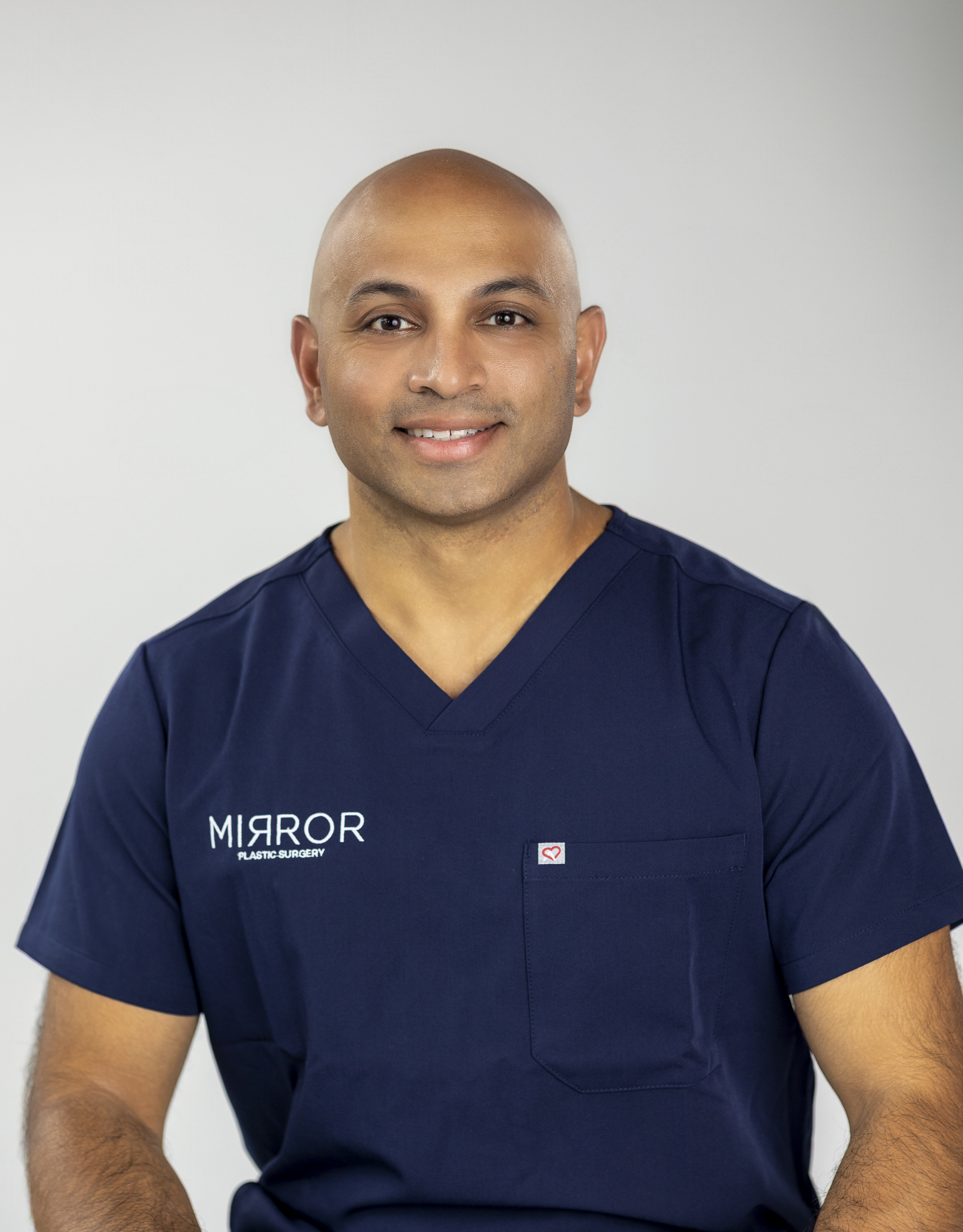
Book a consultation with Dr. Akash and experience a surgeon-led, anatomy-first evaluation.
How Painful Is Body Contouring Surgery? Recovery and Comfort Planning
Discomfort after body contouring surgery is manageable and follows a predictable course. The abdominoplasty recovery timeline described earlier translates into clear pain management phases.
In the first week after abdominoplasty, patients usually walk slightly bent forward, wear a compression garment continuously except during showering, and have drains removed at the 1–2 week follow-up based on fluid output. Most patients transition from prescription pain medication to over-the-counter options by weeks 2–4.1
Compression garments are typically worn for 6–8 weeks or longer to reduce swelling, and light exercise usually resumes around three months after body contouring surgery once most swelling has resolved.1 Core exercises, heavy lifting, and abdominal workouts usually require 8–12 weeks for clearance.1
Accredited facilities and board-certified physician anesthesiologists, not a nurse anesthetist alone, support safer anesthesia and smoother pain control. A high-protein, low-sodium diet, adequate hydration, and avoiding smoking, alcohol, and THC products for at least two weeks before and after surgery support tissue repair and help limit swelling.
Common Misconceptions About Mini Procedures, Combined Surgeries, and Non-Surgical Options
Mini procedures are often marketed as lower-risk versions of full operations, yet they treat less anatomy. In practical terms, a mini tummy tuck treats only the skin below the navel and does not repair the rectus muscles. This limitation makes it unsuitable for most post-pregnancy patients who have diastasis that extends above the navel. These patients receive only partial correction and often need revision.
Despite the limitations noted earlier for severe laxity, non-surgical alternatives play a useful role for patients with mild-to-moderate laxity near their ideal weight.
Non-surgical body contouring is not suitable for patients with BMI over 30 or those with severely lax or hanging skin after massive weight loss, because superficial devices cannot treat visceral fat or provide enough tightening. The key distinction is that these devices can improve existing tissue quality but cannot remove tissue.
Combining too many procedures in one session also reflects a common misconception. Complication rates rise as operative time and complexity increase. A staged plan that addresses structural surgery first and refinement later usually offers safer and more durable results than trying to correct every concern in a single operation.
Procedure Comparison at a Glance
The comparison below summarizes each procedure’s invasiveness, main anatomical targets, and recovery timeline. This overview helps you weigh the trade-offs between how extensive the intervention is and how broad the outcome can be.
-
Full Abdominoplasty: High invasiveness, repairs abdominal wall musculature and removes excess skin, provides functional and aesthetic benefit, typical healing 6–12 weeks to return to full activity, final contour at 3–6 months.
-
Liposuction: Moderate invasiveness, removes localized fat deposits, works best when combined with skin excision in laxity cases, swelling usually resolves over 3–6 months for final result.
-
Mommy Makeover: High invasiveness with combined procedures, treats breast and abdominal units at the same time, requires careful patient selection to manage operative time and safety, offers a single recovery period.
-
Circumferential Body Lift: High invasiveness, removes excess skin from abdomen, flanks, lower back, hips, and buttocks, full recovery 6–12 months.1 most appropriate for post-bariatric patients.
-
High-Definition Contouring: Moderate invasiveness, accentuates underlying musculature with precision liposuction, requires good skin elasticity and near-ideal weight, complements rather than replaces foundational reconstruction.
-
Non-Surgical (Energy-Based): Minimal to no invasiveness, results appear 2–6 months after treatment and typically last 1–3 years with maintenance1, appropriate for mild-to-moderate laxity only, requires repeat sessions.
Frequently Asked Questions
How do I know if I am a candidate for body contouring surgery?
Candidacy depends on anatomy and overall health. Ideal candidates are at or near a stable goal weight, maintained for at least six months, do not smoke or are willing to stop well before surgery, and hold realistic expectations. Patients with significant skin laxity, muscle separation, or excess fat that has not improved with diet and exercise are often strong surgical candidates.
A thorough consultation with a full anatomical assessment is the only reliable way to confirm candidacy. At Mirror Plastic Surgery, Dr. Akash spends up to an hour in the initial consultation reviewing your anatomy, health history, and goals before making any recommendation.
What is the difference between a board-certified plastic surgeon and other providers offering body contouring?
The American Board of Plastic Surgery (ABPS) is the only plastic surgery board recognized by the American Board of Medical Specialties. As detailed earlier, this certification requires extensive training, at least six years after medical school, that other specialty boards do not require for cosmetic procedures.
Physicians certified by other boards, such as OB/GYN or emergency medicine, do not receive equivalent plastic surgery training. This difference matters because body contouring involves complex anatomy, and rapid recognition and management of complications depend on the depth of surgical training. Always verify ABPS certification at abplasticsurgery.org before proceeding.
When will I see my final results after body contouring surgery?
Final results depend on the specific procedure. After a full tummy tuck, most patients see their abdominal contour take shape between three and six months, with complete scar maturation up to one year after surgery. After a circumferential body lift, full recovery, including resolution of swelling and scar maturation, usually takes six to twelve months.1
Swelling is the main reason results appear gradually.1 Compression garments, a high-protein diet, and activity restrictions all support faster improvement. During your consultation, Dr. Akash provides a personalized recovery timeline based on your procedure plan and anatomy.
Can non-surgical treatments replace surgery for excess skin after weight loss?
For mild-to-moderate skin laxity in patients near their ideal weight, non-surgical energy-based treatments can create noticeable improvement. For patients with significant hanging skin, especially after bariatric surgery or major weight loss, non-surgical devices cannot remove excess skin or repair underlying muscle. In these cases, surgical excision is the only method that produces a flat, tight, and structurally restored contour.
Combining surgical removal of major skin excess with non-surgical treatments for skin-quality refinement often yields the best overall outcome. Dr. Akash will advise clearly on which approach fits your anatomy, including when non-surgical options are enough and when surgery is necessary.
How does Mirror Plastic Surgery approach safety differently from high-volume practices?
Mirror Plastic Surgery schedules one to two surgeries per day so that Dr. Akash and the team can focus fully on each patient before, during, and after surgery. High-volume practices may perform five to ten surgeries daily, which can divide attention.
All procedures occur in accredited surgical facilities with board-certified physician anesthesiologists. Pre-operative evaluations include advanced diagnostic tools such as ultrasound for precise anatomical assessment.
Dr. Akash is board certified by the ABPS and maintains hospital privileges, which adds another layer of quality oversight and ensures access to hospital-level care in the rare event of a complication. The practice’s philosophy, safety first, function second, aesthetics third, guides every clinical decision.
1 Results may vary from person to person. Editorial content, before and after images, and patient testimonials do not constitute a guarantee of specific results.