
Written by: Ellie Pranckevicius, FNP-BC, Aesthetic Nurse Practitioner & Aesthetic Injector | Facial Restoration & Regenerative Injectable Specialist, Mirror Plastic Surgery | Last updated: August 6, 2026
Profound RF for Cellulite: Quick Facts
- Profound RF is an FDA-cleared radiofrequency microneedling device that stimulates collagen, elastin, and hyaluronic acid to improve skin laxity and mild cellulite dimpling through thermal remodeling.
- Most patients achieve their desired outcome with a single treatment session.1 Some patients benefit from a second session around 12 months later, depending on individual response and anatomy.1
- Visible improvements typically begin around two weeks after treatment.1 Final results develop over 3–6 months and may last 1–5 years in favorable cases.1
- Body-zone Profound RF protocols involve 7–10 days of social downtime with redness, swelling, and mild bruising, which is longer than other RF microneedling devices.
- Patients seeking personalized cellulite treatment recommendations should schedule an anatomy-first evaluation with Ellie at Mirror Plastic Surgery.
How Many Profound RF Sessions Most Cellulite Patients Need
The multi-center pivotal study supporting FDA clearance evaluated outcomes after a single treatment session. On the basis of that single-session protocol, most patients attain their target outcome with one Profound RF treatment.1 Some patients benefit from a second session approximately 12 months later.1
The American Academy of Dermatology offers a more cautious framing. Radiofrequency treatments for cellulite may produce modest improvement, but the improvement is short-lived and several treatments are often needed to sustain even minor change. The divergence between study data and real-world durability reflects the heterogeneity of cellulite anatomy across patients. A thorough pre-treatment assessment is designed to identify that anatomic variability before committing to a plan.
Determine whether a single-session protocol fits your anatomy during a consultation with Ellie at Mirror Plastic Surgery.
Timeline for Visible Change After Profound RF
Most patients notice early changes within weeks, then see gradual refinement over several months. First improvements are typically noticeable around two weeks, with final results developing over 3–6 months and lasting 1–5 years in favorable cases.1 The biological basis for this timeline is the progressive nature of neocollagenesis and neoelastogenesis. Profound’s temperature-controlled long-pulse RF stimulates up to five times the amount of elastin and twice the collagen compared to baseline.1 These remodeling processes unfold over months rather than days. Durability beyond 6 months is supported by study data, but long-term controlled data at 12–24 months for the cellulite indication specifically remain limited.
Bruising, Downtime, and Recovery Expectations
Body-zone Profound RF protocols produce redness, swelling, and mild bruising, with approximately 7–10 days of social downtime before the treated area looks presentable, which is longer than other RF microneedling devices. Residual pinkness may persist for up to two weeks beyond that initial recovery window. Bruising after radiofrequency cellulite treatment is common and fades with time. Procedure time for body cellulite protocols varies by patient and should be discussed during consultation.
How Profound RF Compares With Other Cellulite Treatments
Understanding Profound RF’s downtime and mechanism becomes clearer when viewed alongside alternative approaches. The table below compares four cellulite treatment modalities across four dimensions. Every figure is drawn from cited clinical or regulatory sources, and qualitative descriptors are avoided.
Dermal and subcutaneous skin laxity, thermal remodeling of fibrous septae without mechanical severanceDirect severance of fibrous septal bands tethering dermis to subcutaneous tissueFibrous septae (Avéli) and overlying skin laxity (helium plasma RF)Thermal tissue heating, collagen stimulation without fibrous band release
| Treatment Modality | Primary Target | Typical Sessions | Suitability for Moderate-to-Severe Cellulite |
|---|---|---|---|
| Profound RF (SubQ handpiece) | 1 (second session at ~12 months in some patients) | Limited for band-driven dimpling, more effective where skin laxity is the dominant component | |
| Avéli (mechanical subcision) | 1 | Open-label multicenter study evaluated Cellulite Severity Scale at 6 months | |
| Avéli + Renuvion (combination) | 1 combined session | Up to 81.8% of patients showed improvement at 180 days in 2026 prospective study (n=22) | |
| Radiofrequency (non-Profound devices) | Multiple sessions required | Modest, short-lived improvement, does not address fibrous bands |
When Avéli Is a Better Fit Than Profound RF
Cellulite dimples that are visible at rest, rather than only under compression, usually come from fibrous septal bands pulling the dermis downward toward deeper fascial structures. Subcision, including the Avéli device, is recommended specifically for cellulite depressions present at rest because it directly severs those tethering bands. This approach addresses the primary anatomic cause rather than the overlying skin quality. Energy-based radiofrequency treatments require ongoing maintenance because they do not alter the underlying fibrous bands or fat structure causing cellulite.
At Mirror Plastic Surgery, the decision between Profound RF, Avéli, or a combined approach follows the practice’s guiding principle: safety first, function second, aesthetics third. The top-to-bottom assessment during consultation evaluates the anatomic character of each patient’s cellulite as band-driven, laxity-driven, or mixed before any recommendation is made. This anatomy-first framework distinguishes a concierge evaluation from a volume-driven clinic visit.
Get a top-to-bottom anatomic assessment with Ellie before committing to any cellulite treatment modality.
Who Is a Candidate for Profound RF Cellulite Treatment
FDA clearance for Profound RF’s SubQ handpiece applies to patients with Fitzpatrick skin types I–III. RF microneedling trials for cellulite document the following exclusion criteria:
- Active electrical implants (pacemakers, internal defibrillators)
- Superficial permanent implants in the treatment area (metal plates, screws, silicone implants)
- Pregnancy, nursing, or lactation
- History of keloids or abnormal wound healing
- Isotretinoin use within 6 months prior to treatment
- Active skin conditions in the treatment area (psoriasis, eczema, open sores)
- History of bleeding coagulopathies or current anticoagulant use
- Uncontrolled endocrine disorders including diabetes or thyroid dysfunction
- Known sensitivity or allergy to lidocaine
Postmarketing FDA MAUDE analysis of RF microneedling devices identified textural changes in 25.0% and pigmentary alterations in 18.3% of reported adverse events. These complications occur primarily when treatment parameters are not properly calibrated to patient anatomy, so operator experience and proper training are the primary risk-mitigation factors for any RF microneedling procedure.
Pre-Consultation Checklist for Cellulite Treatment
The following questions help patients organize their thoughts before a consultation. They do not substitute for clinical evaluation.
- Are your dimples visible at rest, or only when skin is compressed?
- Is skin laxity, such as loose or crepey texture, a co-existing concern alongside dimpling?
- Have you had prior energy-based treatments for cellulite, and how durable were the results?
- Do you have any implanted electrical devices or permanent implants in the treatment area?
- Are you able to accommodate 7–10 days of social downtime for a body RF procedure?
- Is your primary concern isolated dimples, generalized surface texture, or both?
- Are you within the Fitzpatrick I–III skin type range documented in the Profound RF pivotal study?
Frequently Asked Questions
Does Profound RF work in one session for cellulite?
The pivotal multi-center study supporting FDA clearance used a single-session protocol. Most patients are treated once, and a subset may benefit from a second session around 12 months later depending on their response and anatomy. Whether one session is sufficient depends on the severity and anatomic character of the cellulite, so a thorough pre-treatment evaluation is essential before setting expectations.
How long do Profound RF cellulite results last?
The pivotal study established durability through 6 months.1 The 1–5 year range mentioned earlier reflects favorable cases, but many patients experience shorter durability and require retreatment.1 The American Academy of Dermatology notes that radiofrequency cellulite results are often short-lived and may require retreatment, particularly when fibrous bands rather than laxity drive the cellulite. Patients whose dimpling is primarily band-driven may experience earlier recurrence with energy-only approaches.
Can Profound RF be combined with Avéli?
Profound RF and Avéli address different anatomic targets. Profound RF remodels soft tissue thermally to improve skin laxity, while Avéli mechanically severs the fibrous septal bands responsible for dimpling. A 2026 prospective study published in Aesthetic Surgery Journal Open Forum demonstrated that combining mechanical subcision with a separate radiofrequency modality produced progressive improvement through 180 days, with histological confirmation of increased collagen and elastin alongside fibrous band release. An anatomic evaluation determines whether laxity, fibrous bands, or both drive the presentation and whether a combined approach is appropriate.
Is Profound RF safe for all skin types?
FDA clearance for the Profound SubQ cellulite handpiece applies to Fitzpatrick skin types I–III. Bipolar radiofrequency energy does not carry the same melanin-absorption risk as laser devices, and postmarketing data indicate that all skin types can be treated safely with bipolar RF when operator experience and treatment parameters are appropriate. The pivotal study population was limited to Fitzpatrick I–III, so evidence for types IV–VI in the cellulite indication specifically is less established. Patients outside the cleared range should discuss this with their provider during a formal assessment.
What is the difference between Profound RF and other RF microneedling devices for cellulite?
Profound RF uses a dedicated SubQ handpiece with a 75-degree angle designed specifically for subcutaneous delivery in cellulite protocols, along with integrated temperature sensors that maintain tissue at a precise target temperature for a controlled duration. This temperature-controlled long-pulse delivery stimulates neoelastogenesis, a five-fold increase in elastin, an effect not consistently observed with standard RF microneedling devices that use shorter pulse durations. Profound RF is the only RF microneedling device with FDA clearance specifically for cellulite reduction on the body. Other RF microneedling platforms may improve skin texture and laxity but lack the same regulatory designation or the SubQ handpiece geometry for subcutaneous cellulite targeting.
Conclusion and Important Disclaimer
Profound RF represents a well-characterized, FDA-cleared option for patients whose cellulite has a meaningful skin-laxity component and who fall within the Fitzpatrick I–III range documented in the pivotal study. Its single-session protocol, defined downtime window of 7–10 days, and documented collagen and elastin stimulation make it a clinically grounded choice for appropriate candidates. For patients with tethered, moderate-to-severe dimpling driven by intact fibrous septal bands, mechanical subcision with Avéli addresses the structural cause more directly and with stronger durability data at 6 months. Many patients present with a mixed picture of laxity and band-driven dimpling that may benefit from a combined approach. No recommendation is reliable without an anatomy-first evaluation.
Mirror Plastic Surgery’s concierge model, which includes up to an hour of consultation time, a top-to-bottom assessment, and a safety-first, function-second, aesthetics-third framework, is designed for this level of decision-making. Ellie Pranckevicius brings dual expertise in esthetics and advanced nursing, with a deep understanding of skin physiology and subdermal anatomy, to every cellulite evaluation.
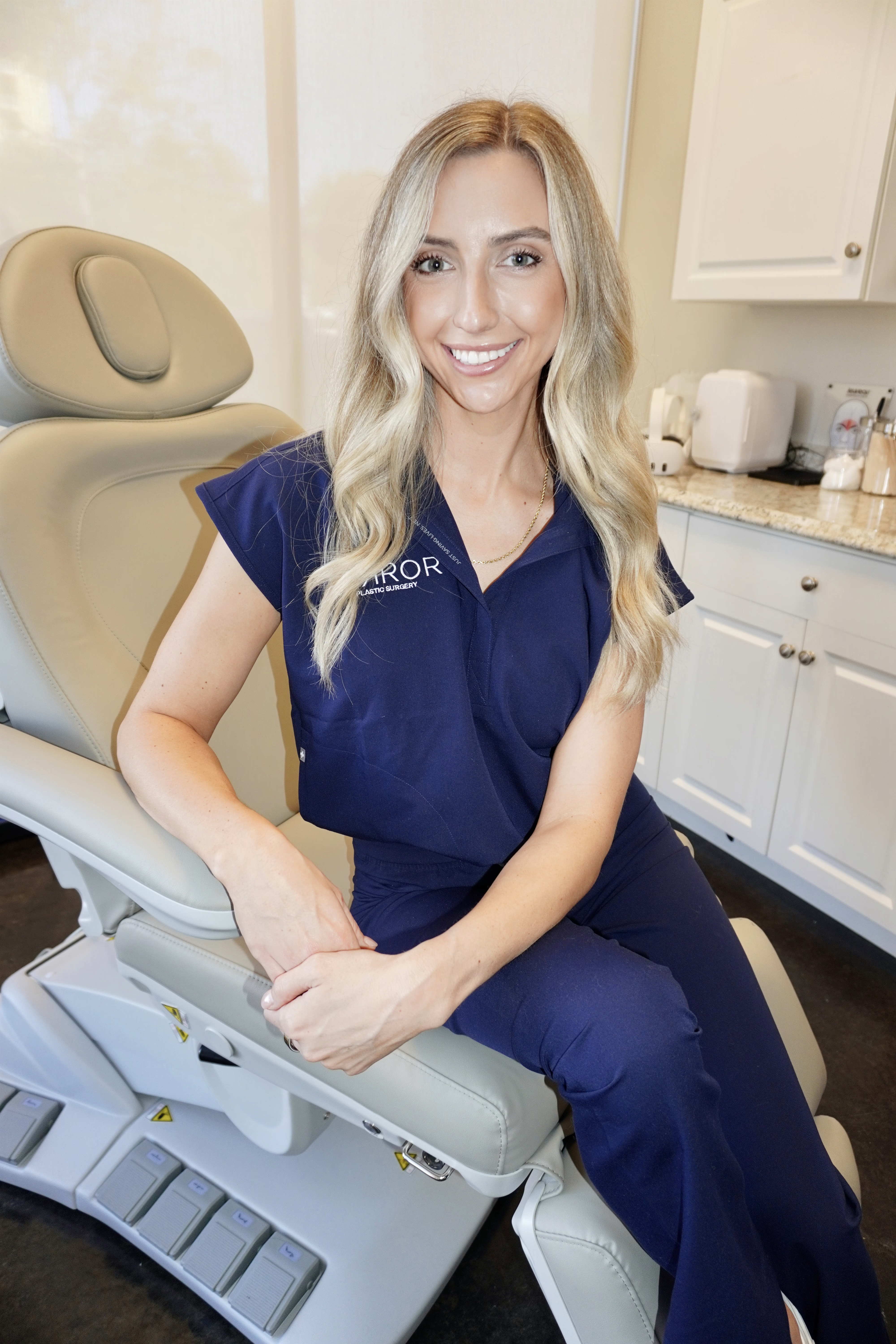
Receive an anatomy-driven assessment of your cellulite options with Ellie at Mirror Plastic Surgery in St. Petersburg, FL.
Disclaimer: Results may vary from person to person. Editorial content, before and after images, and patient testimonials do not constitute a guarantee of specific results.
1 Results may vary from person to person. Editorial content, before and after images, and patient testimonials do not constitute a guarantee of specific results.