
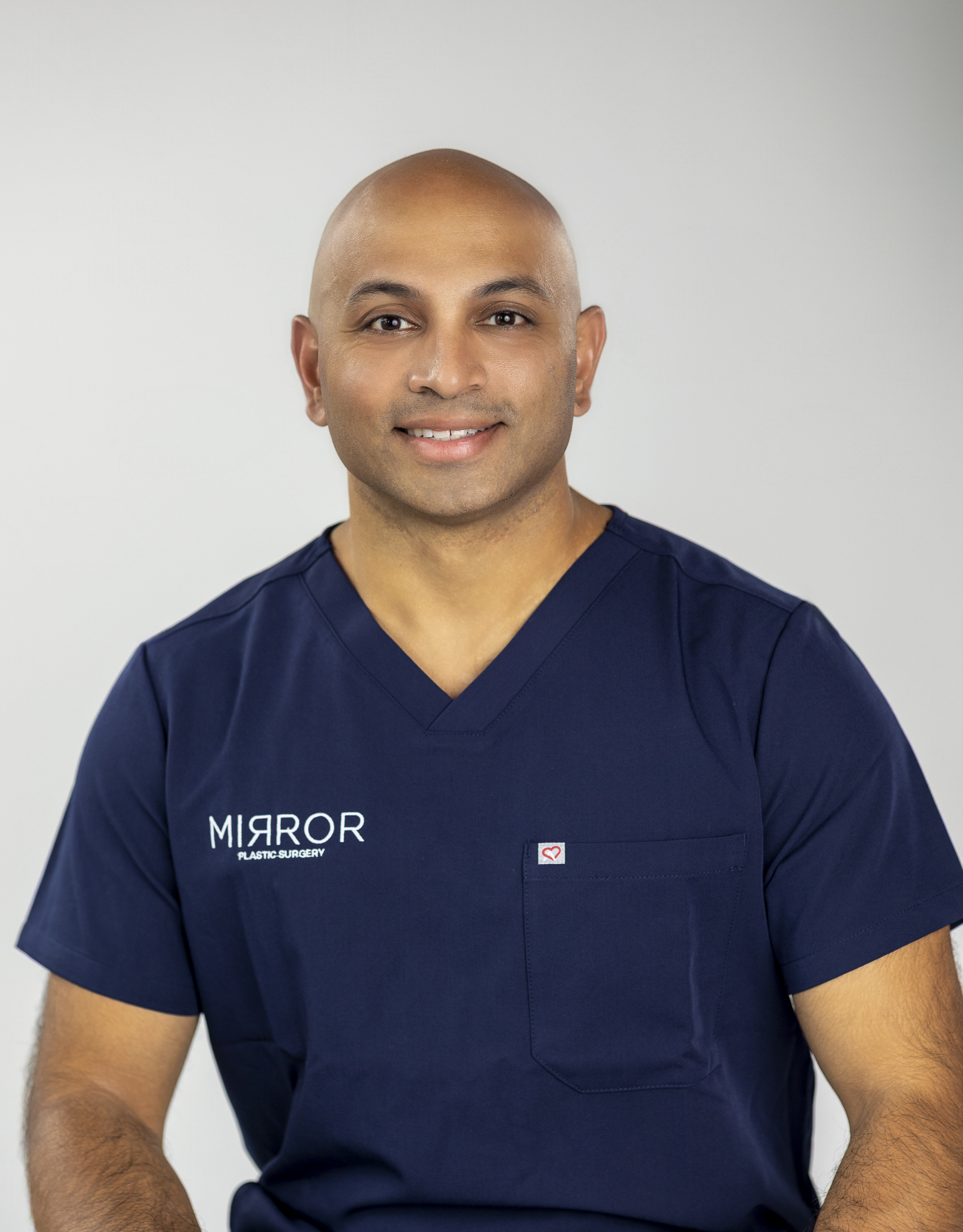
Written by: Dr. Akash Chandawarkar, Board Certified Plastic Surgeon, Mirror Plastic Surgery | Last updated: July 11, 2026
Key BBL Consultation Standards in Tampa
- The best BBL consultation in Tampa focuses on detailed anatomy review, clear safety protocols, and ultrasound-confirmed subcutaneous fat placement, not speed or price.
- Board certification by the American Board of Plastic Surgery, plus advanced training at institutions like Harvard, Johns Hopkins, and MEETH, sets top surgeons apart.
- Florida law (HB 1471) requires real-time ultrasound guidance and subcutaneous-only injection, so patients should confirm these safeguards during any visit.
- Essential questions cover daily case volume, facility accreditation, anesthesia provider credentials, and before-and-after photos that match your body type.
- Schedule your safety-first BBL evaluation with Dr. Akash at Mirror Plastic Surgery for a personalized assessment tailored to your anatomy and goals.
Best BBL Doctors in Tampa FL: Credentials That Matter
Board certification by the American Board of Plastic Surgery (ABPS) is the single most important credential to verify before any BBL consultation. The Aesthetic Society confirms that ABPS is the only American Board of Medical Specialties (ABMS)-recognized board for plastic surgery in the United States, and physicians from non-surgical specialties such as OB/GYN, emergency medicine, and family practice have performed BBLs with devastating outcomes.
Dr. Akash at Mirror Plastic Surgery holds credentials that exceed the standard threshold for safe BBL practice. He has been named to Newsweek’s America’s Best Plastic Surgeons list two years in a row, including 2025. The table below summarizes his training background.
| Training Stage | Institution | Focus | Significance for BBL |
|---|---|---|---|
| Medical Degree | Harvard Medical School / Harvard-MIT HST Program | Physician-scientist integration of science, engineering, and medicine | Rigorous anatomical and scientific foundation |
| Residency | Johns Hopkins University (7-year integrated program) | Plastic and reconstructive surgery, trauma, microsurgery | Deep surgical judgment and complication management |
| Aesthetic Fellowship | Manhattan Eye, Ear and Throat Hospital (MEETH) | Advanced body contouring, breast surgery, facial rejuvenation | ASAPS-accredited fellowships require peer review and signal commitment to safe aesthetic standards beyond residency training |
| Innovation Fellowship | Stanford University Biodesign | Medical device innovation and clinical technology | Fluency in emerging tools including ultrasound-guided techniques |
Dr. Akash also serves as Next Generation Editor for the Aesthetic Surgery Journal, has testified before the FDA on implant safety, and sits on multiple international committees of The Aesthetic Society. He limits his practice to one to two surgeries per day.
Safe BBL Consultation in Florida: Your Safety Checklist
Beyond individual surgeon credentials, Florida has established statewide safety requirements that every BBL provider must meet. Florida law now codifies several of these safety standards. HB 1471 effective July 2023 requires ultrasound guidance during gluteal fat grafting to ensure subcutaneous injection only. Use the checklist below to evaluate any BBL provider.
| Safety Factor | Why It Matters | What to Verify |
|---|---|---|
| Subcutaneous-only injection technique | No confirmed BBL death has involved fat that remained exclusively in the subcutaneous plane, and all documented fatal pulmonary fat embolisms resulted from intramuscular injection lacerating gluteal veins | Ask the surgeon to describe the injection plane and confirm fat is never placed inside or below the gluteal fascia. |
| Real-time ultrasound guidance | The 2022 ASPS/ASAPS/ISAPS Practice Advisory codified real-time ultrasound guidance with video documentation as a key safety principle | Confirm the surgeon personally operates the ultrasound throughout the procedure and retains time-stamped recordings. |
| Annual surgeon case volume | Safety advisories recommend three or fewer BBLs per day, and surgeons performing three or fewer BBLs per day have lower complication rates | Ask how many BBLs the surgeon performs daily and annually. |
| Before-and-after photos for similar body types | Results vary significantly by anatomy, so photos from patients with comparable starting points provide realistic expectations. | Request a gallery specific to your body type and fat availability. |
| Accredited surgical facility | A 2022 analysis of BBL-related deaths in South Florida found that 92% of fatalities occurred at high-volume, budget clinics rather than properly accredited surgical centers | Verify the facility holds state-approved or licensed ambulatory surgery center or hospital accreditation. |
| Board-certified anesthesiologist | A dedicated physician anesthesiologist, not a CRNA alone, provides the highest level of intraoperative monitoring. | Confirm anesthesia is administered by a board-certified physician anesthesiologist. |
What to Ask During Your Tampa BBL Consultation
The questions below come from the 2022 ASPS/ASAPS/ISAPS Practice Advisory on Gluteal Fat Grafting and Florida HB 1471 requirements. Bring this list to any BBL consultation in Tampa.
- Confirm that the surgeon is certified by the American Board of Plastic Surgery, the only ABMS-recognized board for plastic surgery.
- Ask whether fat is injected exclusively above the gluteal muscle fascia, in the subcutaneous plane.
- Confirm use of real-time ultrasound guidance throughout cannula placement and fat injection, with time-stamped video recordings.
- Ask how many BBL procedures the surgeon performs per day and the annual volume.
- Verify that the procedure takes place in an accredited surgical facility.
- Confirm who administers anesthesia and whether it is a board-certified physician anesthesiologist.
- Request before-and-after photos of patients with a body type similar to yours.
- Ask about the protocol if a complication arises and whether the surgeon has hospital privileges.
Discuss these safety questions with Dr. Akash during an unhurried, hour-long evaluation focused on your specific concerns.
Ultrasound-Guided BBL in Tampa and Anatomical Expertise
The 2022 Joint Safety Statement by ASPS, PSF, The Aesthetic Society, and ASERF states that the entire BBL procedure, including liposuction and fat grafting, must be performed by the named surgeon and cannot be delegated to assistants or other providers. Ultrasound guidance is not a supplementary option, it is the standard of care.
Real-time ultrasound-assisted gluteal fat grafting was first published in Plastic and Reconstructive Surgery in 2018 as a method for confirming subcutaneous cannula position before fat infiltration. This research helped establish ultrasound as a core safety tool for BBL. At Mirror Plastic Surgery, the team builds on this intraoperative use by adding pre-operative ultrasound as a diagnostic tool to map each patient’s individual gluteal anatomy.
This pre-operative mapping identifies fat layer depth, fascial boundaries, and vascular proximity before a single incision is made. The information directly supports Mirror’s safety-function-aesthetics hierarchy. Detailed knowledge of a patient’s tissue architecture allows Dr. Akash to plan fat placement that enhances projection and shape while preserving the structural integrity of the gluteal region.
Skinny BBL in Tampa: Candidacy and Personalization
Patient priorities have shifted from the hyper-projected, maximum-volume results common between 2018 and 2022 toward natural proportions and outcomes that age well and move naturally with the body. This change is especially relevant for leaner patients exploring a skinny BBL in Tampa.
Candidacy for fat-transfer BBL depends on having sufficient donor fat available from areas such as the abdomen, flanks, thighs, or back. For patients with lower body fat percentages, the consultation at Mirror Plastic Surgery includes a frank assessment of realistic donor volume and expected graft survival. In some cases, a combination approach, such as pairing liposuction with AlloClae adipose filler for structural augmentation, may produce more predictable results than fat transfer alone.
Patients are increasingly requesting personalized BBL results designed around their real anatomy rather than following trend-based aesthetics. Dr. Akash structures the hour-long consultation to assess each patient’s unique fat distribution, skin quality, and proportional goals before proposing any surgical plan.
Tampa BBL Recovery Timeline and Planning
A full BBL recovery typically spans 3 to 6 months, with the most intensive restrictions applying only during the first 6 weeks.1 Knowing the timeline before surgery helps patients plan work, travel, and daily life realistically.
- Days 1–14: Most patients with desk jobs can return to work within 10–14 days and often need a standing desk or pressure-off seating strategy.1
- Weeks 2–4: BBL patients should avoid sitting directly on the buttocks for the first 2–4 weeks and use a specialized BBL pillow that supports the thighs instead, which protects transferred fat cells.
- Weeks 4–6: Patients may be cleared for low-impact cardio such as stationary biking at 4–6 weeks post-op. Compression garments are typically worn throughout this period.
- Weeks 6–8: Many patients can gradually resume most exercises including light weightlifting, and full clearance for high-intensity workouts is typically granted at 8 or more weeks with surgeon approval.
- Months 3–6: The “fluff and drop” phase, when the buttocks soften and settle into a more natural position as swelling resolves, typically occurs between 3 and 6 months post-surgery.1 Final results are usually assessed at this stage.1
Stable weight after surgery supports lasting results, because significant weight fluctuation changes fat volume in the grafted area.
Get your personalized BBL recovery roadmap from Dr. Akash, including guidance tailored to your anatomy, lifestyle, and surgical goals.
Frequently Asked Questions
What makes a BBL consultation at Mirror Plastic Surgery different from a standard consultation?
Mirror Plastic Surgery follows a concierge medicine model, so Dr. Akash spends up to one hour with each patient during the initial consultation. This time covers a top-to-bottom anatomical assessment, a review of your medical history, and an honest discussion of realistic outcomes for your specific body type. You also receive a thorough explanation of the safety protocols that guide every BBL at the practice. The team limits itself to one to two surgeries per day, which prevents your care from being compressed by scheduling pressure.
Is ultrasound guidance required for BBL in Florida, and does Dr. Akash use it?
Yes. Florida’s HB 1471 (detailed in the safety checklist section) mandates real-time ultrasound guidance by the surgeon of record, with time-stamped video documentation. Dr. Akash uses ultrasound intraoperatively to confirm subcutaneous fat placement and also pre-operatively as a diagnostic tool to map each patient’s individual gluteal anatomy before surgery. This dual use of ultrasound for planning and real-time confirmation reflects the safety-first hierarchy that defines Mirror Plastic Surgery’s approach.
Am I a candidate for a BBL if I have a lower body fat percentage?
Candidacy for a fat-transfer BBL depends on having sufficient donor fat available from areas such as the abdomen, flanks, thighs, or back. For leaner patients, Dr. Akash conducts a frank assessment during the consultation to determine realistic donor volume and expected graft survival.1 In some cases, a combination approach using AlloClae adipose filler alongside liposuction may produce more predictable structural augmentation than fat transfer alone. No surgical plan is proposed until your anatomy has been thoroughly evaluated. The goal remains a result that looks proportional, natural, and appropriate for your individual frame.
What credentials should I verify before choosing a BBL surgeon in Tampa?
The most important credential is board certification by the American Board of Plastic Surgery, the ABMS-recognized standard mentioned earlier. Beyond certification, patients should verify that the surgeon completed a formal plastic surgery residency of at least six years and has additional fellowship training in aesthetic surgery. You should also confirm that the surgeon performs BBL in an accredited surgical facility, uses real-time ultrasound guidance, and limits daily case volume to three or fewer procedures. Dr. Akash meets and exceeds every one of these benchmarks, with training at Harvard-MIT, Johns Hopkins, MEETH, and Stanford, plus the Newsweek recognition detailed earlier.
What is the recovery timeline after a BBL, and when will I see final results?
Most patients with desk jobs return to work within 10 to 14 days.1 Direct sitting on the buttocks is avoided for the first 2 to 4 weeks, and a BBL pillow supports the thighs during this period. Light walking starts on day one to promote circulation. Low-impact cardio is typically permitted at 4 to 6 weeks, and most exercise resumes at 6 to 8 weeks with surgeon clearance. The “fluff and drop” phase, when swelling resolves and the buttocks settle into their final shape, occurs between 3 and 6 months post-surgery. Full results, including mature fat graft integration, are usually assessed at the 6-month mark.1 Dr. Akash provides a personalized recovery plan at the time of consultation based on your specific procedure, anatomy, and lifestyle.
1 Results may vary from person to person. Editorial content, before and after images, and patient testimonials do not constitute a guarantee of specific results.