

Written by: Dr. Akash Chandawarkar, Board Certified Plastic Surgeon, Mirror Plastic Surgery | Last updated: September 9, 2026
Key Takeaways
Use these key points as your quick guide to choosing a safe Botox provider in Florida.
- A safe Botox injector holds an active state medical license (MD/DO, NP/ARNP, PA, or RN under physician delegation) and has documented, hands-on training in facial anatomy and complication management.
- Florida law requires an in-person good faith exam before any injection, direct visual supervision for RNs, and a physician medical director for med-spa settings.
- Board certification by the American Board of Plastic Surgery or Dermatology, verifiable licenses, and CME-accredited training signal strong injector competency.
- Physician-led practices where the doctor personally performs every injection close the oversight gaps common in high-volume med-spa models.
- Schedule a consultation with Ellie to meet Dr. Akash Chandawarkar at Mirror Plastic Surgery and see physician-led injectable care in person.
The Short Answer: Your Safety Checklist
This checklist gives you a simple way to screen any Botox provider before you book.
Before booking any Botox appointment, confirm your injector meets every item on this list:
- Active state medical license as an MD, DO, NP/ARNP, PA, or RN, verifiable through the Florida Board of Medicine or Florida Board of Nursing
- Board certification by the American Board of Plastic Surgery, American Board of Dermatology, or another recognized specialty board
- Documented hands-on training in facial anatomy, injection technique, and complication management, with live practice rather than online-only coursework
- Physician oversight structure that matches the injector’s license type, including direct supervision for RNs and a collaborative agreement for NPs and PAs
- Good faith exam performed in person by a physician, NP, or PA before your first injection
- FDA-approved product drawn from a labeled vial in your presence
- Written informed consent that clearly names the provider, treatment, and risks
- Complication management protocol with a clear emergency contact available after hours
Once you have this checklist in hand, the next step is understanding who is legally allowed to inject Botox in Florida and under what conditions.
Who Can Legally Inject Botox In Florida?
Florida permits Botox injections by physicians (MD/DO), nurse practitioners (NP/ARNP), physician assistants (PA), and registered nurses (RN), but each role has specific legal requirements.
The supervision requirements differ significantly by license type. The table below summarizes the framework:
| Provider Type | Legal Authority In Florida | Supervision Required | Can Perform Good Faith Exam? |
|---|---|---|---|
| Physician (MD/DO) | Full independent authority | None | Yes |
| NP/ARNP | Under physician protocol or collaborative arrangement | Physician must be genuinely available, though not physically present | Yes |
| PA | Under physician delegation and supervision | Physician must be genuinely available, though not physically present | Yes |
| RN | Under physician delegation only; physician must be physically present and visually observing | Direct visual supervision, and remote or standby availability does not meet the standard | No, because RNs cannot diagnose or generate the treatment order |
Estheticians, medical assistants, and LPNs cannot legally inject Botox in Florida. An in-person good faith exam is mandatory before any Botox injection in Florida, and telehealth exams are not permitted for this purpose.
Florida enforcement is actively moving against the “paper director” model, where a physician signs a medical director agreement but does not participate in daily care. Regulators increasingly expect supervision that is documented, current, and visible.
Why A License Is Just The Starting Point: The Role Of Specialized Training
There is no single federally mandated Botox certification in the United States. A license establishes minimum legal authority. Competency requires additional, focused training, and most complications occur when that training is missing.
A complete Botox curriculum should cover facial anatomy, especially vascular structures, pharmacology and dosing, patient consultation and treatment planning, injection techniques for multiple treatment areas, complication prevention and management, and post-treatment care. Because these skills require hands-on practice, online-only training cannot develop the psychomotor injection skills, tactile feedback, or real-time complication management required for safe clinical practice.
The most important markers of training quality include mandatory live-patient injection, small group sizes of five or fewer participants per instructor, board-certified faculty, comprehensive complication management, and recognized CME accreditation.
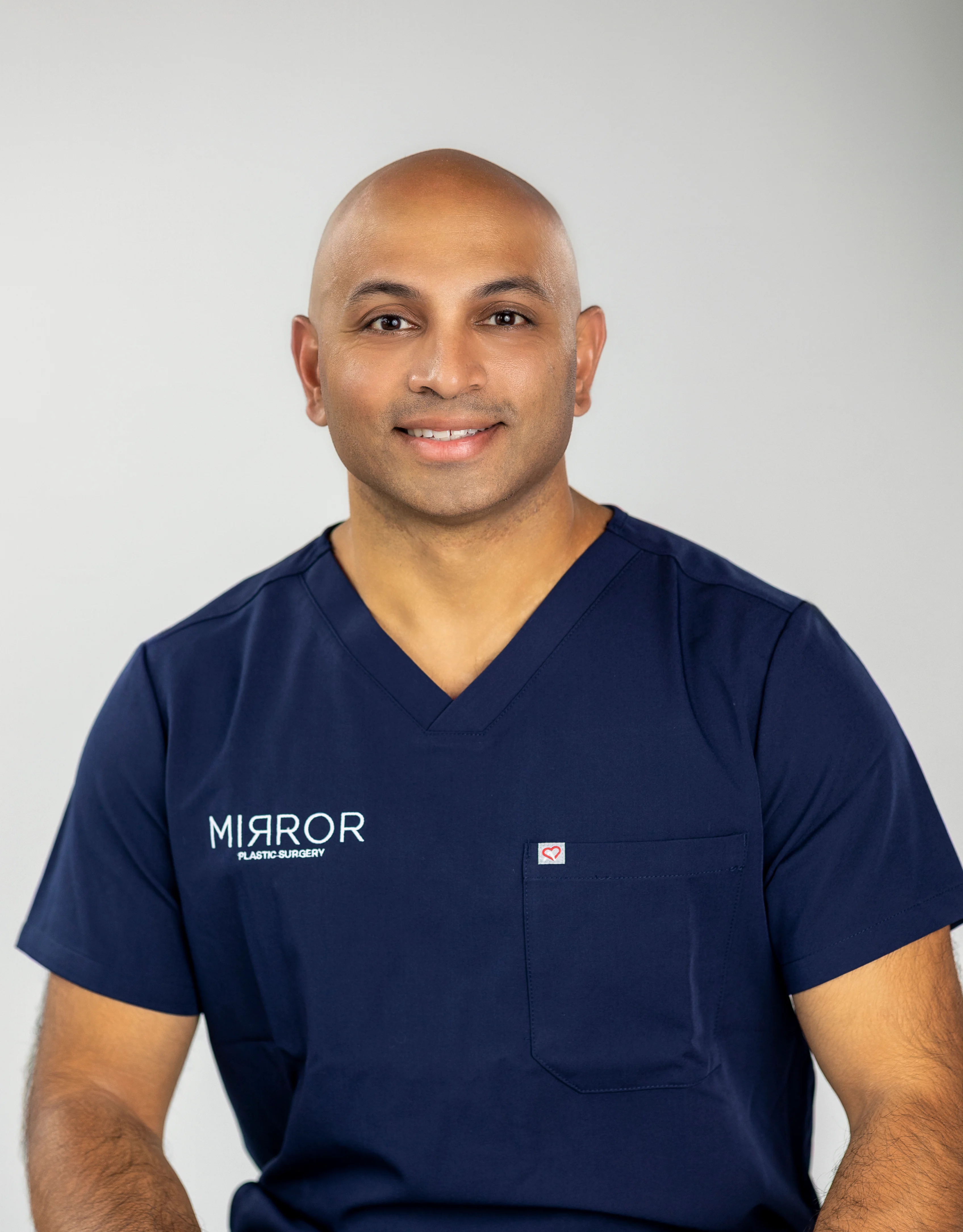
Board-certified plastic surgeons complete years of surgical residency training in facial and subdermal anatomy before performing a single cosmetic injection. This background creates a strong foundation for injectable safety. Dr. Akash Chandawarkar, founder of Mirror Plastic Surgery, is Harvard-educated, Johns Hopkins-trained, board-certified by the American Board of Plastic Surgery, and fellowship-trained in aesthetic surgery at the Manhattan Eye Ear & Throat Hospital/Lenox Hill Hospital. He personally performs every neuromodulator and dermal filler treatment at Mirror Plastic Surgery.
Experience And Physician Oversight: What Separates Safe From Risky
Experience includes the number of injections performed, the variety of cases treated, and the provider’s track record with complications. The most frequent complications from neurotoxin injections occur with injectors who lack formal training in facial anatomy and emergency management, and many are preventable with proper training.
High-volume med-spa models often delegate injections to less-trained staff and rely on distant physician oversight. Physician-led practices, where the doctor performs or closely supervises all injections, provide tighter safety control and clearer accountability.
Before any appointment, ask your injector these questions:
- How many Botox treatments have you personally performed?
- Who will actually perform my injection, you or another staff member?
- What is your protocol if a complication occurs during or after treatment?
- If you are not a physician, who is the supervising physician, and will they be physically present?
- Can you show me your active state license number?
How To Verify Your Injector’s Credentials: A Step-By-Step Guide
- Check the Florida license database. Verify the injector’s active license through the Florida Department of Health MQA Search Services. Search by name and confirm the license is current, unrestricted, and in good standing. Review the disciplinary history for any sanctions or prior investigations.
- Verify board certification. For plastic surgeons, confirm certification through the American Board of Plastic Surgery. For dermatologists, use the American Board of Dermatology’s verification tool. Board certification is separate from licensure and requires passing rigorous examinations after completing an accredited residency.
- Ask about training and request specifics. Request the name of the training program, whether it included live-patient injection, the instructor-to-student ratio, and whether it was CME-accredited. State medical boards, malpractice carriers, and aesthetic employers increasingly expect documented hands-on training, and an online-only certificate often fails to satisfy regulatory, insurance, or employment requirements.
- Confirm the supervision structure. If your injector is an NP or PA, ask who the collaborating physician is and how they participate in your care. If your injector is an RN, Florida law requires the physician to be physically present and visually observing the injection. Confirm that this will occur during your visit.
- Look for ongoing education and complication protocols. Ask whether the provider maintains current CME credits in aesthetic medicine and what their specific protocol is for managing vascular complications. Any injector performing dermal fillers should have hyaluronidase on site, and inability to confirm this is a red flag.
Request an appointment with Ellie to speak directly with Dr. Chandawarkar about his credentials, training, and treatment approach before you decide on care.
Red Flags: When To Walk Away
During a recent 10-month period, state health departments reported 13 patients who were severely ill with suspected botulism after using botulinum toxin products from unlicensed sources; all were hospitalized and received botulism antitoxin, and some required intubation and mechanical ventilation. These outcomes show how serious unsafe injections can become.
Leave immediately if you encounter any of the following:
- Non-clinical setting, such as injections offered at a home, salon, hotel room, or “Botox party” that are frequently performed by untrained or unlicensed individuals who may use counterfeit or improperly stored products
- Refusal to show credentials, since any reputable provider will give their license number without hesitation
- Pre-filled or unlabeled syringes, because many unlicensed products are described as vials of white powder without labels, missing product name, strength, dosage, expiration date, manufacturer, lot number, and warnings
- No medical history review or informed consent, which represents both a clinical and legal violation
- Pressure tactics or same-day-only discounts, since high-pressure sales tactics are a red flag for unsafe medical spas
- Inability to name the medical director, because a clinic operating without an accessible, credentialed medical director (MD or DO) violates basic safety standards
- Vague or unverifiable titles, since titles like “certified master injector” without naming who certified them, or a heavy focus on follower count over education, are red flags
- No good faith exam, and a missing good faith exam before treatment signals unsafe injector practices
Why Physician-Led Care Is The Safest Choice For Your Botox
All members of the American Society of Plastic Surgeons are board certified by the American Board of Plastic Surgery, have completed an accredited plastic surgery training program, practice in accredited facilities, and follow strict standards of safety and ethics. Years of surgical training in facial anatomy before performing cosmetic injections create a strong safety margin for patients.
At Mirror Plastic Surgery, Dr. Chandawarkar personally performs every neuromodulator and dermal filler treatment. His approach prioritizes safety first, function second, and aesthetics third. Consultations can run up to an hour, which allows time for a detailed exam and questions instead of rushed, high-volume appointments. As an advisory board member for Merz Aesthetics and Tiger Aesthetics, Dr. Chandawarkar stays current with injectable advances while keeping recommendations focused on each patient’s anatomy and goals.
As noted earlier, Dr. Chandawarkar remains directly responsible for all injectable care at Mirror Plastic Surgery, from the good faith exam through the final injection.
Contact Ellie to book your visit and experience concierge-level, physician-led injectable care. Reach Mirror Plastic Surgery at 780 4th Ave S, St. Petersburg, FL 33701, by phone at 727-361-6515, or by email at hello@mirrorplasticsurgery.com.
Frequently Asked Questions
Can A Nurse Practitioner Inject Botox In Florida?
Yes. In Florida, ARNPs (Advanced Registered Nurse Practitioners) may perform injectable aesthetic procedures under a physician protocol or collaborative arrangement. They are among the providers, alongside physicians and PAs, who can perform the good faith exam that authorizes treatment within their scope of practice. The supervising physician does not need to be physically present during the injection but must be genuinely available for consultation. An ARNP cannot serve as the supervising physician for an RN injector, because that delegation must come from a physician.
Can An Esthetician Inject Botox?
No. Estheticians cannot legally inject Botox in any U.S. state, including Florida. Botox is a prescription drug, and its injection counts as the practice of medicine or nursing. Estheticians in Florida are limited to surface skincare that does not pierce the skin, draw blood, or inject. Violations carry serious penalties, including criminal charges for practicing medicine without a license, and enforcement has increased significantly since 2024.
What Is A “Good Faith Exam” And Why Does It Matter?
A good faith exam (GFE) is an in-person clinical evaluation by a provider with prescribing and diagnostic authority, such as a physician, NP, or PA, conducted before any Botox injection. In Florida, this exam is mandatory for the initial visit, and telehealth exams are not permitted for this purpose. The GFE confirms that the treatment is medically appropriate for the specific patient, generates the individualized treatment order, and creates the legal foundation for the injection. A standing order cannot replace an individualized assessment. Clinics that skip this step or attempt to conduct it remotely for a first-time patient violate Florida law and create a significant patient safety concern.
How Do I Verify A Florida Injector’s License?
Use the Florida Department of Health’s MQA Search Services database to search by the provider’s name and confirm their license type, status, and disciplinary history. For board certification, use the American Board of Plastic Surgery’s verification tool or the relevant specialty board’s public database. Any reputable provider will supply their license number and specialty board information without hesitation. If a provider declines to share this information or becomes evasive, that behavior is a clear red flag and should prompt you to seek care elsewhere.
Disclaimer: Results may vary from person to person. Editorial content, before and after images, and patient testimonials do not constitute a guarantee of specific results.


