

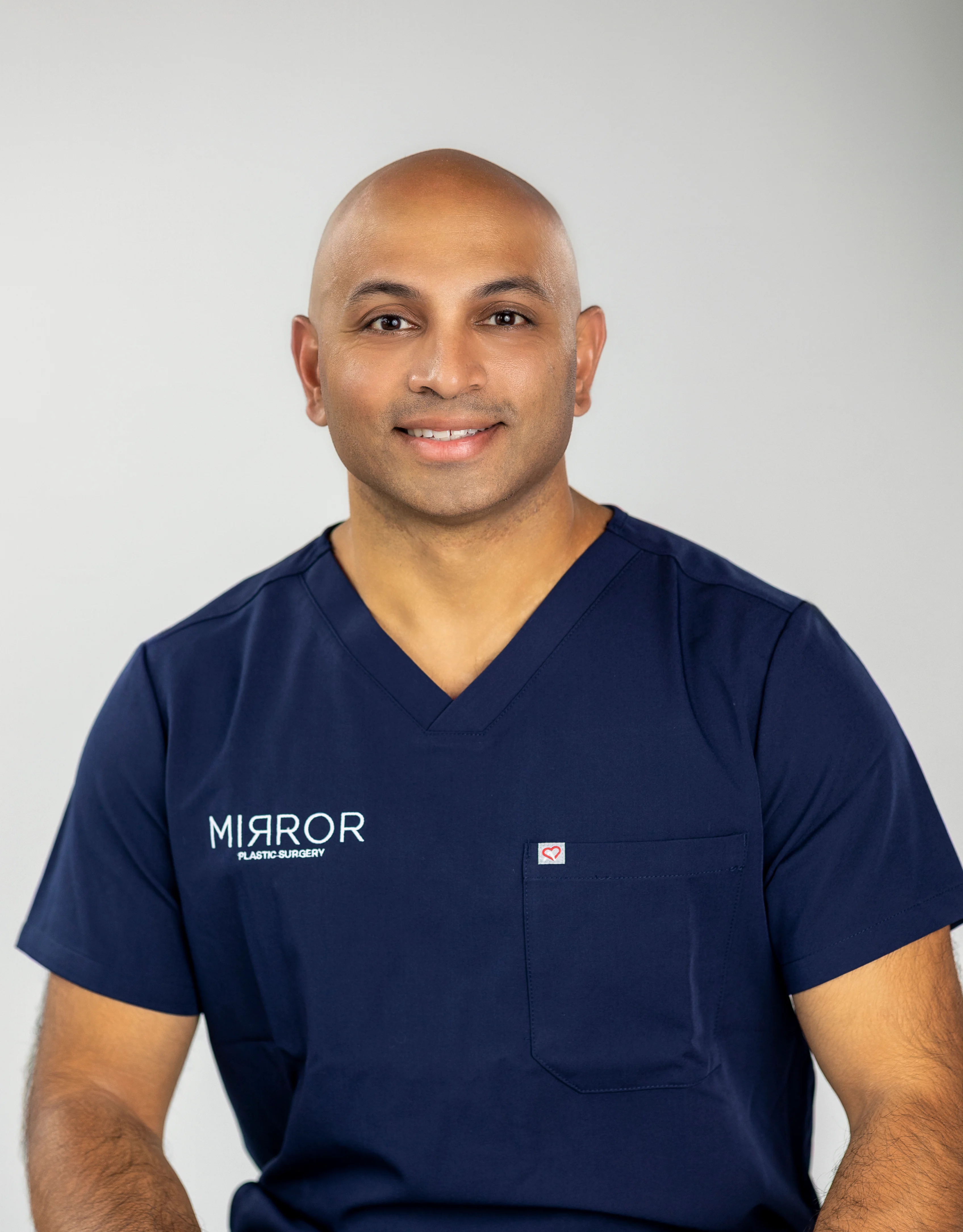
Written by: Dr. Akash Chandawarkar, Board Certified Plastic Surgeon, Mirror Plastic Surgery | Last updated: September 9, 2026
Key Takeaways
- Non-surgical lip augmentation includes at-home topical plumpers, makeup techniques, and professional laser treatments like LipLase that stimulate natural collagen production.
- Topical plumpers offer temporary results lasting hours to weeks, while makeup provides immediate optical enhancement with zero commitment.1
- LipLase laser therapy delivers natural, longer-lasting results by building volume from the patient’s own collagen without needles or downtime.1
- Patients should avoid unregulated at-home devices such as hyaluron pens due to serious safety risks including infection and tissue damage.
- Patients ready to explore needle-free options can book a consultation with Mirror Plastic Surgery to discover the best approach for their goals.
Rethinking Modern Lip Enhancement
Interest in lip augmentation without surgery continues to grow for many reasons. The American Society of Plastic Surgeons reported 1.44 million injectable lip procedures in the US in 2023, yet many patients now seek alternatives. Some dislike needles. Others want to avoid an overfilled look and prefer subtle, natural changes. Many are only beginning to learn that professional, non-injectable options exist beyond drugstore glosses.
This guide walks through the full spectrum of needle-free lip enhancement. It covers topical plumpers, makeup artistry, and professional laser collagen stimulation with LipLase. The information reflects clinical evidence and the expertise of board-certified plastic surgeon Dr. Akash Chandawarkar of Mirror Plastic Surgery in St. Petersburg, FL.
What Non-Surgical, Needle-Free Lip Augmentation Means
Non-surgical lip augmentation in this guide means no incisions, no needles, and no injectables. Two main approaches exist. One focuses on temporary plumping with topicals and makeup that last for hours. The other uses collagen-stimulating treatment, specifically LipLase laser therapy, which builds results over weeks and months from the patient’s own tissue.
Fillers remain the most common non-surgical option in aesthetic medicine, yet they are still injectables. This guide focuses only on needle-free alternatives for patients who want to avoid injections entirely.
Book a consultation with Ellie to explore your needle-free options at Mirror Plastic Surgery.
At-Home Topical Plumpers That Actually Help
Topical lip plumpers work through two primary mechanisms. The first is irritant-based vasodilation. Ingredients like cinnamon, menthol, and capsaicin activate TRP channels in the skin, triggering a mild inflammatory response that increases blood flow and causes temporary lip swelling lasting 30 minutes to 2 hours.1
The second mechanism is hydration-based humectancy. Certain humectants hold up to 1,000 times their weight in water, smoothing and plumping the lip surface for 2–4 hours per application.1
Peptide-based formulas add a third pathway. Peptides such as palmitoyl tripeptide-1 signal fibroblasts to produce more collagen and elastin, and over 4–8 weeks of consistent use, peptide-based lip plumpers can improve lip structure and definition.1 A 2026 review in the Journal of Cosmetic Dermatology found that topical humectants can improve lip hydration and reduce the appearance of fine lines, creating a fuller look without irritation.1
Realistic expectations keep patients satisfied with these products. No topical can permanently increase lip volume because the molecules do not penetrate deeply enough to create structural change. Safety considerations include the following points.
- Avoid DIY devices, hyaluron pens, and unregulated at-home filler kits. The FDA states that needle-free devices marketed for injecting dermal fillers are not approved for that purpose, with reported risks including infection, tissue necrosis, and vascular complications.
- Irritant-based plumpers containing cinnamon, capsaicin, or menthol should be limited to two or three times per week, as daily use risks barrier damage, chapping, and inflammation.
- Patch-test any new product on the inner wrist for 24 hours before applying to lips, especially for patients with sensitive skin or a history of reactions.
- People with lips prone to eczema, perioral dermatitis, or chronic chapping should avoid irritant-based plumpers, because the nerve-and-vessel response that plumps also flares inflammation on already-inflamed skin.
Makeup Strategies For Fuller-Looking Lips
Strategic makeup application creates the illusion of fuller lips without changing the tissue. Classic overlining and micro-lining techniques extend liner just outside the natural lip border at targeted spots like the cupid’s bow and center of the lower lip, creating the illusion of a fuller shape without looking overdone.
The cloud lip technique builds on this idea. Softening and slightly extending the lip border in all directions creates a naturally plump, three-dimensional look. Glossy finishes add reflective plumpness, and highlighting the cupid’s bow reflects light for added dimension. Makeup remains completely reversible, requires daily application, and delivers optical results with no recovery time.
LipLase Laser Treatment For Needle-Free Volume
LipLase is a needle-free, non-invasive laser treatment on the Fotona platform that uses controlled thermal energy to stimulate collagen and elastin production in the lips. It uses non-ablative Er:YAG Smooth mode and super-long-pulse Nd:YAG Piano mode wavelengths to cause collagen regeneration, producing a fuller, more natural lip appearance.
The Fotona Smooth laser safely heats targeted sub-surface tissue to a hyperthermic range of 60–65°C, a thermal threshold that causes immediate contraction of existing collagen fibers and triggers long-term synthesis of new collagen (neocollagenesis). Because LipLase builds results from the patient’s own collagen, there is no injected material that could migrate or shift. Fullness stays within the patient’s native anatomical contours.
The clinical protocol usually involves a series of three to four sessions spaced 2–4 weeks apart, with each session lasting 15–30 minutes. A 2026 prospective interventional study by Shenoy et al. in the Journal of Cutaneous and Aesthetic Surgery found that after three monthly LipLase sessions, patients reported 53% improvement in lip volume, 100% improvement in lip color, and 76.9% improvement in texture, with results sustained at 3-month follow-up.1 Results typically last 4–6 months, and the treatment is suitable for all skin types.1
LipLase also improves lip color, texture, and perioral lines, which fillers do not address in the same way. Compared to injectable fillers, LipLase carries no risk of vascular occlusion, requires no downtime, and produces subtle, natural fullness. LipLase involves no injections and essentially no downtime, allowing patients to return to normal activities immediately, though mild warmth or slight swelling may occur for a few hours.
LipLase is a professional treatment that must be performed by a qualified medical provider with anatomical expertise. At Mirror Plastic Surgery, Dr. Akash Chandawarkar’s Harvard and Johns Hopkins training guides every non-surgical treatment with a surgeon’s command of facial anatomy for safer, more precise outcomes.
Book a consultation with Ellie and find out if LipLase is right for your anatomy and goals.
Comparing At-Home And In-Office Lip Options
| Attribute | Topical Plumpers | Makeup Techniques | LipLase Laser |
|---|---|---|---|
| Time to Results | Immediate (irritants) to 4–8 weeks (peptides) | Immediate (optical only) | Gradual over 4–8 weeks across a series |
| Duration of Effect | 30 minutes to 4 hours per application | Hours (until removed) | 4–6 months per series |
| Invasiveness | None (topical application) | None | None (no needles, no downtime) |
| Naturalness of Result | Subtle, temporary | Visual illusion only | Subtle, built from own collagen within native anatomical contours |
Maintenance expectations differ across these categories. Topicals require daily reapplication. Makeup becomes a daily ritual. LipLase maintenance sessions are commonly recommended every 3–6 months to sustain results long term, and because LipLase relies on the body’s own collagen, effects can improve with consistent treatment over time.1
Why Collagen Stimulation Lasts Longer
Collagen stimulation creates non-injectable lip enhancement that lasts beyond a few hours. LipLase works by heating tissue to a hyperthermic range that causes immediate contraction of existing collagen fibers and triggers long-term synthesis of new collagen (neocollagenesis). This approach builds structural improvement from within, rather than relying on surface swelling alone.
Topical peptides can support collagen production over time, yet their effects stay modest compared to laser therapy. The peptide-and-HA route delivers genuine but small, gradual, and reversible effects that depend on daily use.1
Safety Guidelines And Red Flags To Watch
Several categories of at-home products and devices carry documented risks that patients should understand before trying any lip enhancement method.
- Hyaluron pens and needle-free filler devices: The FDA states these devices are not approved for injecting fillers, and reported risks include infection, allergic reaction, lumps, scarring, blocked blood flow, and distorted lip contours.
- At-home suction devices: Suction-style lip plumping devices can over-stretch delicate lip tissue if suction is too strong or treatment time is too long, increasing the risk of bruising, broken capillaries, swelling, tenderness, and temporary discoloration.
- Irritant-based plumpers on compromised skin: The most common reaction dermatologists see from lip plumpers is irritant contact cheilitis, which causes persistent redness and scaling triggered by repeated exposure to spices like cinnamon and cayenne.
- At-home microneedling: At-home microneedling or dermaroller use for lip enhancement can cause infections, scars, or uneven results if the user lacks proper training.
Even non-invasive professional treatments require anatomical knowledge to avoid complications. Patients should consult a board-certified plastic surgeon or qualified medical professional for any in-office procedure.
Frequently Asked Questions
How Can I Get Bigger Lips Without Surgery?
The most effective non-surgical, non-injectable options are LipLase laser therapy and topical plumpers. LipLase stimulates collagen production over a series of three to four sessions, with results lasting 4–6 months.1 Topical plumpers containing peptides offer temporary enhancement lasting hours to weeks with consistent use.1 Makeup techniques such as overlining, gloss, and the cloud lip method provide immediate optical fullness with no commitment or recovery time. For patients seeking the most meaningful and lasting needle-free results, LipLase represents the professional standard.
What Is The Most Natural Looking Lip Augmentation?
LipLase produces very natural results among non-injectable options because it builds volume from the patient’s own collagen within native lip anatomy. There is no added material that could look overfilled, migrate, or shift. Results develop gradually over 2–3 months for a subtle, understated enhancement that improves volume, color, texture, and perioral lines at the same time. Patients who want enhancement that looks like their own lips, only more refined, often choose LipLase.
Is Lip Augmentation Without Surgery Permanent?
No needle-free method produces permanent results. Topical plumpers last for hours, and makeup lasts until removed. LipLase results typically last 4–6 months per treatment series.1 Maintenance sessions every 3–6 months help sustain LipLase results, because collagen naturally turns over with time. With consistent treatment, some patients notice that results build cumulatively.1 No topical product or at-home device can create permanent structural lip volume, while injectable or surgical options approach longer-term durability but still require maintenance.
How Much Does Lip Augmentation Without Surgery Cost?
Topical plumpers usually range from about $20–$80 per product and require ongoing repurchase. LipLase pricing depends on the individual treatment plan, the number of sessions recommended, and geographic location. At Mirror Plastic Surgery, patients receive a personalized quote during consultation based on unique anatomy and goals. The team tailors every plan to what is genuinely appropriate for each patient.
Are There Any Side Effects Of LipLase?
LipLase is generally well-tolerated with minimal side effects. Most patients feel mild warmth during treatment and may experience slight redness or swelling for a few hours afterward. Some patients notice mild lip peeling for 3–4 days after treatment, which responds well to moisturizer. Patients with a history of herpes simplex virus (HSV or cold sores) may experience an outbreak triggered by heat to the perioral area, so antiviral prophylaxis is often recommended before treatment. Consistent use of SPF lip balm after treatment matters, because inconsistent sun protection has been associated with temporary post-procedure darkening that usually resolves with topical depigmenting agents.
Can I Do Lip Augmentation At Home?
Topical products and makeup are appropriate for at-home use when applied as directed and patch-tested first. Hydration-based plumpers with peptides are generally safe for daily use. Irritant-based formulas should stay limited to two or three times per week to protect the skin barrier. Patients should avoid DIY devices, hyaluron pens, and at-home filler kits entirely, because these tools are unregulated, not FDA-approved for injecting fillers, and carry serious documented risks including infection, tissue damage, and vascular complications. Professional treatments like LipLase must be performed by a qualified medical provider.
What Is The Difference Between A Lip Flip And Lip Augmentation?
A lip flip uses neuromodulators such as Botox to relax the upper lip muscle, which causes the lip to roll outward slightly for a subtle appearance of fullness. It adds no volume and usually lasts about 6–8 weeks. Lip augmentation, whether with fillers or non-injectable methods like LipLase, actually increases lip volume or stimulates the tissue to produce more collagen. LipLase is the only lip augmentation method in this guide that is both needle-free and volume-building, making it especially relevant for patients who want to avoid all injectables.
Your Path To Natural Needle-Free Lip Enhancement
Non-surgical lip augmentation without needles spans temporary topicals, optical makeup techniques, and professional laser collagen stimulation with LipLase. Patients who want natural-looking, longer-lasting results without injectables often choose LipLase, which stimulates the body’s own collagen within native anatomy and involves no downtime or injected material.
Realistic expectations and professional guidance support satisfying outcomes at every level. At Mirror Plastic Surgery in St. Petersburg, FL, Dr. Akash Chandawarkar provides comprehensive, hour-long consultations so each patient can understand their anatomy, their options, and the results that are genuinely achievable. The practice’s concierge approach means unhurried assessments and treatment plans tailored to the individual.
Patients ready to explore needle-free lip enhancement can book a consultation with Ellie today.
Secure An Appointment
Mirror Plastic Surgery is located at 780 4th Ave S, St. Petersburg, FL 33701. To schedule a consultation for non-surgical lip enhancement, call 727-361-6515 or email hello@mirrorplasticsurgery.com. Dr. Akash Chandawarkar and his team provide concierge-level care with up to an hour of dedicated consultation time, prioritizing safety, function, and natural aesthetics.
Disclaimer: Results may vary from person to person. Editorial content, before and after images, and patient testimonials do not constitute a guarantee of specific results.
1 Results may vary from person to person. Editorial content, before and after images, and patient testimonials do not constitute a guarantee of specific results.


