
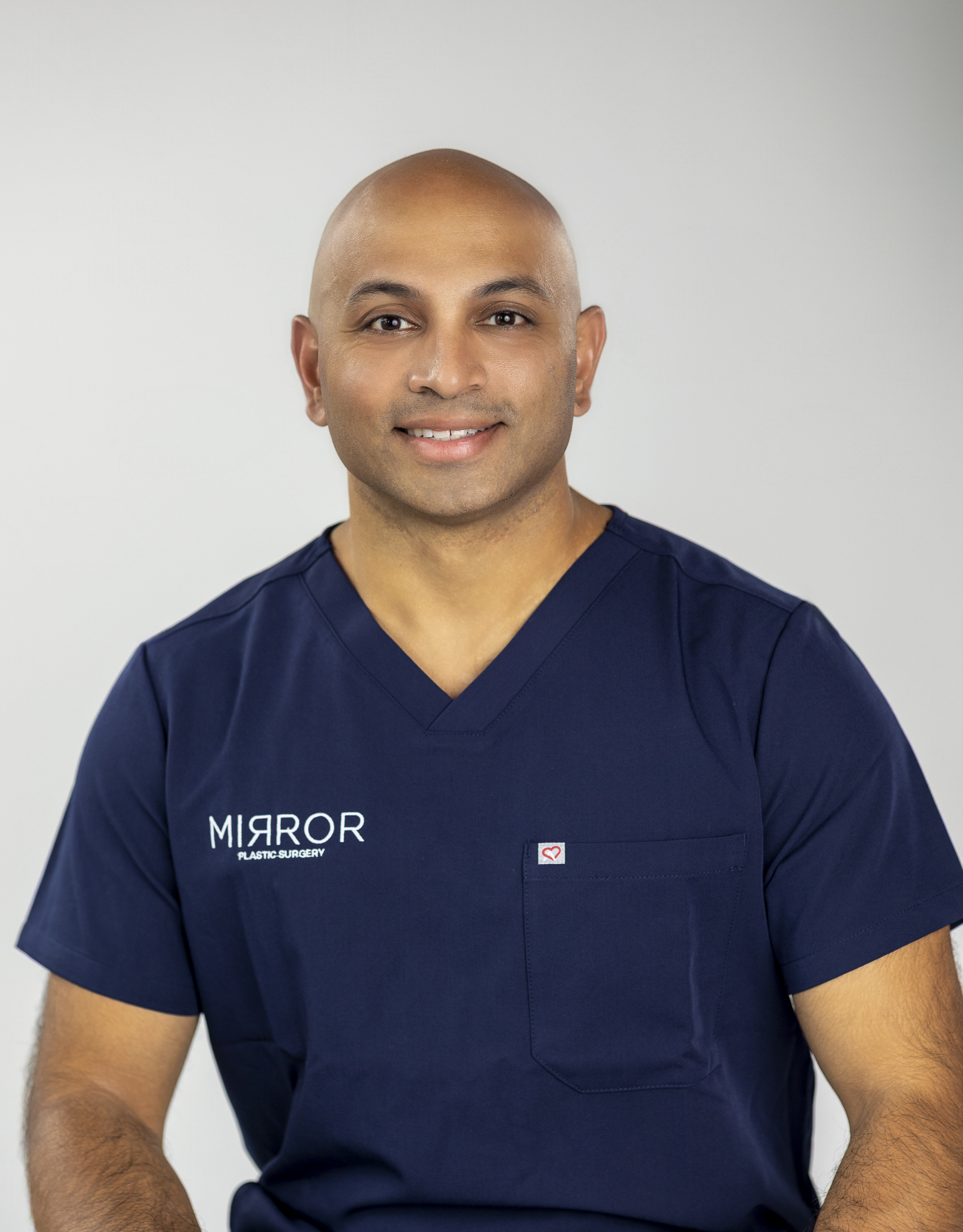
Written by: Dr. Akash Chandawarkar, Board Certified Plastic Surgeon, Mirror Plastic Surgery | Last updated: July 9, 2026
Key Takeaways for Buccal Fat Removal and Age
- The most common age range for buccal fat removal is 20–35, when facial fat volume has stabilized and skin elasticity still supports natural contour changes.
- Patients under 20 or over 40 face higher risks of dissatisfaction or premature aging, so rigorous anatomical evaluation is essential before surgery.
- Buccal fat removal is permanent, so measured removal and careful candidate screening help prevent long-term hollowing or a gaunt look as the face ages.
- Ideal candidates have strong cheekbone support, stable weight, isolated buccal fat fullness, and realistic expectations instead of trend-driven motivations.
- A personalized consultation at Mirror Plastic Surgery provides an anatomy-driven assessment from Dr. Akash before you move forward with buccal fat removal.
Buccal Fat Removal at 18: Why Most Surgeons Advise Waiting
Most board-certified plastic surgeons advise against buccal fat removal at 18, even though the procedure is technically possible. The face continues to mature through the early twenties, and buccal fat pads usually have not reached stable adult volume at 18 or 19. A face that looks round at 18 may naturally slim by 23 or 24, so early surgery can be unnecessary and potentially harmful. Removing fat before facial maturation finishes increases the risk of a hollow, prematurely aged appearance that often requires fat grafting or filler to correct.1
Candidacy depends on anatomy, not age alone. Ideal candidates have fullness in the lower cheeks that does not significantly change with weight fluctuations, good skin elasticity, and realistic expectations, and these criteria are rarely met at 18 because facial maturation is still underway.
How Buccal Fat Removal Can Affect Facial Aging
Buccal fat removal can accelerate visible aging in patients who are not anatomically suited for the procedure.1 Removing too much buccal fat can create a gaunt or hollow look years later because facial fat naturally diminishes with age, which makes conservative removal and careful candidate screening essential.1
Patients who are already lean or have narrow faces face a higher risk of an aged or sunken appearance if too much buccal fat is removed, since facial fat distribution changes over time. For patients with strong skeletal support and adequate facial volume, a conservative excision performed between ages 20 and 35 carries a lower risk of this outcome.
Buccal Fat Removal Regret: What Current Evidence Suggests
A 2018 peer-reviewed article in Plastic & Reconstructive Surgery Global Open cautioned that long-term follow-up data on aging-related fat loss and secondary deformities after buccal fat pad excision remain limited. Regret most often follows procedures performed on patients without clear anatomical indication, patients who were too young, or patients whose expectations were shaped by social media trends instead of clinical need.
The decision framework at Mirror Plastic Surgery is built to identify these risks before any surgical commitment. Dr. Akash, named to Newsweek’s America’s Best Plastic Surgeons list two years in a row, spends up to an hour in consultation assessing facial anatomy, skeletal structure, skin quality, and long-term aging trajectory before recommending the procedure.
Buccal Fat Removal 10 Years Later: Long-Term Patterns
Beyond immediate candidacy concerns, understanding how results evolve over time supports a more informed decision. Long-term clinical data on buccal lipectomy outcomes remain limited because the current patient population is younger and larger than historical groups, so decades-long outcome data for patients in their 50s and 60s are still emerging. Surgeons do observe that a face that looks elegantly sculpted at 25 can appear gaunt or prematurely aged by 35 or 40 if the procedure did not match that patient’s anatomy.1
Ten years after surgery, outcomes diverge sharply based on initial candidacy. Patients with strong cheekbones, stable weight, and adequate subcutaneous fat usually maintain a defined, balanced appearance.1 Patients who were lean, young, or lacked skeletal support at the time of surgery are more likely to report dissatisfaction as the volume loss mentioned earlier compounds the surgical deficit.1
Profiles That Are Poor Candidates for Buccal Fat Removal
Several anatomical and lifestyle profiles represent clear contraindications:
- Individuals with naturally thin faces or significant facial volume loss
- Patients whose facial fullness comes from subcutaneous fat or skin laxity rather than the buccal fat pad itself
- Patients who lack prominent cheekbones to provide the needed skeletal foundation
- Patients with unstable weight, since significant weight loss after surgery can worsen hollowing
- Patients under about 20 years of age whose facial fat has not yet reached adult stability
- Patients seeking trend-driven results without clear anatomical indication
Buccal Fat Pad Anatomy and Why It Matters for Safety
The buccal fat pad is a deep, encapsulated fat compartment located in the buccal space between the buccinator muscle and the superficial muscles of facial expression. It is distinct from subcutaneous facial fat and is determined by genetics, which is why weight loss alone cannot eliminate it. These deep, genetically influenced fat compartments cannot be directly removed with non-surgical methods.
The buccal fat pad sits close to the parotid duct and facial nerve branches, so safe removal requires precise anatomical knowledge. Mirror Plastic Surgery follows a safety-first philosophy, and Dr. Akash’s Johns Hopkins training directly supports careful handling of this anatomy.
Age-Based Risk Profiles: 18–19, 20–35, and 40+
| Age Bracket | Facial Maturity Status | Key Risk Factors | General Recommendation |
|---|---|---|---|
| 18–19 | Facial fat still maturing, skeletal growth may be incomplete | High risk of over-removal, natural slimming may occur without surgery | Generally contraindicated, defer until mid-twenties |
| 20–35 | Buccal fat pad volume stable, skin elasticity adequate for contour adaptation | Moderate risk if candidacy criteria are met, lower risk with strong skeletal support and stable weight | Often the most favorable window for anatomically suitable candidates |
| 40+ | Natural age-related decrease in facial fat underway, skin laxity increasing | Higher risk of a gaunt appearance as facial fat diminishes with age | Requires individualized assessment, many patients benefit more from volume-restoring procedures |
Candidacy Checklist: How Surgeons Evaluate Buccal Fat Removal
| Criterion | Favorable Finding | Unfavorable Finding | Clinical Implication |
|---|---|---|---|
| Age | 20–35 | Under 20 or over 40 without thorough evaluation | Defer or require enhanced assessment |
| Skeletal support | Prominent, well-defined cheekbones | Flat or underdeveloped zygoma | Contraindicated without prior cheekbone enhancement |
| Facial fullness source | Fullness isolated to buccal fat pad | Fullness from subcutaneous fat or skin laxity | Buccal removal will not address the concern |
| Weight stability | Fullness does not significantly change with weight fluctuations | Active weight loss or fluctuating BMI | Defer until weight is stable for 6–12 months |
| Skin elasticity | Good skin elasticity and facial support | Reduced elasticity or early laxity | Higher risk of skin irregularity after removal |
| Motivation | Clear anatomical concern with realistic expectations | Trend-driven without anatomical indication | Defer and explore non-surgical options first |
Non-Surgical Contouring Options and Why Stable Weight Matters
Patients who do not meet surgical candidacy criteria still have several non-surgical options for addressing the appearance of lower-face fullness:
- Dermal fillers to enhance cheekbone or jawline volume, which reduce the visual prominence of fuller cheeks without removing fat cells
- FaceTite, a minimally invasive radiofrequency treatment that reduces fat and tightens skin beneath the cheeks with less downtime than surgery
- CoolSculpting, which uses cryolipolysis to target and reduce fat cells in the lower cheeks and under the chin
- Lifestyle measures such as balanced nutrition, regular cardio exercise, and 7–9 hours of consistent sleep, which can reduce overall facial puffiness, though they do not significantly shrink genetically influenced buccal fat pads
Weight stability is a prerequisite for any contouring intervention, surgical or non-surgical. Patients who are actively losing weight should complete that process before pursuing permanent fat removal, because later volume loss can change the result in unpredictable ways.
Mirror Plastic Surgery’s Low-Volume, High-Attention Approach
Mirror Plastic Surgery limits the schedule to one or two surgeries per day, which contrasts with high-volume practices that may perform five to ten. This structure ensures that every patient receives the full attention of the surgical team before, during, and after the procedure. For buccal fat removal, patients receive a comprehensive pre-operative assessment that evaluates skeletal architecture, skin quality, fat compartment distribution, and long-term aging trajectory rather than a brief consultation focused only on the immediate aesthetic request.
The practice follows a clear hierarchy of safety first, function second, and aesthetics third. If the anatomy does not support a safe, lasting result, the recommendation reflects that reality, even when it means advising against surgery.
Dr. Akash’s Training and Safety-First Philosophy
Dr. Akash earned his medical degree from Harvard Medical School through the Harvard-MIT Health Sciences and Technology program and completed a seven-year integrated plastic and reconstructive surgery residency at Johns Hopkins University. He then completed an aesthetic surgery fellowship at the Manhattan Eye, Ear and Throat Hospital (MEETH), one of the most competitive programs in the country for facial surgery training.
His approach to buccal fat removal reflects the same anatomical rigor applied to every procedure at Mirror Plastic Surgery. Patients receive an hour-long initial consultation, evidence-based candidacy screening, and direct communication about what surgery can and cannot achieve over a lifetime.
Frequently Asked Questions About Age and Buccal Fat Removal
Is 25 a good age for buccal fat removal?
For many patients, 25 falls within the favorable 20–35 window. By this age, facial fat pads have usually reached stable adult volume, and skin elasticity still supports contour changes. Age alone does not determine candidacy, though. A 25-year-old with a naturally lean face, flat cheekbones, or unstable weight may not qualify, regardless of age, so a thorough anatomical assessment remains essential.
Can buccal fat removal be reversed?
Buccal fat removal is considered permanent because the excised fat pad does not regenerate. Patients who develop hollowing or dissatisfaction after surgery often need fat grafting or injectable fillers to restore lost volume. This reality makes measured excision and rigorous pre-operative screening crucial so that the initial result does not require correction.
How long does buccal fat removal last?
The structural change from buccal fat removal lasts for life. The visible result, however, continues to evolve as the face ages naturally. Patients who were strong candidates at the time of surgery, with solid skeletal support, adequate surrounding facial fat, and stable weight, tend to maintain a balanced, defined appearance over time.1 Patients who were poor candidates may see the result worsen as age-related volume loss compounds the surgical deficit.1
Does buccal fat removal affect the smile or facial movement?
When a trained surgeon with precise anatomical knowledge performs the procedure, buccal fat removal does not affect the facial nerve or muscles of facial expression. The buccal fat pad is accessed through a small incision inside the mouth and removed from a defined anatomical compartment. The risk of functional complications remains low in experienced hands, which makes surgeon selection and anatomical expertise critical.
What is the recovery time for buccal fat removal?
Most patients experience swelling and mild discomfort for one to two weeks after buccal fat removal. The final result usually becomes visible between three and six months, once post-operative swelling resolves fully. Because the incisions sit inside the mouth, there are no visible external scars. Patients typically follow a soft diet and avoid strenuous activity during the first week of recovery.
Summary: Choose Education Before Permanent Change
Buccal fat removal is a permanent, anatomy-dependent procedure with a relatively narrow optimal window of about 20–35 years of age. Patients outside that range, or patients who lack the skeletal support, skin elasticity, and weight stability needed for a lasting result, face higher risks of dissatisfaction and premature aging. The evidence base for long-term outcomes is still developing, which makes careful candidacy screening even more important.
Mirror Plastic Surgery’s concierge model, Dr. Akash’s Harvard and Johns Hopkins training, and the practice’s safety-first philosophy support the kind of thorough, unhurried evaluation this procedure requires. No decision about permanent fat removal should happen during a rushed consultation.
1 Results may vary from person to person. Editorial content, before and after images, and patient testimonials do not constitute a guarantee of specific results.