
Written by: Ellie Pranckevicius, FNP-BC, Aesthetic Nurse Practitioner & Aesthetic Injector | Facial Restoration & Regenerative Injectable Specialist, Mirror Plastic Surgery | Last updated: July 19, 2026
Key Takeaways
- AOD9604 is a synthetic fragment of human growth hormone that promotes fat breakdown without raising IGF-1 or causing insulin resistance, which separates it from full-length hGH and GLP-1 therapies.
- Early Phase IIa trials showed modest fat loss of about 1.8 kg above placebo over 12 weeks, while the larger 24-week Phase IIb trial did not confirm statistically significant weight-loss benefits.
- Six controlled trials showed a safety profile similar to placebo with no serious adverse events, but long-term safety beyond 24 weeks and for subcutaneous use has not been established.
- AOD9604 has never received FDA approval for any indication, and its compounding status continues to evolve as of 2026, so use requires licensed medical oversight.
- Patients who want evidence-based, medically supervised peptide care can schedule a personalized consultation with Mirror Plastic Surgery to explore whether AOD9604 fits their metabolic goals.
What Is AOD9604? Mechanism and Differentiation
AOD9604 is a 16-amino-acid synthetic fragment corresponding to residues 176–191 of human growth hormone, with a stabilizing tyrosine substitution at the N-terminus, originally developed at Monash University in Australia. Researchers designed it to isolate the fat-burning activity linked to the C-terminal region of hGH while removing the growth-promoting and diabetogenic effects of the full-length hormone.
AOD9604 increases beta-3 adrenergic receptor expression in fat tissue and stimulates lipolysis while inhibiting acetyl-CoA carboxylase to reduce lipogenesis. This dual action, which combines increased fat breakdown with reduced new fat storage, occurs without binding the classical growth hormone receptor.
AOD9604 does not elevate IGF-1 and does not cause insulin resistance, which clearly separates it from full-length exogenous hGH and from growth hormone secretagogues such as sermorelin or ipamorelin. It also works through a pathway completely different from GLP-1 receptor agonists, and AOD9604 does not suppress appetite, slow gastric emptying, or act on brain satiety circuits. AOD9604 has never received FDA approval for weight loss or any other therapeutic indication.
Clinical Research and Evidence Summary
Metabolic Pharmaceuticals Ltd. ran several human clinical trials of AOD9604 in the early 2000s, testing oral, intravenous, and subcutaneous routes across doses from micrograms to 30 mg per day.
The most cited efficacy signal comes from the 12-week Phase IIa trial METAOD005. In that randomized, double-blind, placebo-controlled study of about 300 obese adults, participants receiving 1 mg per day of oral AOD9604 lost an average of 2.6 kg compared with 0.8 kg in the placebo group, a net placebo-subtracted difference of about 1.8 kg. The trial evaluated doses of 1, 5, 10, 20, and 30 mg per day.
The pivotal Phase IIb OPTIONS trial (METAOD006) attempted to confirm and extend that signal. It enrolled 536 subjects randomized to placebo or 0.25, 0.5, or 1 mg once daily for 24 weeks and showed no statistically significant weight-loss separation from placebo at the prespecified endpoint. Metabolic Pharmaceuticals ended the AOD9604 obesity program in 2007 after this pivotal trial failed to replicate earlier efficacy signals, even though the program had reached Phase III.
Several limitations affect how these results apply to current practice. All large controlled efficacy trials used oral dosing, and no double-blind, placebo-controlled trial of subcutaneous AOD9604 for weight loss has been published. Primary endpoints focused on weight and BMI rather than DXA-confirmed fat mass. The Phase IIa effect size, although statistically significant, fell below the threshold considered commercially viable for an obesity drug.
Review your lab results with Ellie to decide whether AOD9604 fits into your broader metabolic strategy.
Dosing Considerations from Available Literature
Clinical trials used oral dosing, while current supervised research protocols usually favor subcutaneous administration based on presumed higher bioavailability. Published research-use ranges and practitioner-reported protocols describe the following:
- Standard research protocol: 300 mcg per day via subcutaneous injection, given in the morning in a fasted state at least 30 minutes before food or exercise
- Broader research range: 250–500 mcg once daily subcutaneously; the peptide has a short plasma half-life of about 15–30 minutes but produces a lipolytic effect lasting several hours through downstream cAMP signaling
- Typical cycle duration: 8–12 weeks with a 2–4 week rest period; measurable body-composition changes usually begin at 4–6 weeks of consistent use alongside caloric deficit and exercise1
- Fasted morning dosing is strongly recommended because insulin suppresses lipolysis and blunts the peptide’s fat-releasing effects
These ranges come from research protocols and practitioner experience, not from a controlled subcutaneous human efficacy trial. Because no controlled subcutaneous trial exists, any protocol must be individualized after a detailed lab review and medical history assessment. At the 300 mcg subcutaneous dose commonly used in practice, the expected effect size is more modest than the Phase IIa trial results1, so patients should set conservative expectations.1
Practical Applications for Health-Conscious Adults
AOD9604 works as an adjunct to core metabolic habits rather than a replacement for them. Its mechanism, which focuses on direct fat-tissue lipolysis without appetite suppression, positions it as a secondary tool instead of a primary weight-loss medication. Adults who already follow structured nutrition and exercise plans, or who have plateaued on or transitioned off GLP-1 therapies, sometimes consider AOD9604 as part of a broader body-composition plan.
Clinicians generally view AOD9604 as a body-composition peptide with a low rate of systemic side effects rather than a major weight-loss drug. Because it does not elevate IGF-1 or activate the growth hormone receptor, it can be used in parallel with growth hormone secretagogue protocols without disrupting pulsatile GH dynamics. Some supervised protocols also pair it with GLP-1 agonists, given the non-overlapping mechanisms, although no robust human outcomes data show that adding AOD9604 to semaglutide or tirzepatide produces clearly meaningful additional fat loss.
Realistic expectations guide better decisions. The strongest human efficacy signal for AOD9604, discussed earlier, came from an oral dose higher than what subcutaneous research protocols usually use, and the larger pivotal trial did not reproduce that benefit. Patients who want substantial weight reduction should understand that GLP-1 receptor agonists have a much larger and more consistent evidence base for that goal.
Risks, Safety Profile, and Sourcing Considerations
Stier, Vos, and Kenley reviewed pooled safety data from placebo-controlled AOD9604 trials in the Journal of Endocrinology and Metabolism (2013). Key findings from that integrated dataset include:
- No change in serum IGF-1, fasting glucose, oral glucose tolerance, insulin sensitivity, thyroid function, cortisol, prolactin, or gonadal hormones
- No treatment-related serious adverse events and no treatment-related withdrawals across the six trials
- Most commonly reported adverse events included headache, mild gastrointestinal effects such as diarrhea, flatulence and nausea, nasopharyngitis, fatigue, dizziness, and mild injection-site reactions
- One case of severe chest tightness occurred in the 50 mcg/kg intravenous arm and was considered possibly related to the study drug
Important safety gaps remain despite this reassuring short-term profile. The longest controlled AOD9604 trial lasted 24 weeks, so long-term safety beyond this duration, safety with subcutaneous administration, and safety in patients with significant comorbidities remain unknown. Published human pharmacokinetic data for subcutaneous AOD9604 describe a half-life of about 30 minutes in Phase 2 trials, and the FDA’s December 2024 review still highlighted additional data gaps. Contraindications include active malignancy, pregnancy, breastfeeding, and pediatric use.
Sourcing now represents the main practical risk. The dominant real-world safety concern for AOD9604 involves product purity, identity, sterility, and dosing accuracy from unregulated gray-market research-chemical vials rather than the molecule itself. Self-injection of unregulated AOD9604 can cause systemic infection, abscesses, and immune or allergic reactions due to non-sterile product, poor technique, or contaminated reconstitution water. Mirror Plastic Surgery sources peptides only from suppliers with documented batch testing and pharmaceutical-grade manufacturing standards, which clearly separates this approach from online retail.
Get a lab-reviewed, medically supervised protocol and reduce the quality and safety risks linked to unregulated sourcing.
Practitioner Context: Ellie Pranckevicius, FNP-BC
Peptide protocols at Mirror Plastic Surgery are led by Ellie Pranckevicius, a board-certified Family Nurse Practitioner with a background that spans esthetician training at a high-end Boston medical spa, a Bachelor’s in Health Science from Boston University, and both a Bachelor’s and Master’s in Nursing from the University of South Florida. Four years in the Neuroscience ICU at Tampa General Hospital gave Ellie deep experience with physiology, metabolic health, and recovery, and she applies that clinical depth to every peptide protocol she designs.
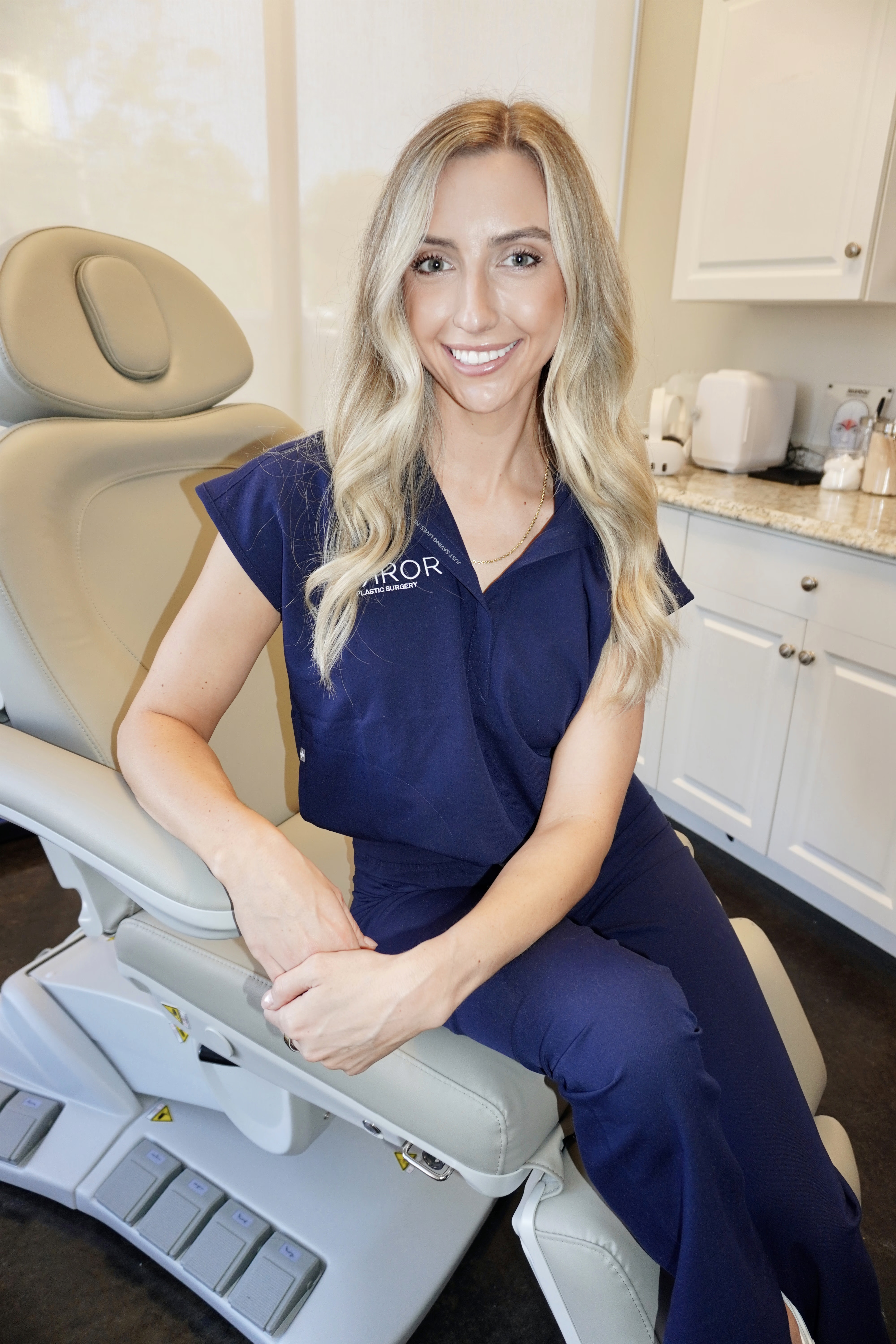
Her approach reflects the practice’s philosophy of education first, clear discussion of what current evidence supports, and a personalized protocol built around each patient’s lab results, health history, and goals. She remains reachable by text between appointments and provides detailed reconstitution and self-administration guidance, including video demonstrations, so patients never navigate an investigational therapy on their own.
Discuss your metabolic profile with Ellie to see whether AOD9604 aligns with your goals.
Industry Context: Peptide Research and Concierge Supervision
AOD9604 fits into a broader shift in metabolic care toward peptide-based adjuncts that target specific physiological pathways instead of broad systemic pharmacology. As GLP-1 therapies have become mainstream, more health-conscious adults are exploring complementary compounds, including growth hormone fragments, mitochondrial peptides, and anti-inflammatory agents, as part of individualized wellness plans.
This interest has grown faster than regulatory frameworks. Most peptides in active clinical use, including AOD9604, are not FDA-approved drugs, and compounding rules have changed several times in recent years. The responsible path in this environment relies on medically supervised care rather than online self-sourcing. A licensed practitioner reviews labs, screens for contraindications, sources from verified suppliers, and provides ongoing monitoring. Mirror Plastic Surgery’s concierge model, which includes direct practitioner access, comprehensive lab panels, and individualized protocol design, is built for this landscape. Ellie’s critical-care background and commitment to transparent, education-first communication help patients understand the evidence base, including its limits, before they commit to any protocol.
Frequently Asked Questions
How long does it take to see results with AOD9604?
Measurable body-composition changes with typical subcutaneous AOD9604 doses usually begin at four to six weeks of consistent daily use when paired with a caloric deficit and regular exercise.1 The peptide’s lipolytic mechanism mobilizes stored fatty acids, and those fatty acids must be burned through physical activity to create net fat loss, so fasted morning dosing followed by exercise is the standard approach. Most supervised research cycles run eight to twelve weeks before a formal reassessment. Patients should approach AOD9604 with realistic expectations, since the strongest controlled-trial signal showed modest additional fat loss and individual responses vary based on genetics, diet, activity level, and metabolic baseline.1
Can AOD9604 be combined with other peptides?
AOD9604 does not bind the growth hormone receptor or raise IGF-1, so it can be used alongside growth hormone secretagogue protocols such as sermorelin or ipamorelin without disrupting pulsatile GH dynamics. Some supervised protocols also combine it with GLP-1 receptor agonists because the mechanisms of action differ. No controlled human trial data exist on any AOD9604 combination protocol, so all stacking decisions should occur under medical supervision after a full review of current medications, lab values, and health history. Mirror Plastic Surgery’s consultation process evaluates whether any combination protocol is appropriate for each individual patient.
What happens if I stop AOD9604?
AOD9604 does not alter major hormonal axes or suppress endogenous growth hormone production, so stopping it does not create the rebound risks associated with full-length hGH therapy. The lipolytic and anti-lipogenic effects will fade after discontinuation.1 similar to stopping any metabolic support intervention. Fat regain can occur if the diet and activity habits that supported fat loss are not maintained.1 For patients who achieve meaningful body-composition changes, Ellie typically reviews maintenance strategies during follow-up visits, which may include periodic cycles, lifestyle reinforcement, or transition to other metabolic support options.
Is AOD9604 FDA-approved for weight loss?
No. As noted earlier, AOD9604 has never received FDA approval for any indication. Metabolic Pharmaceuticals ended its obesity development program in 2007 after the pivotal Phase IIb OPTIONS trial failed to meet its primary endpoint, and no Phase III trial followed. The compound holds self-affirmed GRAS status as a food ingredient for oral use only, which reflects a safety designation rather than drug approval or proof of therapeutic benefit. The regulatory compounding status of AOD9604 has shifted multiple times between 2023 and 2026, and its current eligibility under the 503A pathway remains under FDA review. Any clinical use of AOD9604 requires a licensed medical provider, a valid prescription, and sourcing through a licensed compounding pharmacy that follows applicable regulations.
Summary of AOD9604 for Patients Considering Treatment
- AOD9604 is a modified C-terminal fragment of human growth hormone that stimulates lipolysis through beta-3 adrenergic receptors without elevating IGF-1 or causing insulin resistance.
- Six Phase I and II trials in about 900 participants showed a safety profile similar to placebo with no serious adverse events attributed to the compound.
- The strongest human efficacy signal, discussed earlier, came from a Phase IIa trial, while the larger 24-week Phase IIb OPTIONS trial did not show statistically significant weight loss at any dose.
- No controlled human trial of subcutaneous AOD9604 for weight loss has been published, and long-term safety data beyond 24 weeks remain unavailable.
- AOD9604 is not FDA-approved for any indication, and its 503A compounding eligibility remains under active regulatory review as of mid-2026.
- The main practical risk in 2026 involves sourcing, since unregulated gray-market products can contain contaminants, inaccurate doses, and non-sterile components.
- Mirror Plastic Surgery’s concierge model, which includes lab review, individualized protocol design, verified sourcing, and ongoing practitioner access, offers a structured and safer path for patients who want to evaluate AOD9604.
Medical and Regulatory Disclaimer
AOD9604 is an investigational compound that has not been approved by the U.S. Food and Drug Administration or any other major regulatory authority for the treatment of obesity, weight loss, or any other therapeutic indication. The clinical trial data summarized in this article reflect published and publicly available research, and individual results will vary and cannot be guaranteed. This article is for educational purposes only and does not constitute medical advice, a diagnosis, or a treatment recommendation. Any use of AOD9604 requires evaluation and supervision by a licensed medical provider, including a thorough review of the patient’s medical history, current medications, and relevant laboratory values. Mirror Plastic Surgery’s peptide protocols are administered under the supervision of a board-certified Family Nurse Practitioner and are tailored to each patient’s individual health profile. Patients with active malignancy, pregnancy, breastfeeding, or other relevant contraindications should not use AOD9604. WADA-governed athletes should know that AOD9604 is prohibited under Section S2 of the WADA Prohibited List at all times, both in and out of competition.
1 Results may vary from person to person. Editorial content, before and after images, and patient testimonials do not constitute a guarantee of specific results.
Peptide therapy is intended for wellness and optimization purposes and is not prescribed to diagnose, treat, cure, or prevent disease unless specifically stated. Many peptides are not FDA-approved and may be used off-label. Some have limited long-term safety data, with a potential for unknown risks, complications, or desensitization with prolonged use.