
Written by: Ellie Pranckevicius, FNP-BC, Aesthetic Nurse Practitioner & Aesthetic Injector | Facial Restoration & Regenerative Injectable Specialist, Mirror Plastic Surgery | Last updated: July 18, 2026
Key Timing Takeaways for Hip Dip Filler
- Non-surgical BBL and hip dip filler unfold over three to six months, from consultation through treatment and collagen-building.
- Procedure sessions usually last under one hour for Radiesse and up to two hours for AlloClae, depending on volume and anatomy.
- Results build over time. Radiesse gives immediate volume, while biostimulatory fillers like AlloClae improve gradually as collagen forms.1
- Most patients need one to three sessions, based on hip dip depth, filler type, and anatomy assessed during a detailed consultation.1
- Book a consultation with Ellie at Mirror Plastic Surgery to receive a personalized timeline and treatment plan.
How Long Your Hip Dip Filler Appointment Takes
In-office session length depends on filler type, total volume, and whether topical numbing is used before injection. At Mirror Plastic Surgery, Ellie Pranckevicius reserves up to one hour for the initial assessment alone, separate from treatment, so procedure time focuses on precise, anatomy-guided injection instead of rushed planning.
For biostimulatory fillers used in non-surgical gluteal contouring, published clinical data and multi-site practice protocols establish consistent time benchmarks that help set realistic expectations. Based on these protocols, the injection process for a single session, including cleansing, topical anesthetic application, deep-dermal injection, and immediate post-injection massage, typically takes less than one hour. Radiesse hip dip appointments, including preparation and aftercare instructions, are usually completed in under two hours.1
Session length increases when hip dips are deeper, require higher vial counts, or show significant asymmetry that needs different volumes on each side. Time also increases when a more extensive post-injection massage protocol is used to distribute product evenly. Sessions move faster when dips are mild and symmetric, fewer vials are needed, and pre-treatment instructions have been followed carefully.
The table below summarizes typical session durations, likely session counts, and how long results usually last, so you can see the overall time commitment for each filler type.
| Filler | Minutes per Session | Typical Sessions | Expected Duration |
|---|---|---|---|
| Radiesse | 30–60 | 1–2 | 12–24 months on average |
| AlloClae | 1 to 2 hours | Varies | Varies |
How Long Filler Takes to Settle in Hip Dips
Filler settling timelines differ between immediate-volume fillers and biostimulatory agents, so patients benefit from understanding both phases before judging their result.
With Radiesse, the product contains 30% calcium hydroxylapatite microspheres suspended in 70% aqueous carrier gel, which provides immediate volume that is later maintained as the gel dissipates and collagen forms.1 Most patients return to desk work within 24 to 48 hours and notice only mild swelling and bruising for a few days.1
With biostimulatory fillers like AlloClae, the timeline feels more gradual. Patients see immediate swelling and fluid displacement that makes the area look fuller at first, then volume settles closer to the starting point as fluid resorbs. Visible change usually begins after several weeks and continues to improve over several months.1 This slower onset reflects active collagen stimulation rather than a failed treatment.
These different settling timelines shape how treatment plans are scheduled, because the number and spacing of sessions depend partly on how quickly each filler shows visible change.
How Many Hip Dip Filler Sessions You May Need
Session count varies widely from person to person. No single protocol fits everyone because hip dips are largely structural, influenced by pelvic bone width, femur angle, and fat distribution, and these factors do not change with exercise alone.
With Radiesse, many patients reach their desired projection in one or two sessions.1 Some return for a second visit to fine-tune specific areas such as hip dips or to smooth subtle asymmetries.
With AlloClae and similar biostimulatory agents, treatment often occurs across several visits to allow gradual collagen buildup and a controlled, natural-looking result. Key variables include hip dip depth and width, filler type, and the total vial volume required for your anatomy.
At Mirror Plastic Surgery, Ellie’s comprehensive initial assessment maps these anatomical variables before any product is ordered. Patients receive a realistic session estimate based on their actual structure rather than a generic protocol.
Book a consultation with Ellie to receive a session plan tailored to your anatomy and goals.
What Recovery Looks Like After Hip Dip Filler
Mild swelling, tenderness, and bruising after non-surgical BBL or hip dip filler are common and usually resolve with minimal downtime, and most patients resume light activities the same day.
However, for Florida patients specifically, the local climate introduces aftercare considerations that can affect this recovery timeline during the first 48 to 72 hours.
Heat and humidity can increase swelling and interfere with early product distribution during the settling phase. Patients in the St. Petersburg and Tampa area should plan to avoid:
- Direct sun exposure and outdoor heat for at least 48 hours after treatment
- Saunas, hot tubs, and heated pools during the first week
- Intense workouts and alcohol for about one week after biostimulatory filler treatment
- Prolonged pressure on the treated area, especially during long car rides or extended seated work
How Hip Dip Filler Feels During Treatment
Treatment uses numbing cream and local anesthesia followed by injection with a blunt-tipped cannula, so most patients feel only mild pinching. Ellie monitors comfort in real time and adjusts technique as needed. The blunt cannula method used for gluteal contouring reduces entry points and tissue trauma compared to sharp needles, which supports a more comfortable experience and faster recovery.
How Long Hip Dip Filler Results Last
Result longevity depends on filler type, total volume placed, metabolism, activity level, and how closely you follow aftercare instructions. Radiesse non-surgical BBL results align with the 12 to 24 month duration mentioned earlier, with many patients choosing annual touch-up sessions using roughly half the original volume to maintain contour.1
For AlloClae and comparable biostimulatory agents, results typically last up to two years, and maintenance every one to two years helps sustain the collagen framework.1 A 2026 multicenter retrospective review of 498 subjects treated with poly-L-lactic acid stimulating agents in nonfacial areas found the treatment well tolerated, with low rates of mild or moderate treatment-related adverse events and no serious adverse events recorded.
Because the hip area moves less constantly than the face, hip dip filler often feels longer-lasting than facial filler, although individual absorption rates still vary.
Choosing a Hip Dip Filler Provider Who Values Your Time and Safety
Provider selection has the greatest impact on safety and outcome quality in non-surgical gluteal contouring. The depth of the pre-treatment assessment, the injector’s anatomical training, and the practice’s daily procedure limits all influence your experience and results.
Mirror Plastic Surgery’s model centers on these priorities. Ellie Pranckevicius holds a Master’s in Nursing from the University of South Florida and spent four years in the Neuroscience ICU at Tampa General Hospital, where she developed expertise in managing complex physiological responses and patient safety protocols. This clinical foundation, combined with 600 hours of specialized hands-on aesthetics training, gives her a layered understanding of skin physiology and subdermal anatomy that guides every treatment plan. The practice schedules a limited number of procedures per day so the full clinical team can focus on each patient before, during, and after treatment, in contrast to high-volume practices where planning time is compressed and individualized assessment is often reduced.
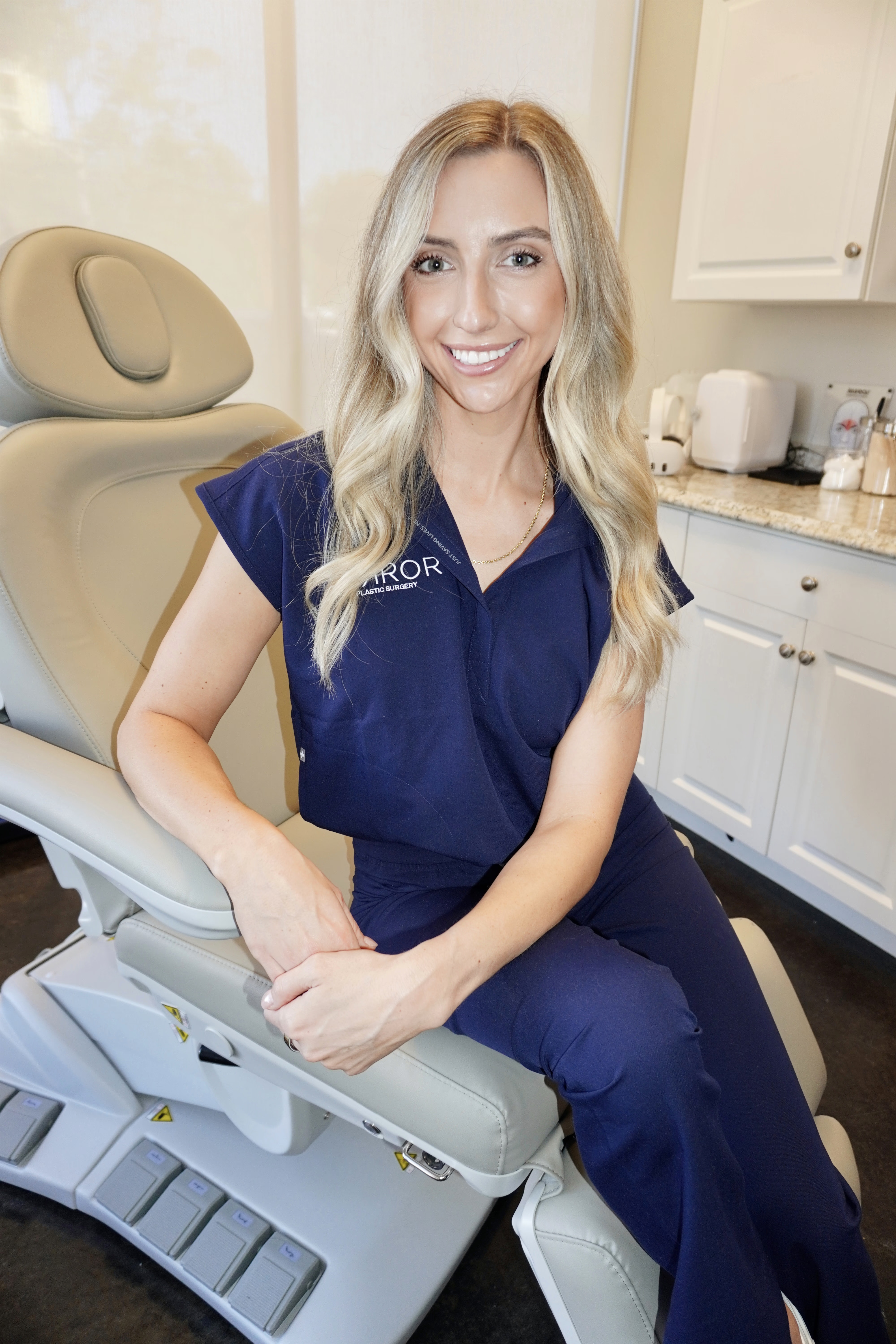
When evaluating any provider, ask about their specific injection training for body contouring, how much time they devote to your pre-treatment assessment, and how many procedures they perform in a typical day.
Day-Of Hip Dip Filler Checklist
Arriving prepared shortens session time, reduces bruising risk, and supports smoother recovery. The checklist below reflects standard pre- and post-care protocols drawn from published clinical guidance.
Before You Arrive
- Stop blood-thinning agents such as aspirin, ibuprofen, fish oil, and vitamin E one to two weeks prior to reduce bruising
- Avoid alcohol for at least 48 hours before your appointment
- Wear loose, comfortable clothing that allows easy access to the hip and gluteal area
- Eat a light meal and stay well hydrated before arriving
- Arrange transportation if you expect any post-procedure discomfort
During Your Session
- Topical numbing cream is applied and allowed to work before injections begin
- The provider maps hip dip depth, skin thickness, and contour before choosing injection points
- Injections are delivered with a blunt-tipped cannula into the deep subcutaneous layer
- Share any discomfort in real time so the provider can adjust technique
- Immediate post-injection massage helps distribute product evenly
Immediately After
- Expect mild swelling, tenderness, and possible bruising at cannula entry points
- Sit on a memory-foam cushion for the first 48 hours and avoid saunas or high-intensity workouts during that period
- Begin gentle massage of the treated area the day after treatment, several times daily for a few days, as directed by your provider
- Avoid direct Florida sun, heated pools, and outdoor heat for at least 48 hours
- Contact your provider immediately if you notice worsening swelling, skin color changes, or severe pain on one side
Frequently Asked Questions
Am I a good candidate for non-surgical hip dip filler?
Most adults in good general health with mild to moderate hip dip indentation qualify for non-surgical correction. Patients with very loose skin, very deep structural dips caused by significant skeletal variation, or expectations of dramatic volume changes may benefit more from a surgical consultation. Ellie’s detailed assessment at Mirror Plastic Surgery reviews pelvic structure, skin quality, fat distribution, and your goals before any recommendation, so the plan matches your anatomy rather than a standard template.
Can hip dip filler be completed in one session?
Many patients with mild, symmetric hip dips see meaningful correction in a single Radiesse session.1 Deeper or wider dips, or treatments using a biostimulatory agent like AlloClae that builds collagen gradually, usually respond best to two or three sessions spaced four to six weeks apart.1 Attempting to correct deep dips in one visit with excessive volume raises the risk of an overfilled look and uneven settling. A staged approach lets the provider evaluate collagen response between sessions and adjust volume safely.
What is the difference between Radiesse and AlloClae for hip dip correction?
Radiesse is a calcium hydroxyapatite-based filler that provides immediate structural volume while also stimulating collagen production over the following 12 to 18 months. It suits patients who want visible change sooner and are comfortable with regular maintenance. AlloClae is a biostimulatory agent that works mainly by recruiting the body’s collagen-producing cells, with results developing over three to six months and often lasting 18 to 24 or more months. The right choice depends on your anatomy, timeline, and maintenance preferences, which Ellie reviews with you during consultation.
How do I maintain my results after hip dip filler?
Maintenance schedules differ by filler type. Radiesse patients often return for a touch-up around 12 to 18 months using about half the original volume. AlloClae and similar biostimulatory agents usually need maintenance every one to two years to support the collagen framework. Between sessions, avoiding prolonged pressure on the area, keeping a stable body weight, and following your provider’s aftercare guidance all help results last longer. Ellie treats non-surgical body contouring as a long-term care relationship, so your maintenance plan is part of the initial treatment discussion.
When should I seek medical attention after hip dip filler?
Mild swelling, tenderness, and bruising during the first few days are expected and usually resolve without intervention. Seek immediate medical attention if you notice worsening swelling or pain on one side, skin that turns pale, bluish, or dark with pain, which may signal vascular compromise, widespread redness with warmth and fever, which may indicate infection, or visible nodules that appear after the first week. Mirror Plastic Surgery offers open communication by call, text, and email so any concern can be addressed quickly without navigating a crowded call center.
Book a consultation with Ellie at Mirror Plastic Surgery in St. Petersburg to receive a clear, anatomy-based treatment plan with realistic timelines and no pressure to commit on the day.
Disclaimer
Disclaimer: Results may vary from person to person. Editorial content, before and after images, and patient testimonials do not constitute a guarantee of specific results.
1 Results may vary from person to person. Editorial content, before and after images, and patient testimonials do not constitute a guarantee of specific results.