
Written by: Ellie Pranckevicius, FNP-BC, Aesthetic Nurse Practitioner & Aesthetic Injector | Facial Restoration & Regenerative Injectable Specialist, Mirror Plastic Surgery | Last updated: August 16, 2026
Key Takeaways
- Acoustic wave therapy (AWT) is a non-invasive treatment that delivers mechanical pressure pulses to disrupt fibrous tissue, stimulate collagen remodeling, and improve local circulation without breaking the skin.
- Clinical evidence shows AWT produces measurable but moderate improvement in cellulite appearance, with results typically lasting several months and often requiring maintenance sessions to sustain.1
- Unlike AWT, subcision-based procedures such as Avéli and Cellfina mechanically release the fibrous septae responsible for structural dimpling, which supports longer-lasting outcomes after a single session.
- AWT is generally well-tolerated with minimal downtime, though results are not permanent and do not correct the underlying structural cause of cellulite dimples.1
- For personalized cellulite treatment options, schedule a cellulite consultation with Ellie at Mirror Plastic Surgery.
How Acoustic Wave Therapy Works on Cellulite
AWT devices such as the Cellactor (Storz Medical) and Z-wave (Zimmer) transmit pressure waves through a handheld applicator pressed against the skin. These waves create controlled microtrauma in connective tissue, which triggers an inflammatory repair cascade that increases collagen synthesis, angiogenesis, and lymphatic drainage. The procedure requires no anesthesia and no incisions.
A standard AWT session for cellulite usually follows this protocol:
- Session length: 20–40 minutes per treatment zone, delivering 2,000–4,000 pulses.
- Course of treatment: 6–8 sessions for visible reduction, with some protocols extending to 12–18 sessions for moderate-to-severe cellulite.
- Session frequency: Once or twice weekly over 6–12 weeks.
- Sensation: Mild pressure and vibration, with temporary redness, minor bruising, or tenderness possible afterward.
- Downtime: None required, and mild redness and warmth typically resolve within hours.
Evidence for Acoustic Wave Therapy in Cellulite Treatment
A systematic review analyzed randomized trials of cellulite treatments, including shock-wave therapy, and graded the overall evidence as moderate because follow-up periods were short and heterogeneous. The review reported promising results for shock-wave therapy as a noninvasive option but did not consider the data definitive for durable or universal efficacy.
No 2023 Chen et al. meta-analysis on AWT for cellulite exists in the evidence, and Chen et al. instead published 2023 meta-analyses on extracorporeal shock wave therapy for carpal tunnel syndrome. A 2015 meta-analysis of ESWT for cellulite reported effectiveness across 11 trials but did not report any cellulite reduction score of 2.07 ± 0.39.
An earlier randomized controlled trial by Knobloch et al. showed that six sessions of focused ESWT at 0.35 mJ/mm² produced improvement in cellulite severity scores versus control.1 Taken together, the evidence supports AWT as a modality that produces measurable but moderate improvement in cellulite appearance rather than structural correction of dimples.1
Cost of Acoustic Wave Therapy for Cellulite at Mirror Plastic Surgery
Because AWT results are not permanent, maintenance sessions may be recommended to sustain any visible improvement, which adds ongoing cost to the total investment. Pricing at Mirror Plastic Surgery is individualized based on anatomy, cellulite severity, and the specific treatment plan, and exact figures are discussed during consultation.
Get a personalized cellulite pricing plan with Ellie to receive an assessment and clear cost breakdown based on your anatomy and goals.
How Long Acoustic Wave Therapy Results Last
Data on the durability of AWT results for cellulite beyond 1 year remain limited. Current studies suggest that AWT results can last several months, and maintenance sessions are often needed to sustain any improvement.1
Tissue remodeling from AWT, including collagen regeneration and angiogenesis, can continue after the final treatment session, so peak results may not be visible immediately after the course ends. However, even at peak improvement, no cellulite reduction treatment, including AWT, permanently eliminates cellulite, and longevity depends on ongoing management rather than a single intervention.1
By contrast, subcision-based procedures such as Cellfina and Avéli address the structural fibrous septae bands that cause cellulite dimples, which explains their longer-lasting outcomes compared to surface-based treatments like AWT.
Comparing AWT, Avéli, and Cellfina for Cellulite
The table below compares AWT, Avéli, and Cellfina across four clinically relevant dimensions. Every figure is drawn from published trial data or systematic review.
| Treatment | Sessions Required | Reported Longevity | Downtime |
|---|---|---|---|
| Acoustic Wave Therapy (AWT) | 6–8 (up to 12–18 for severe cellulite) | Several months, and maintenance may be required | None, and mild redness usually resolves within hours |
| Avéli (manual subcision) | 1 session per treatment area | Improvement sustained at 6 months and 12 months in studies1 | Minimal, performed under local anesthesia |
| Cellfina (vacuum-assisted subcision) | 1 session (45–60 minutes) | Results maintained at 1 year and 3 years in studies1 | Minimal, performed under local anesthesia |
The structural difference between these modalities is clinically significant. AWT delivers mechanical energy that temporarily disrupts fibrous tissue and stimulates circulation, but it does not sever the fibrous septae responsible for dimpling. Avéli uses an integrated light source and verification to target and release individual fibrous septae, enabling the provider to confirm each band is released before withdrawing the device, which offers a level of anatomical precision that surface-based energy treatments cannot replicate.
At Mirror Plastic Surgery, Avéli is performed by providers with deep anatomical training. The ability to identify, isolate, and release individual septae under local anesthesia requires a thorough understanding of subdermal architecture, and that same foundation informs every treatment plan at the practice.
Choosing a Cellulite Treatment Provider in St. Petersburg
Cellulite treatment outcomes closely track with provider anatomical knowledge. A subcision procedure such as Avéli requires the practitioner to navigate subdermal tissue planes accurately, confirm band release, and assess the treated area in real time, which is not realistic in a high-volume, time-pressured setting.
Mirror Plastic Surgery’s approach to cellulite treatment begins with a comprehensive top-to-bottom assessment that can extend up to an hour. During this consultation, the provider evaluates cellulite severity, skin quality, tissue depth, and the patient’s long-term goals before recommending any intervention. The practice performs one to two procedures per day, which helps ensure that clinical attention is not divided across a high volume of concurrent cases.
Ellie Pranckevicius, FNP-BC, leads non-surgical body treatments at Mirror Plastic Surgery. Her dual background, which includes 600 hours of hands-on esthetics training combined with a Master’s in Nursing from the University of South Florida and four years in the Neuroscience ICU at Tampa General Hospital, provides a clinical foundation that extends well beyond surface-level aesthetic training. Her understanding of skin physiology and subdermal anatomy directly shapes how she evaluates and treats structural cellulite.
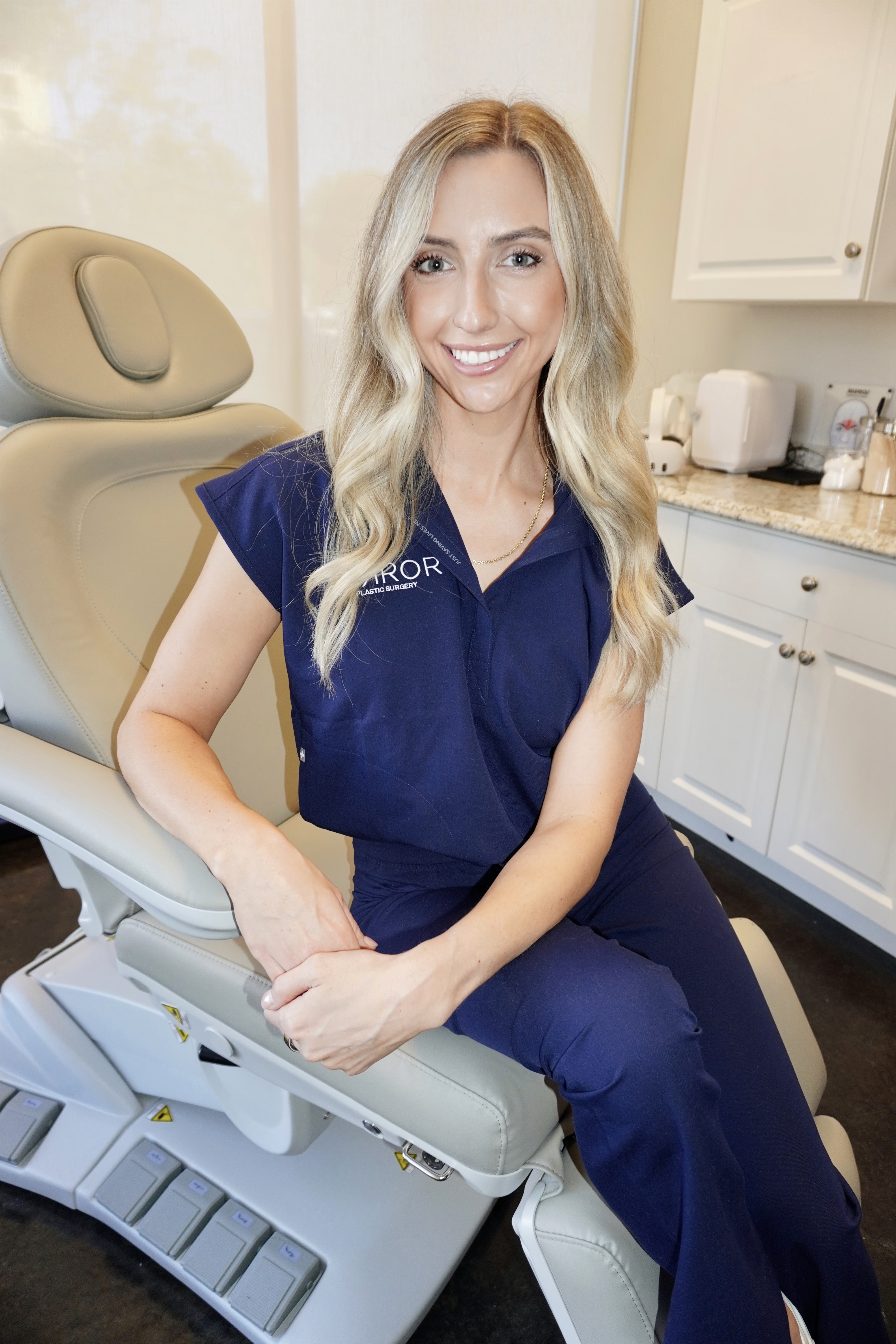
The practice is supplier-neutral, so treatment recommendations are driven by evidence and individual anatomy, not by product quotas or commission structures. Patients who have previously experienced rushed consultations or one-size-fits-all treatment plans often find a substantively different process at Mirror Plastic Surgery.
Arrange an anatomy-first cellulite evaluation with Ellie and review your treatment options in St. Petersburg, FL.
Frequently Asked Questions
Does acoustic wave therapy actually work for cellulite?
AWT produces measurable but moderate improvement in cellulite appearance.1 Multiple studies and systematic reviews published through 2025 report statistically significant reductions in cellulite severity scores compared to sham treatment.1 However, the overall evidence quality is classified as moderate, follow-up periods in most trials are short, and results are not permanent.1 Unlike the subcision approach described earlier, AWT does not sever the fibrous septae that cause structural dimpling, which limits how durable its effects can be.
How long do acoustic wave therapy results last for cellulite?
Published data place AWT results in the range of several months, with limited evidence of durability beyond 12 months.1 Maintenance sessions may be required to sustain visible improvement. This pattern contrasts with subcision-based procedures such as Avéli and Cellfina, which have published data demonstrating longer-term results after a single session.
What is the most successful treatment for cellulite?
Based on current clinical evidence, subcision-based procedures, specifically Avéli and Cellfina, demonstrate the most durable outcomes for structural cellulite dimples on the buttocks and thighs.1 Both are FDA-cleared, single-session procedures performed under local anesthesia that mechanically release the fibrous septae responsible for dimpling. Published studies show high rates of success and maintained results over time for these procedures.1 AWT is a reasonable option for mild cellulite or as part of a combination plan, but it does not match the longevity of subcision for moderate-to-severe structural cellulite.1
Is acoustic wave therapy safe?
AWT has a well-documented safety profile. The most common side effects are temporary redness, mild swelling, minor bruising, and localized tenderness, and these effects typically resolve within 7–10 days. Serious adverse events are extremely rare. Standard contraindications include active infection at the treatment site, blood clotting disorders, anticoagulant therapy, malignancy near the treatment area, pregnancy, and the presence of a pacemaker. A thorough pre-treatment medical history review is essential to confirm candidacy.
How many sessions of acoustic wave therapy are needed for cellulite?
Most clinical protocols require 6–12 sessions for visible improvement, with sessions scheduled once or twice weekly. Severe cellulite may require up to 18 sessions across multiple series. Each session typically lasts 20–40 minutes per treatment zone. Results continue to develop after the final session as collagen remodeling progresses, and maintenance sessions may be recommended to sustain outcomes.
Key Takeaways and Next Steps
The 2024–2025 body of evidence positions AWT as a moderate-evidence, maintenance-dependent option for cellulite improvement. AWT is non-invasive, well-tolerated, and produces measurable reductions in cellulite severity scores, but it does not address the structural fibrous septae that cause dimpling, and its results require ongoing sessions to sustain.1 For patients with moderate-to-severe structural cellulite who want durable correction, single-session subcision procedures such as Avéli represent a more evidence-supported path, with published longevity data extending to two years and beyond.1
Selecting the right treatment works best when it starts with an honest assessment of cellulite severity, skin quality, tissue anatomy, and long-term goals rather than a standardized protocol applied to every patient. Mirror Plastic Surgery’s concierge approach, anatomical expertise, and supplier-neutral philosophy are designed for patients who want that level of rigor before committing to any procedure.
Schedule your cellulite consult at Mirror Plastic Surgery in St. Petersburg, FL. Reach the practice by phone or text at 727-361-6515, by email at hello@mirrorplasticsurgery.com, or visit the clinic at 780 4th Ave S, St. Petersburg, FL 33701. Follow the practice on Instagram at @mirrorplasticsurgery, @dr.akashplasticsurgery, and @perfectlyplastics.
Disclaimer: Results may vary from person to person. Editorial content, before and after images, and patient testimonials do not constitute a guarantee of specific results.
1 Results may vary from person to person. Editorial content, before and after images, and patient testimonials do not constitute a guarantee of specific results.