
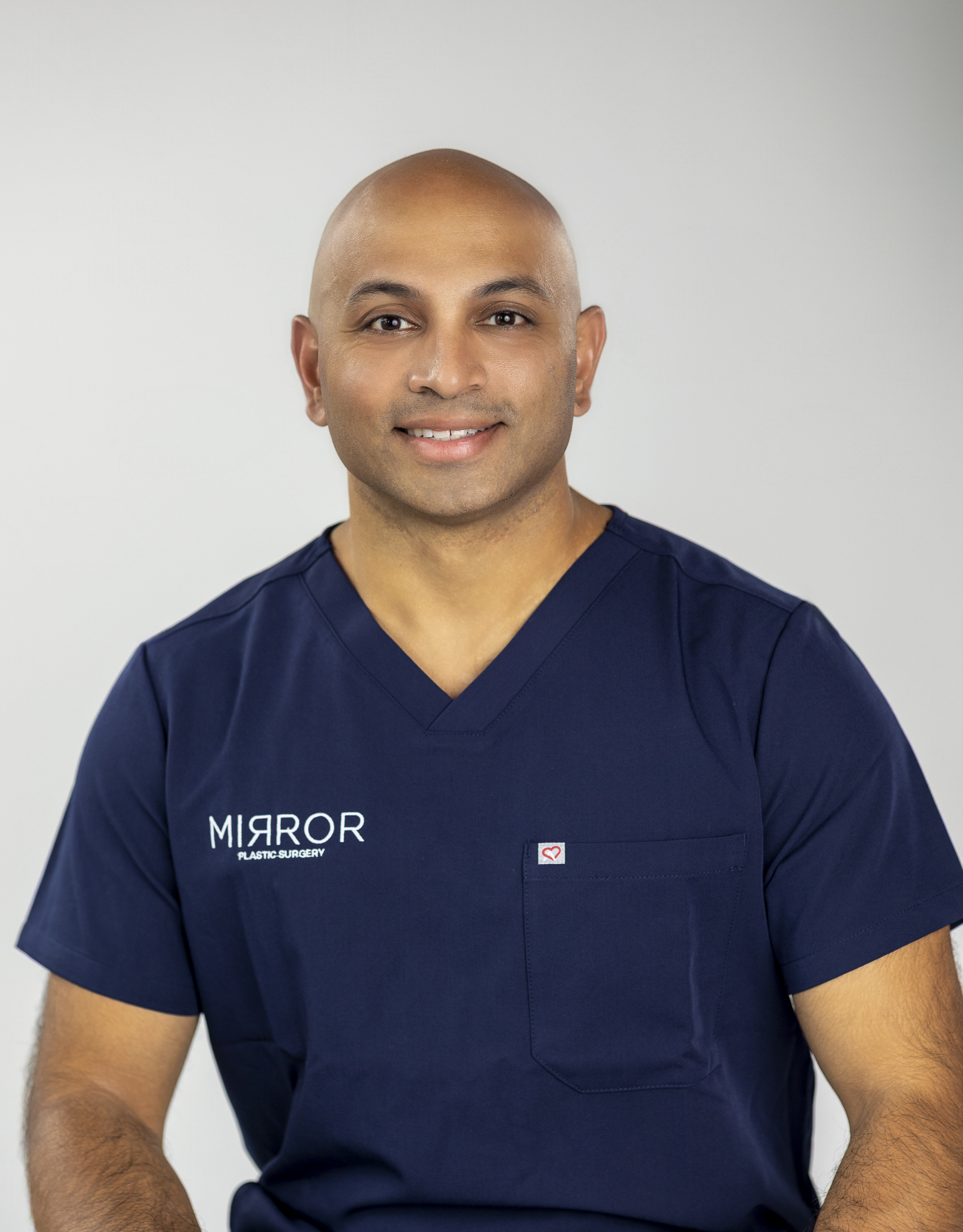
Written by: Dr. Akash Chandawarkar, Board Certified Plastic Surgeon, Mirror Plastic Surgery | Last updated: July 20, 2026
Key Takeaways for Tampa Bay Patients
- Board certification by the American Board of Plastic Surgery (ABPS) is the only ABMS-recognized credential for full plastic and reconstructive surgery.
- Patients should verify ABPS certification, hospital privileges, residency pathway, and fellowship training before scheduling any consultation.
- High-volume practices that perform many surgeries each day limit individualized attention. Concierge practices like Mirror Plastic Surgery cap volume at one to two procedures daily to support safety and outcomes.
- Consultation red flags such as pressure to book immediately, rushed visits under 30 minutes, guarantees of results, or vague answers about credentials signal a volume-focused practice.
- Patients seeking verified, personalized plastic surgery in the Tampa Bay area can book a consultation with Dr. Akash at Mirror Plastic Surgery for a thorough, hour-long evaluation tailored to their anatomy and goals.
Why ABPS Board Certification Protects Plastic Surgery Patients
The American Board of Plastic Surgery (ABPS) is the only board recognized by the American Board of Medical Specialties (ABMS) to certify physicians in the full scope of plastic and reconstructive surgery in the United States. That distinction matters because any licensed physician may legally perform cosmetic procedures regardless of plastic surgery training, and several non-ABMS boards use credential language that can mislead patients.
For the integrated residency model, ABPS certification requires at least six years of ACGME-accredited surgical residency after medical school. A minimum of three of those years focus exclusively on plastic surgery. The independent model instead requires five years of general surgery prerequisite training plus three years of plastic surgery.
Completing this training is only the first hurdle. Candidates must pass a written qualifying examination that covers basic science, clinical decision-making, and patient safety. They then complete an oral certifying examination, presenting a year-long log of their own operative cases for review by examiners.
These rigorous requirements explain why only about 7,000 surgeons in the United States hold active ABPS certification. Certification is not a one-time credential. The ABPS requires Maintenance of Certification, and failure to meet these requirements results in loss of certification status. Understanding what certification means is the first step; the next is knowing how to verify it before scheduling any consultation.
Step-by-Step Guide to Verifying Any Surgeon’s Credentials
Credential verification usually takes less than ten minutes and should happen before you book a consultation. The six steps below apply to any surgeon you are considering in the Tampa Bay area.
- Confirm ABPS certification status. Search the surgeon’s name and state at certificationmatters.org or directly at abplasticsurgery.org. Review both active certification and recertification history.
- Confirm hospital privileges. A board-certified plastic surgeon should hold unrestricted plastic surgery privileges at an accredited hospital. Hospital credentialing involves peer review that goes beyond state licensure.
- Review residency training pathway. Confirm completion of either an integrated six-year plastic surgery residency or an independent pathway that combines prerequisite surgical residency with dedicated plastic surgery training at an ACGME-accredited program.
- Evaluate fellowship training. Post-residency aesthetic surgery fellowship adds one to two years of focused subspecialty training. Confirm the fellowship institution and its accreditation.
- Review advisory and leadership roles. Service on technology advisory boards, editorial boards of peer-reviewed journals, or professional society committees shows ongoing engagement with evidence-based practice.
- Check for independent recognition. Third-party recognition such as inclusion in Newsweek’s America’s Best Plastic Surgeons list offers an additional external validation point.
Dr. Akash at Mirror Plastic Surgery meets each of these criteria. He completed his medical degree through the Harvard-MIT Division of Health Sciences and Technology, graduating from Harvard Medical School with Honors. His surgical training was a seven-year integrated plastic and reconstructive surgery residency at Johns Hopkins University, including rotations at the Johns Hopkins Hospital, the R Adams Cowley Shock Trauma Center, and the Curtis National Hand Center.
He completed an aesthetic surgery fellowship at the Manhattan Eye, Ear and Throat Hospital (MEETH), one of the most competitive aesthetic fellowship programs in the country. He then completed a Biodesign Innovation Fellowship at Stanford University. He serves on the advisory boards of Motiva, Tiger Aesthetics, Cypris Medical, and Merz Aesthetics, and as Next Generation Editor for the Aesthetic Surgery Journal. He has been named in America’s Best Plastic Surgeons 2025 by Newsweek for two years in a row.
How Surgical Volume Affects Attention and Safety
The number of surgeries a practice performs each day directly affects the attention each patient receives. High-volume practices often perform five to ten surgeries daily across multiple providers. At that volume, pre-operative assessment, intraoperative focus, and post-operative follow-up spread across many patients, and the operating surgeon’s undivided attention becomes structurally limited.
Mirror Plastic Surgery limits surgical volume to one to two procedures per day. That cap reflects a deliberate clinical decision rather than a capacity limitation. It allows the entire team to focus on a single patient before, during, and after surgery.
Complication rates for procedures such as liposuction can increase when combined with other operations. This pattern highlights why cumulative risk assessment and undivided surgical attention matter. Studies associate smaller patient panels in concierge models with longer appointment times, higher patient satisfaction scores, and improved continuity of care.
Concierge practices also differ in consultation length, follow-up access, and surgical planning depth. Concierge medicine typically provides 30 to 60 minute appointments instead of rushed 10-minute slots, which supports in-depth anatomical discussion and comprehensive goal-setting. At Mirror Plastic Surgery, initial consultations run up to an hour, covering a full top-to-bottom assessment of anatomy, motivations, and long-term outcomes. That depth of consultation extends into recovery planning, a critical area where practice philosophy directly affects patient safety and results.
Essential Recovery Questions to Ask Your Surgeon
Recovery planning reflects how seriously a practice takes patient safety and long-term outcomes. The questions below help you determine whether a surgeon tailors recovery to you or relies on a generic template.
- What are the specific recovery milestones for my procedure, and how will they be tracked?
- Who is my primary point of contact if I have a concern after hours or on a weekend?
- What facility will the procedure be performed in, and what is its accreditation status?
- Will a board-certified physician anesthesiologist be present for the entire procedure?
- What is your protocol if a complication requires hospital-level intervention?
- How does your surgical plan account for my specific anatomy and any functional considerations?
- What is the realistic timeline before I see final results, and what does healing look like at each stage?
Mirror Plastic Surgery’s safety-first philosophy provides clear, documented answers to each of these questions. Dr. Akash holds hospital privileges that allow direct access to hospital-level care in the rare event of a complication, a safeguard that many non-board-certified practitioners cannot provide. The practice uses advanced in-office diagnostic tools, including ultrasound, for pre-operative assessment. It also advises against combining too many procedures at once, since evidence shows that extensive combinations can sharply increase complication risk.
Consultation Red Flags That Signal You Should Walk Away
The consultation functions as a diagnostic tool for evaluating both the surgeon and the practice. The patterns below suggest a focus on volume, revenue, or marketing rather than safety and individualized care.
- Pressure to commit or pay a deposit at the first visit. Ethical physicians do not require same-day booking decisions. Manufactured urgency reflects a sales tactic, not a clinical recommendation.
- Guarantees of specific outcomes. All surgery carries inherent variability. Guaranteeing specific aesthetic results is a clear red flag that suggests inexperience or dishonesty.
- Rushed appointments with minimal surgeon contact. A 10 to 15 minute consultation is a major warning sign. A thorough review of medical history, anatomy, and goals usually requires 30 to 60 minutes.
- Inability to explain anatomical rationale. A surgeon should clearly explain why a specific technique is recommended over alternatives. One-size-fits-all recommendations without detailed examination suggest weak surgical planning.
- Evasion of credential questions. Deflecting questions about board certification, citing non-ABMS boards, or failing to confirm hospital privileges warrants immediate caution.
- No discussion of complications or recovery. Claims that complications never occur block informed consent and hide information patients need for safe decisions.
- Pricing significantly below market rate. Prices 30 to 50 percent below market often reflect reduced experience, inferior facilities, or shortcuts in materials and technique.
- Surgery planned in a non-accredited facility. Accredited outpatient centers provide board-certified anesthesiologists, advanced monitoring, trained staff, and emergency protocols that non-accredited settings cannot guarantee.
Checklist for Comparing Tampa Bay Plastic Surgeons
Use this checklist before and during any plastic surgery consultation in the Tampa Bay area.
- Verified active ABPS certification at certificationmatters.org or abplasticsurgery.org
- Confirmed hospital privileges for the specific procedure planned
- Completed ACGME-accredited plastic surgery residency (six or more years post-medical school)
- Aesthetic surgery fellowship at an accredited institution
- Surgery performed in an AAAHC-, Joint Commission-, or equivalent-accredited facility
- Board-certified physician anesthesiologist present for the entire procedure
- Consultation lasted 30 to 60 minutes with the surgeon personally conducting the evaluation
- Surgeon explained anatomical rationale for the recommended technique
- Surgeon discussed realistic outcomes, recovery milestones, and complication risks without minimizing them
- No pressure to book surgery or pay a deposit at the first visit
- Before-and-after photos shown from the surgeon’s own patients with similar anatomy
- Clear, itemized written cost estimate provided
- After-hours contact protocol and complication management plan explained
- No claims of proprietary techniques unavailable elsewhere or guarantees of specific results
Book a consultation with Dr. Akash and bring this checklist. Every item on it reflects the standard Mirror Plastic Surgery applies to every patient interaction.
Frequently Asked Questions
Does board certification matter for plastic surgery?
Board certification by the American Board of Plastic Surgery is the single most important credential to verify when selecting a plastic surgeon. As the only ABMS-recognized board for plastic surgery, ABPS certification represents the definitive standard. Earning this certification requires completion of an ACGME-accredited plastic surgery residency, passing both written and oral examinations, and participating in Maintenance of Certification. Approximately 7,000 surgeons in the United States hold active ABPS certification.
What are the signs of a bad plastic surgeon?
The most reliable warning signs usually appear during the consultation. A surgeon who cannot confirm ABPS board certification, lacks hospital privileges, or deflects credential questions presents a primary concern. Pressure to book surgery or pay a deposit at the first visit, guarantees of specific outcomes, and claims that complications never occur suggest inexperience or a willingness to mislead patients.
A consultation lasting fewer than 30 minutes, conducted mainly by a coordinator rather than the surgeon, or lacking any anatomical explanation for the recommended technique signals inadequate surgical planning. Pricing significantly below market rate, surgery planned in a non-accredited facility, and the absence of a board-certified anesthesiologist are facility-level red flags. Any single red flag warrants caution. Multiple red flags clearly indicate that you should seek evaluation elsewhere.
What is the hardest plastic surgery to recover from?
Recovery complexity depends on the procedure, the patient’s baseline health, the surgical technique, and the quality of post-operative support. Among the procedures Mirror Plastic Surgery performs, body contouring surgeries such as tummy tuck (abdominoplasty), circumferential body lift, and mommy makeover combinations often involve the most demanding recoveries. These operations require extensive tissue manipulation, muscle repair, and activity restriction over several weeks.
Rhinoplasty does not involve large tissue areas, yet final results may take 12 months or more to appear.1 The procedure also demands precise technique to avoid functional or aesthetic complications. Breast revision surgery, especially correction of capsular contracture or implant malposition, can be technically complex, with recovery timelines that depend on the extent of prior damage.
The most important factor in any recovery is not the procedure category alone. The quality of pre-operative planning, surgical execution, and post-operative follow-up often has greater impact. A concierge model that limits daily surgical volume and provides direct surgeon access throughout recovery can materially improve outcomes across procedure types.1
How do I confirm a surgeon’s hospital privileges?
Hospital privileges are granted by a hospital’s credentialing committee after peer review of a surgeon’s training, board certification, and practice history. They provide independent institutional verification that a surgeon is qualified to perform specific procedures. To confirm hospital privileges, ask the surgeon which hospital or hospitals have granted them privileges for the procedure you are considering, and request the name of the specific facility.
You can then contact the hospital’s medical staff office to verify that the surgeon holds active, unrestricted privileges for that procedure. A surgeon who is evasive about this question, cannot name a specific accredited hospital, or operates only in non-hospital settings without any hospital affiliation deserves further scrutiny. Hospital privileges also provide a critical safety backstop. In the rare event of a complication requiring hospital-level intervention, a surgeon with active privileges can manage that care directly rather than transferring the patient to an unfamiliar team. Dr. Akash holds hospital privileges as part of Mirror Plastic Surgery’s commitment to patient safety at every stage of care.
Conclusion: Your Next Step Toward Safe, Personalized Results
Choosing a board-certified concierge plastic surgeon in Tampa Bay requires deliberate verification rather than trust in marketing alone. The process includes confirming ABPS certification through official ABMS portals, reviewing residency and fellowship training, verifying hospital privileges, and comparing each practice against the red flags and checklist criteria outlined above. Patients’ primary concern has shifted toward avoiding unnatural results, and subtle, precise, long-term planning now defines the standard of care many people expect.
Mirror Plastic Surgery and Dr. Akash embody that standard in the St. Petersburg and Tampa Bay area. His Harvard-MIT and Johns Hopkins training, MEETH aesthetic fellowship, Stanford Biodesign Innovation Fellowship, and Newsweek recognition create a credential foundation that patients can independently verify. The practice’s concierge model, with one to two surgeries per day, hour-long consultations, a safety-first surgical philosophy, and direct surgeon access throughout recovery, provides the focused attention that complex, long-term aesthetic outcomes require.1
Book a consultation with Dr. Akash at Mirror Plastic Surgery, located at 780 4th Ave S, St. Petersburg, FL 33701. Call or text 727-361-6515, or email hello@mirrorplasticsurgery.com to schedule your evaluation.
1 Results may vary from person to person. Editorial content, before and after images, and patient testimonials do not constitute a guarantee of specific results.